
The Sustainability Laboratory

UPDATES FROM THE LAB

Winners of the 2025 Sustainability Prize at EARTH University Announced

On December 4th, The Lab officially announced projects Aprisco Paco y Calie and Eco-Nature as the winners of the 2025 Sustainability Prize at EARTH University. The prize celebrates visionary student projects that advance the global sustainability agenda.

First Place Winner

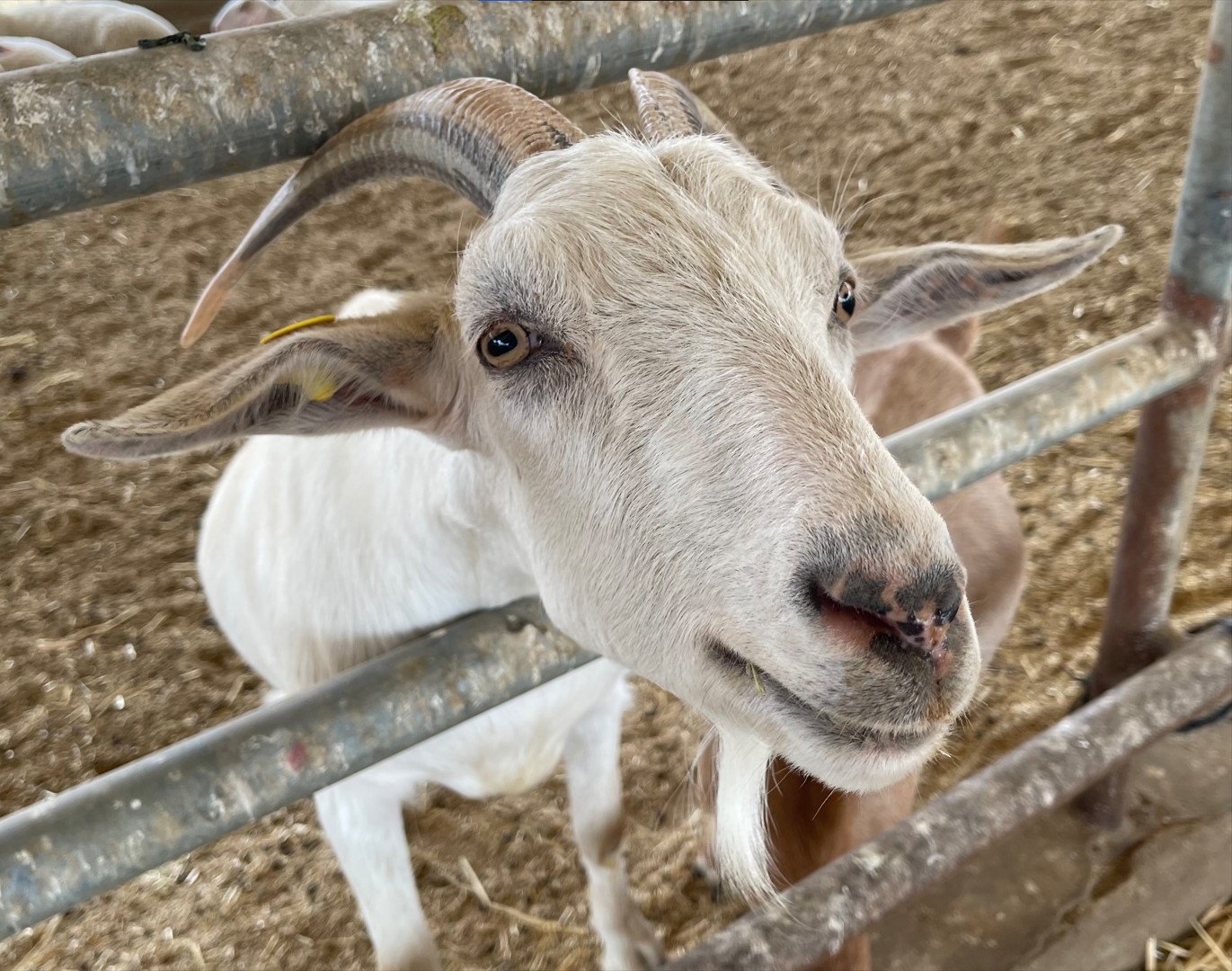
First Place was awarded to Angélica Abarca (Costa Rica) for her project Aprisco Paco y Calie. This initiative proposes an innovative model of goat farming based on circular economy principles, animal welfare, community education, and comprehensive sustainability criteria. It offers an alternative approach to transforming rural realities through responsible resource use, environmental regeneration, and the strengthening of the social fabric.

(l to r) Professor David Alejandro Sepúlveda Vélez and Lab founder Dr. Michael Ben-Eli with First-Place winner Angélica Abarca (Project Aprisco Paco y Calie)
(l to r) Professor David Alejandro Sepúlveda Vélez and Lab founder Dr. Michael Ben-Eli with Second-Place winners Kine-Madelaise Laguerre and Ana Kélle Brito (Project ECO-Nature).

Second Place Winner

Second Place went to students Ana Kélle Brito (Brazil) and Kine-Madelaise Laguerre (Haiti) for their project Eco-Nature. This project focuses on the transformation of local natural resources, such as breadfruit, into sustainable nutritional supplements for Haitian livestock. The initiative strengthens animal food security while promoting agroecological systems that contribute to the restoration of rural ecosystems in Haiti.

The two prizes are awarded annually to support project implementation of the top two initiatives that best exemplify The Lab’s five core sustainability principles.

Lab founder Dr. Michael Ben-Eli with EARTH University President, Dr. Arturo Condo during the ceremony.
Students and families assemble for the graduation dinner.

The Sustainability Prize at EARTH University is made possible through the generous support of Ivor and Barbara Freeman, and Joshua Arnow and Elyse Arnow Brill.

The Lab Awards Inaugural Anders Nyquist Sustainability Prize in Bhutan

The Lab is pleased to announce that project Yoering-Ma and project From Weeds to Wealth are the winners of the inaugural Anders Nyquist Sustainability Prize program at the College of Natural Resources (CNR) of the Royal University of Bhutan, honoring student-led environmental stewardship. The session culminated on November 11th with the presentation of the awards at a ceremony held during College Foundation Day.

First Place Winner

Project Yoering-Ma, an eco-innovation startup based in Thimphu, received First Place for its pioneering work in transforming urban food waste into high-quality vermicompost. By integrating advanced composting techniques and community engagement, this project diverts over 60 metric tons of organic waste each month, producing nutrient-rich fertilizer and supporting Bhutan’s carbon-neutral vision. The project not only reduces landfill pressure but also creates green jobs for youth and women, strengthening the nation’s circular economy and sustainability goals. The initiative was created by students Sailesh Bhandari, Pema Uden, Ugyen Yangzom, Kezang Dorji, and Tashi Kinley Rabgay.

group of students receiving an award
Members of both winning teams, Yoering-Ma (1st Place) and From Weeds to Wealth (2nd Place) with (c) Dasho Sonam Wangchuk, CNR President.

Second Place Winner

From Weeds to Wealth, a social enterprise empowering the Doya (Lhop) community in Tading Gewog, Samtse, was awarded Second Place. This initiative transforms underutilized herbs and invasive weeds into valuable herbal products, providing new income streams and preserving indigenous knowledge. By establishing a farmer-owned cooperative and promoting chemical-free cultivation, the project enhances rural livelihoods, biodiversity, and aligns with Bhutan’s Organic Vision 2030.  The project team comprises students Wangdi Rigsel and Sangay Nidup.

Students at the award ceremony on November 11, 2025, during College Foundation Day.
men and women standing at award ceremony
Audience at the award ceremony on November 11, 2025, during College Foundation Day.

Thank you to Tandin Gyeltshen, who administers the program, and to Per Carstedt and the Göran Carstedt Family Foundation for making the program possible and for empowering young leaders and sustainability entrepreneurs in Bhutan.

The Lab Sparks Dialogue on Sustainability Through Art

On October 30, 2025, The Sustainability Laboratory hosted an inspiring evening at The 8th Floor Gallery that explored the critical role of art in expressing deep concerns about environmental and social issues.

(l to r) Carmel Coblence, Strategic Partnerships, The Lab; Dr. Michael Ben-Eli, Founder, The Lab; and Anjuli Nanda Diamond, Executive Director, The 8th Floor Gallery
a woman lecturing in an art gallery
Curators Anjuli Nanda Diamond and George Bolster discuss the gallery’s artworks and their role in highlighting environmental and social issues

During the event, Beyond the Frame: An Evening with The Sustainability Laboratory, Lab founder Dr. Michael Ben-Eli and exhibition curators Anjuli Nanda Diamond and George Bolster examined how artistic expressions interpret sustainability issues and the role of art in raising fundamental questions and inspiring change.

The exhibition itself resonated deeply with The Lab’s mission, visually embodying the Five Core Sustainability Principles that guide its work. This dialogue underscored the vital role of cross-disciplinary collaboration in advancing sustainability, highlighting how environmental art can inspire communities to move from awareness to substantive change.

Heartfelt thanks to Anjuli and George, and the exceptional community that gathered with us for this event. We are especially grateful to The Shelley & Donald Rubin Foundation for hosting this event and supporting our ongoing work.

Event attendees gather in conversation

Empower Bedouin-Led Sustainability in the Negev

Project Wadi Attir

A Groundbreaking Bedouin-led Sustainability Initiative in the Negev Desert.

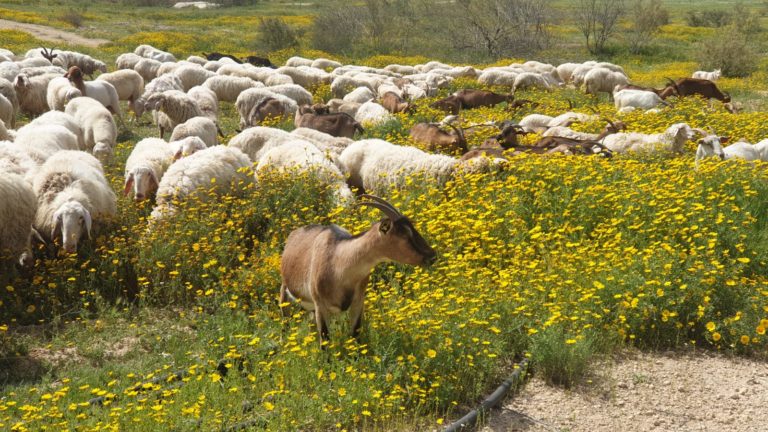
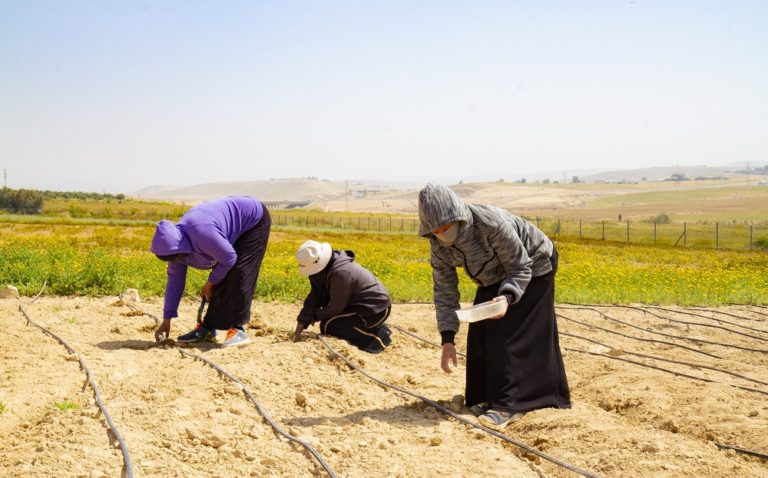
Project Wadi Attir is a groundbreaking initiative of a Bedouin community in the Negev desert, demonstrating an approach to sustainable desert agriculture that leverages Bedouin traditional values, know-how and experience with modern-day science and cutting-edge technologies. The project empowers local entrepreneurs, uplifts women in leadership, and restores ecosystems–serving as a replicable model for arid regions worldwide.

Your support fuels:

  • — Regenerative agriculture and biodiversity restoration
  • — Women-led cooperative enterprises
  • — Indigenous vegetable and medicinal plant initiatives
  • — Renewable energy and zero-waste systems
  • — Community education and global knowledge exchange

Help us scale this model of equity, resilience, and hope. Every donation strengthens a future rooted in dignity, sustainability, and shared prosperity.

Donate Now

WAYS TO GIVE

Thank you for supporting Project Wadi Attir, a groundbreaking Bedouin-led sustainability initiative. To enable faster, safer, and more efficient processing, please consider making your gift electronically.

Please add Memo: “Project Wadi Attir”

Donations for Project Wadi Attir
can be made as follows:

ACH

Wire Transfers

_____________________

Zelle

Please add “donate@sustainabilitylabs.org” to your recipient list.
(Please check with your institution as some banks may limit the amount you can send via Zelle.)

_____________________

PayPal
Please consider a monthly or annual donation.

_____________________

Check

Checks of any amount should be made out to “The Sustainability Laboratory”

Memo: “Project Wadi Attir”

Mail to:

The Sustainability Laboratory
229 East 85th Street
PO Box 1571
New York, NY 10028


Invest in the Future of Sustainability Leadership

Global Sustainability Fellows Program

A Transformative Education Initiative Empowering the Next Generation of Global Changemakers.

Support the Global Sustainability Fellows program—where emerging leaders from diverse backgrounds gain the tools, vision, and field experience to drive systemic, equitable, innovative, and community-rooted solutions for a thriving planet.

Your donation directly supports:

  • — Fellowships for diverse, high-impact candidates from around the world
  • — Field-based learning and community engagement
  • — Development of cutting-edge sustainability frameworks
  • — Expansion of a global alumni network driving systemic change

Every contribution helps empower the next wave of visionary leaders.

Donate Now

WAYS TO GIVE

Thank you for supporting the Global Sustainability Fellows (GSF) program. To enable faster, safer, and more efficient processing, please consider making your gift electronically.

Please add Memo: “Global Sustainability Fellows” or “GSF”

Donations for the GSF can be made as follows:

ACH

Wire Transfers

_____________________

Zelle

Please add “donate@sustainabilitylabs.org” to your recipient list.
(Please check with your institution as some banks may limit the amount you can send via Zelle.)

_____________________

PayPal
Please consider a monthly or annual donation.

_____________________

Check

Checks of any amount should be made out to “The Sustainability Laboratory”

Memo: “GSF” or “Global Sustainability Fellows”

Mail to:

The Sustainability Laboratory
229 East 85th Street
PO Box 1571
New York, NY 10028


The Lab and Development Alternatives Explore Synergies in Systems Thinking During New Delhi Visit

During his recent visit to New Delhi, India, Lab Founder Dr. Michael Ben-Eli met with colleagues at Development Alternatives, a leading social enterprise and think tank, to explore systems thinking and the system-based design approach that is at the heart of The Lab’s work. The group acknowledged the close alignment of the two organizations and touched on opportunities for future collaborations.

Group of men and women sitting at a conference table
Dr. Michael Ben-Eli (fifth from right) with Founder Dr. Ashok Khosla (fourth from left) and team members at Development Alternatives

Lab Founder Dr. Michael Ben-Eli Visits Bhutan to Advance Sustainability Prize and Explore New Partnership Opportunities

In October, Lab founder Dr. Michael Ben-Eli visited Bhutan to advance The Lab’s Anders Nyquist Sustainability Prize at the College of Natural Resources (CNR) of the Royal University of Bhutan. The purpose of the visit was to review the current (2024-2025) cohort of competing projects and launch the 2026 Prize cycle.

Rooted in The Sustainability Laboratory’s Five Core Sustainability Principles, the program fosters a systems-based approach to education, aiming to inspire and support student initiatives and encourage the development of entrepreneurial projects that impact local communities and address critical sustainability issues.

We extend our heartfelt thanks to the program’s donors, Per Carstedt and the Göran Carstedt Family Foundation, whose generosity makes this transformative initiative possible. Together, we are nurturing the next generation of sustainability innovators and leaders.

The visit also included meetings with government officials to explore opportunities for collaborating on development projects in the future.

L- r: Dasho Tashi Dorji, Chairperson of Desuung Skilling Programme, Spiritual Affairs Lead, GMC; Zimponwom Sonam Thinley SCM and Executive Director, Desuung Skilling Programme; ⁠Tashi Penjor, Director, Department of Human Settlement; ⁠Sherab Tshomo, Head, Planning, Research and Media, DSP
President Sonam Wangchuk, Michael Ben-Eli, and Dean Tandin Gyeltshen (Sustainability Prize program liaison) at the College of Natural Resources of the Royal University of Bhutan
Dechen Choki, National Food Systems Expert, Michael Ben-Eli, and Karma Tshering, Policy & Planning Division, Ministry of Agriculture and Livestock
With students and faculty at the College of Natural Resources at the Royal University of Bhutan.

Beyond The Frame: An Evening with The Sustainability Laboratory

Beyond The Frame: An Evening with The Sustainability Laboratory

in collaboration with

The 8th Floor
Thursday, October 30, 2025

6:00 p.m. to 8:00 p.m. 

An intimate evening with The Sustainability Laboratory, highlighting the connection between art, sustainability, and our shared responsibility toward the future health of our planet! Get to know The Lab’s work with this unique opportunity to connect with fellow artists/activists and learn about how we are addressing urgent sustainability challenges through bold experimentation.

Limited Capacity. Reservation required.

Speaker

Dr. Michael Ben-Eli

Founder of The Sustainability Laboratory, Dr. Michael Ben-Eli is a pioneer in the applications of systems thinking and cybernetics, and its relationship with sustainability. He graduated from the Architectural Association in London and holds a PhD from the Institute of Cybernetics, Brunel University, Oxbridge, UK, and led the development of the laboratory as a network of research, development and education activity centres in different ecological zones. In 2016, Dr. Ben-Eli was inducted into the International Green Industry Hall of Fame and received the organization’s Lifetime Achievement Award.

Our Host

The 8th Floor is an independent exhibition and event space established in 2010 by Shelley and Donald Rubin to promote artistic and cultural initiatives. Inspired by the Shelley & Donald Rubin Foundation, the gallery is committed to broadening the access and availability of art to New York audiences. Seeking further cultural exchange, The 8th Floor explores the potential of art as an instrument for social change in the 21st century, through an annual program of innovative contemporary art exhibitions and an events program comprised of performances, salon-style discussions, and those organized by external partners.

The Exhibit

Romance, Regret, and Regeneration in Landscape, is a new group exhibition exploring nature in contemporary artistic practices. Artists include: Francis Alÿs, Joseph Beuys, Boyle Family, Chagos Research Initiative, Anya Gallaccio, Michele Horrigan, Sanam Khatibi, Ishmael Marika, Megs Morley & Tom Flanagan, Richard Mosse, Winfred Rembert, Alexis Rockman, Clement Siatous, and Yang Yongliang.

To learn more, click here.

Fusion Energy in a Decade?

Longview Fusion Energy Systems Designs the World's First Laser Fusion Power Plant, Planned to be Operational Within a Decade.

In December 2022, the Lawrence Livermore National Laboratory (LLNL) National Ignition Facility (NIF) announced the achievement of a controlled fusion ignition, a major scientific breakthrough that opens the door to a potential new era of abundant, clean, non-fossil-based energy for all.

Recently, Dr. Edward Moses, former director of NIF and a leading laser scientist, launched
startup company Longview Fusion Energy Systems with a mission of developing a laser-fusion power plant to supply baseload, carbon-free, and safe fusion energy. This January, Dr. Moses announced that Longview selected the Fluor Cooperation to design the world’s first laser fusion power plant expected to be operational within a decade.

Once realized, this will be a groundbreaking step towards sustainability: truly clean and abundant energy production that will spur decarbonization goals, provide energy stability, and push innovation across industries.

Learn more about Longview Fusion Energy Systems.

This article was originally submitted by Willow Gatewood.

The Climate Uplift logo in orange, blue, and green, representing sustainability

To receive notifications about new posts, subscribe to The Lab’s mailing list.

Spirit of the Corn

Plant Geneticist Walter Goldstein is Unearthing Corn's Regenerative Relationship with Soils.​

Corn is one of the most ubiquitous crops in the world. From livestock feed to plant-based ethanol, corn permeates our lives far beyond the foods we consume. Yet the crop is shrouded in negative environmental and social narratives—growing corn epitomizes industrial agriculture, degrading soils, threatening biodiversity, and poisoning waterways with chemical fertilizers, pesticides, and herbicides. Plant scientists take pride in developing varieties that are highly receptive to nitrogen fertilizers. Without inputs of inorganic fertilizers, most modern corn wouldn’t reach knee-high, but this is costly both for farmers and for the health of our planet. 

Plant geneticist and founder of the Mandaamin Institute, Walter Goldstein, has taken a different approach and turned to corn’s Indigenous roots to breed varieties that fertilize themselves. Goldstein found that corn can partner with bacteria and endophytic fungi in soils and, like legume crops, these hybrid maize varieties fix nitrogen. Bacteria even reside in the husks, allowing plants to take nitrogen directly from the air, a trait long lost to modern crop varieties.

Close-up of heirloom corn variety

The Mandaamin Institute works with farmers directly and relies on landraces, Indigenous plant knowledge, and cutting-edge soil biome research to breed corn that can be grown with little to no chemical inputs. A landrace crop is adapted to the environment in which it is grown and has developed unique relationships with its native soil and microbial partners through years of cultivation. These crops are open-pollinated, and by both natural and human-influenced selection, are designed to thrive in the habitats where they’ve developed. Goldstein demonstrates that his corn varieties yield high-performing crops that can feed and protect themselves, regenerating soils and microbiota in the process. While they do not tackle all environmental harm from industrial agriculture, this is the corn of the future, an ancient crop that will sustain us and help us shift towards ecologically positive modes of production.

Learn more about Walter Goldstein’s work and how the Mandaamin Institute breeds climate-friendly corn on their website.

Read about Goldstein’s work.

This article was originally submitted by Willow Gatewood.

The Climate Uplift logo in orange, blue, and green, representing sustainability

To receive notifications about new posts, subscribe to The Lab’s mailing list.

Historic Renewable Energy Boom

Renewables Powered 90% of New Capacity in 2024. Why That’s a Big Deal.

Amidst climate chaos and discouraging headlines, good news often gets buried. Yet hope and optimism are vital if we are to sustain the will and collective action needed to confront the climate crisis. Encouragingly, the global energy transition is accelerating faster than most experts once imagined.

Good News: A Rapid Energy Transition is Underway

— Renewables are leading the way: Last year, renewables accounted for 90% of new power capacity installed worldwide.

— Solar is now the cheapest energy source in history, a stunning reversal of predictions from just a decade ago. Since 2015 (The Paris Agreement), the world has installed twice as much solar capacity as all new fossil fuel installations combined.

— The U.S. is not waiting: Despite federal policy setbacks, U.S. clean energy investments more than doubled during the previous Trump administration. In that same period, U.S. solar capacity doubled, and wind capacity increased by 49%.

— The technology exists: We already have all the tools we need to reduce emissions by 50% in this decade.

solar panels in a biodiverse field

The Challenge and the Call to Action

While the progress is undeniable, we are still moving too slowly. Looking forward, the economic potential is staggering. Acting decisively on the climate crisis could add $43 trillion to the global economy, while slashing emissions with technologies that already exist today. The fossil fuel industry’s resistance remains fierce, but momentum is no longer on its side.

The takeaway is clear: the future of energy is renewables. The tools are here, the costs are lower than ever, and what was once dismissed as unrealistic is now reality. Far from hopeless, the transition is underway—faster than predicted. This is why our collective action matters now more than ever.

Don’t lose hope. Act.

This article is inspired by Al Gore’s 2025 TED Talk on What the Fossil Fuel Industry Doesn’t Want You To Know.

The Climate Uplift logo in orange, blue, and green, representing sustainability

To receive notifications about new posts, subscribe to The Lab’s mailing list.

Good News!

We are Launching a Good News Blog!

Our planet is in distress. Persistently careless, shortsighted human activities now threaten every part of the biosphere, including the well-being of our own species. For many who are sensitive to the condition of our planet and to the required sustainability transition, it is becoming difficult not to lose heart.

Bad news seems to accumulate exponentially. Frequent and increasing warnings by scientists and international expert panels are materializing, as evident in the looming threats of climate change, including floods, longer droughts, raging fires, storms of increasing frequency and severity, degradation of whole ecosystems, loss of precious biodiversity, compromised water sources, and more.

This is why we decided to launch our new blog, The Climate Uplift. 

Edited by The Lab’s Carmel Coblence, our blog will highlight exciting stories from around the world that show a promise to advance the sustainability agenda: innovations in technology, community development, green economics, ecosystem restoration and conservation, corporate practices, development projects, individuals’ initiatives, and other relevant topics.

The purpose is to showcase groundbreaking stories that will inspire commitment, determination, and hope, and encourage a collaborative, broad-based design revolution that will establish the concept of sustainability as the organizing principle on our planet.

If you have any significant stories you would like to share, please send them to us for consideration for our blog.

Thank you and enjoy!

Michael Ben-Eli
Founder, The Sustainability Laboratory

The Climate Uplift logo in orange, blue, and green, representing sustainability

To receive notifications about new posts, subscribe to The Lab’s mailing list.

Dr. Michael Ben-Eli Explores System Aspects of Sustainability in Recent LinkedIn Posts

Lab founder Dr. Michael Ben-Eli recently published a series of long-form posts on LinkedIn, offering important insights on the state of our global sustainability agenda.

His reflections challenge conventional thinking and provide a framework for approaching complex global challenges. Posts like “Defining Sustainability”, “Sustainability is a System’s State”, and “Sustainability and System Thinking” explore the foundational principles of sustainability, emphasizing the importance of taking a systemic perspective. These pieces reinforce The Lab’s commitment to developing holistic, practical, scalable solutions worldwide.

Beyond the technical aspects, Dr. Ben-Eli also shares broader, more philosophical reflections on humanity’s deeper, ecological role and the power of collective consciousness in posts such as “Is Humanity Waking Up?” and “Reflections on the Occasion of World Environment Day (Beyond Plastics)”. ” These posts encourage a more soulful consideration of our environmental responsibility.

Explore Dr. Ben-Eli’s thought-provoking series and join the conversation on these critical topics by visiting his LinkedIn profile.

Preserve Heritage, Build Futures – Support Project Turquoise Mountain!

Project Turquoise Mountain

From Mining Ghost Town to Oasis Wonderland

Project Turquoise Mountain revitalizes cultural heritage while creating economic opportunities for artisans in conflict-affected regions. Your donation helps preserve traditional skills, foster creative enterprises, and support communities in reclaiming cultural pride.

Act now to protect heritage and empower resilient, self-reliant communities.

WAYS TO GIVE

Thank you for supporting The Sustainability Laboratory. To enable faster, safer, and more efficient processing, please consider making your gift electronically.

Donations to The Sustainability Laboratory can be made as follows:

ACH

Wire Transfers

_____________________

Zelle

(Please add “donate@sustainabilitylabs.org” to your recipient list.
Additionally, you may scan the following QR code to register and pay.
Please check with your institution as some banks may limit the amount you can send via Zelle.)

_____________________

PayPal
Additionally, you may scan the following QR code to register and pay.

_____________________

Check

Checks of any amount should be made out to “The Sustainability Laboratory”

Memo: Project Turquoise Mountain

Mail to:

The Sustainability Laboratory
229 East 85th Street
PO Box 1571
New York, NY 10028


Empower Kenya’s Future: Support Project Olgulului Today!

Project Olgulului, Kenya

Food Security and Ecosystem Restoration: A Pilot Project in Southern Kenya

Project Olgulului transforms degraded landscapes in Kenya into thriving ecosystems while creating sustainable livelihoods for local communities. Your support helps restore biodiversity, enhance food security, and scale a proven model of regenerative agriculture—bringing hope and resilience to people and nature alike.

Act now to make a lasting impact.

WAYS TO GIVE

Thank you for supporting The Sustainability Laboratory. To enable faster, safer, and more efficient processing, please consider making your gift electronically.

Please add Memo: “Project Olgulului”

Donations to The Sustainability Laboratory can be made as follows:

ACH

Wire Transfers

_____________________

Zelle

(Please add “donate@sustainabilitylabs.org” to your recipient list.
Additionally, you may scan the following QR code to register and pay.
Please check with your institution as some banks may limit the amount you can send via Zelle.)

_____________________

PayPal
Additionally, you may scan the following QR code to register and pay.

_____________________

Check

Checks of any amount should be made out to “The Sustainability Laboratory”

Memo: Project Olgulului

Mail to:

The Sustainability Laboratory
229 East 85th Street
PO Box 1571
New York, NY 10028


Meet Carmel Coblence: The Lab's Newest Intern and Ecosystems Ambassador​

The Sustainability Laboratory is pleased to welcome Carmel Coblence as a Grants Development and Research intern. Carmel holds a B.A. from NYU’s Gallatin School of Individualized Study, where she concentrated in Environmental Protection and Ecological Solutions with a minor in Animal Studies.

Her work bridges sustainability and peace-building initiatives across Israel, France, and the United States, with experience ranging from composting systems and environmental education to corporate sustainability. She has collaborated with municipalities, nonprofits, and international organizations to design and implement community-centered environmental solutions. Fluent in Hebrew and French, Carmel brings strong skills in communication, leadership, and project coordination.

Her interests focus on the intersections of ecology and justice, and on developing practical, systems-based responses to environmental and social challenges.

We are thrilled to have Carmel join The Lab and contribute her talents to advancing our mission of pioneering new models for sustainability worldwide.

Innovative Projects in Fuel, Sustainable Packaging, and Beekeeping Compete for 2025 Sustainability Prize at Earth University

From a pool of six exceptional semi-finalist projects, three visionary student proposals from Guatemala, Tanzania, and Haiti that turn waste into energy, replace plastics with nature-based materials, and restore ecosystems through community action and regenerative beekeeping, have emerged as strong contenders for The Sustainability Laboratory’s 2025 Sustainability Prize at EARTH University in Costa Rica, an initiative that recognizes innovative student projects advancing sustainability in practice.

Finalists are:

PetZen (Guatemala), designed by Esteban Soto and Juan Suquén, revalues forest waste to give it new life as affordable fuel.

Banavate Wraps (Tanzania), created by Kuruthumu Hemed Saidi, develops biodegradable films from banana peels as a natural substitute for synthetic plastic packaging.

Apis Haiti (Haiti), proposed by Ed Duddley Dumont, promotes regenerative beekeeping among small-scale producers in rural areas of Haiti to protect key ecosystems.

gathering of multiple students at EARTH University
EARTH's students and faculty during the prize finalists selection day

Two winning projects will be selected in December, with the first-place winner receiving $10,000 and the second-place winner receiving $5,000. Good luck to all the participants. Thank you to EARTH University faculty and to our donors Ivor and Barbara Freeman and Joshua Arnow and Elyse Arnow Brill.

__________

The Sustainability Prize is part of The Lab’s ongoing commitment to cultivating emerging leaders and advancing transformative solutions that can be adapted and scaled across diverse communities worldwide. Prize money is awarded annually to the student project that best exemplifies The Lab’s five core principles of sustainability.

Rethinking The World Economy

Rethinking The World Economy

with John Fullerton and Michael Ben-Eli

Session 27
Wednesday, May 28, 2025
6:00 p.m. EST

In this conversation with Michael Ben-Eli, founder of The Sustainability Laboratory, John Fullerton, founder of Capital Institute, will explore how the world economy and the financial system are failing us; how to better align finance and social purpose; the principles of a regenerative economy; the need for a collective shift in consciousness to bring about system change; and how a deep transformation in the current financial model can help establish a more just, equitable, and life affirming way.

This conversation will be followed by a live Q&A session.

John Fullerton is an unconventional economist, teacher, writer, impact investor, and some have said philosopher. He is considered the architect of Regenerative Economics and its companion Regenerative Finance, built on a foundation of complex adaptive-living systems science and first presented in his book Regenerative Capitalism (2015).

John is the founder of Capital Institute, dedicated to the bold reimagination of economics and finance, aligned with and in service to life. Previously he was a managing director of “the old JPMorgan” until walking away from Wall Street in 2001 with no plans and many questions.

John is also the co-founder of Grasslands, LLC, a board member of the Savory Institute, and a member of the Club of Rome. He teaches two online courses with a growing alumni base from over 50 countries and speaks internationally to public audiences and universities. John was featured in the 2021 award-winning documentary Going Circular.

“Exploring the Sustainability Challenge”
In 2021, The Sustainability Laboratory launched “Exploring the Sustainability Challenge,” a new forum for the exchange of ideas. We invite you to join us as we engage with thought leaders from around the world in exploring key ideas related to some of the most urgent topics of our time.

Register Now to join our live conversations via Zoom. The events are free to attend.

The Lab Inducted Into International Green Industry Hall of Fame

The Sustainability Laboratory is honored to have been inducted into the International Green Industry Hall of Fame (IGIHOF) in a ceremony that took place on March 21, 2025, hosted by the University of Redlands in California.

The induction ceremony took part during the Green Future Forum, a day event of lively dialogue, exploration, and collaboration that brought together students, faculty, community members, and sustainability leaders.

Dr. Michael Ben-Eli, founder of The Sustainability Laboratory accepted the award, noting that this recognition will inspire The Lab to further its work in advancing the sustainability agenda and amplify its life-affirming impacts on people and ecosystems around the world.

Founded in 2008, The Lab has been advancing breakthrough model projects and developing tools to address critical sustainability challenges facing our planet. The IGIHOF recognition places The Lab among a distinguished group of individuals and organizations working to shape a better world.

Learn more at gogreenhall.org.

Lab Founder Michael Ben-Eli (r) with IGIHOF Board Chair Adam Fromson (l)
(l to r) Lab representatives Ben Naman, Vanessa Armendariz, and Nicole Lumpress with IGIHOF Board Chair Adam Fromson (c) and Lab Founder Michael Ben-Eli

The Sacred Connection

The Sacred Connection

with Mindahi Bastida and Michael Ben-Eli

Session 26
Wednesday, April 23, 2025
6:00 p.m. EST

In this conversation with Michael Ben-Eli, founder of The Sustainability Laboratory, Mindahi Bastida, caretaker of the philosophy and tradition of the Otomi-Toltec Peoples of Central Mexico, will explore the essential connection to ancestors, sacred sites, and ceremonies, the urgent need to reconnect with nature and protect Mother Earth, and how ancestral wisdom and teachings can contribute to advancing the sustainability agenda.

This conversation will be followed by a live Q&A session.

Mindahi Bastida, Founder and Convenor of The Earth Elders, was Director of the Original Nations Program of the Fountain 2020 through 2023 and, until July 2020, the Director of the Original Caretakers Program at the Center for Earth Ethics, Union Theological Seminary in the City of New York. Mindahi is also General Coordinator of the Otomi-Toltec Regional Council in Mexico and caretaker of the philosophy and traditions of the Otomi-Toltec peoples. He has been an Otomi-Toltec Ritual Ceremony Officer since 1988, and is a consultant with UNESCO around Sacred Sites and Biocultural issues. Born in San Pedro Tultepec, Lerma, Mexico, Mindahi holds a doctorate in Rural Development from the Universidad Autoěnoma Metropolitana, achieving the University Medal of Merit; a M.A. in Political Science from Carleton University, Canada; and a Bachelor of Tourism from the Universidad Autónoma del Estado de Mexico. He has written on the relationship between the State and Indigenous Peoples, intercultural education, collective intellectual property rights and associated traditional knowledge, among other topics.

“Exploring the Sustainability Challenge”
In 2021, The Sustainability Laboratory launched “Exploring the Sustainability Challenge,” a new forum for the exchange of ideas. We invite you to join us as we engage with thought leaders from around the world in exploring key ideas related to some of the most urgent topics of our time.

Register Now to join our live conversations via Zoom. The events are free to attend.

The RAIC 2025 Conference on Architecture

The Royal Architectural Institute of Canada: Conference on Architecture

ft. Michael Ben-Eli
RAIC Keynote Lunch
Tuesday, June 3, 2025
12:30 – 2:00 PM
Montréal 4 & 5, Bonaventure Hotel

Lab founder Michael Ben-Eli will be headlining the Keynote Lunch for the 2025 RAIC Conference for Architecture and will share insights from his extensive experience and groundbreaking work in the field of sustainability.

The RAIC 2025 Conference on Architecture is Canada’s premier annual gathering for leaders and emerging talents in architecture and design, students, faculty, and allied professionals. The program includes high-quality learning opportunities that include interactive content, innovative ideas, and engaging discussions that support advancement of a built environment that is more livable and sustainable.

Learn more.

a smiling man with glasses

Dr. Michael Ben-Eli founded The Sustainability Laboratory to develop and demonstrate groundbreaking approaches to sustainability practices, expanding prospects and producing positive, life affirming impacts on people and ecosystems in all parts of the world. In 2016, Michael was inducted into the International Green Industry Hall of Fame and recognized with the organization’s Lifetime Achievement Award.

No Upcoming Events

Subscribe to The Lab

Don’t miss out. Join our mailing list to receive notifications of upcoming events and
program updates directly in your inbox.

New Team Member Willow Gatewood to Blog About Significant Advances in Sustainability Innovations from Around the World

The Lab is delighted to welcome recent graduate Willow Gatewood to The Lab’s team as an editorial volunteer.

An environmental scientist and interdisciplinary artist with a passion for storytelling and a deep commitment to sustainability, Willow will be spotlighting people, places, projects, and ideas driving transformative change toward a sustainable future.

The blog aims to educate and inspire readers, offering a fresh perspective on the innovative efforts shaping our world. Stay tuned for thought-provoking and motivational content that connects us to the ideas and actions making a difference in the sustainability agenda and the way we treat our planet.

Welcome to the team, Willow!

To learn more about Willow’s journey, visit: willowgatewood.com

Project Wadi Attir Celebrates 17th Anniversary

On December 19, 2024, Project Wadi Attir celebrated its 17th anniversary. Local dignitaries, members of the community, and many of those who were involved with the project over the years participated in this festive occasion celebrating the inspiring accomplishments of this unique undertaking.

In December 2007, during a reconnaissance trip to explore possibilities for launching a model development initiative with the Bedouin community, Lab founder Dr. Michael Ben-Eli met Dr. Mohammed Alnabari, then Mayor of Hura. Mohammed was intrigued, the immediate chemistry between the two was palatable, and they committed to start working together.

Early in 2008, they launched an effort that grew to be known as project Wadi Attir. Designed to demonstrate an approach to sustainable agriculture in an arid zone, the project combines indigenous tradition with modern-day science and technology. It aims to showcase implementation of the sustainability principles developed by The Lab and includes significant innovations in community development, economic opportunity, green technology, ecosystem restoration and more.

Dr. Michael Ben-Eli with Dr. Mohammed Alnabari during an early encounter.
Dr. Mohammed Alnabari (left) with Dr. Michael Ben-Eli at Project Wadi Attir
Dr. Ben-Eli and Dr. Alnabari at Project Wadi Attir in 2015
Project Wadi Attir video fallback
Aerial view of Project Wadi Attir

Project Wadi Attir has received broad international attention. It was recognized by the United Nations Convention on Combating Desertification, used as a case study in several universities, and hailed for its comprehensive approach based on The Lab’s sustainability principles.

Happy Anniversary to all members of the community, project partners, team, and supporters.

The story of Project Wadi Attir is being documented in a book to be authored by acclaimed writer and documentarian Naomi Azar.

Click here to see Naomi’s recent post on the 17th Anniversary of Project Wadi Attir.

Guests at Project Wadi Attir's 17th Anniversary celebration.
Dr. Ben-Eli addresses guests at Project Wadi Attir's 17th Anniversary celebration.
Attendees at the 17th Anniversary celebration.

The Sustainability Laboratory Welcomes Glenn Yago to Advisory Board

The Sustainability Laboratory is thrilled to announce the appointment of Glenn Yago to its International Advisory Board. Glenn Yago is a distinguished economist known for his financial innovations to sustainable development. He brings a wealth of experience and knowledge to The Lab’s advisory board.

Glenn is a senior fellow and founder of the Financial Innovations Labs at the Milken Institute and currently directs the Milken Innovation Center at the Jerusalem Institute. His work has significantly contributed to the democratization of capital, providing innovative financial solutions to traditionally underserved markets. Glenn’s research and project initiatives have been supported by prestigious organizations such as the National Science Foundation, Gates Foundation, Google, Ford Foundation, Rothschild Foundation, and Rockefeller Foundation.

We are confident that Glenn’s expertise and vision will greatly enhance The Lab’s mission to promote sustainable development and practices worldwide.

Welcome Glenn!

For more information on Glenn Yago, click here.

Winner of The Lab's 2024 Sustainability Prize Program at Earth University Announced

The Sustainability Laboratory is pleased to announce project Senene Farm as the winner of the 2024 Sustainability Prize Program at Earth University. 

Developed by students Birtukan Feyisa (Ethiopia), Anthony Ilalio (Tanzania), and Charles Munga (Kenya), this innovative project explores large-scale farming of edible grasshoppers (Ruspolia differens) to address malnutrition issues in Tanzania. By promoting the consumption of grasshoppers as a viable protein source, the initiative aims to enhance food security, reduce environmental impact, and create employment opportunities.

The selection process, which took place in July 2023, saw the participation of 29 students working on 18 projects. Finalists included Allpamantha, developed by Wendy Esquit (Guatemala), for developing innovative food products using medicinal plants, and Saberes Ance by Jessenia Mármol (Ecuador), a project on reviving traditional knowledge through the commercialization and production of basketry and the implementation of bio-gardens.

The projects underwent prototyping during the first semester of 2024 and were evaluated by a panel of judges: David Méndez (Project Specialist, Costa Rica), Brian Torres (Agricultural Engineer, Colombia), and Jonathan Castro (Agricultural Project Manager, Costa Rica).

Congratulations to all participants for driving innovation in sustainable development!

Prize winners Birtukan Feyisa (l), Anthony Ilalio (c) and Charles Munga (r) with (l to r) Prof. David Alejandro Sepúlveda Vélez; Arturo Condo, President, Earth University; and Lab founder Dr. Michael Ben-Eli

Understanding Sustainability

NorrEd: The Future of Architecture / Engineering 2024

ft. Michael Ben-Eli
Tuesday, December 10, 2024
12 noon – 2:00 p.m. EST

In this conversation, Dr. Michael Ben-Eli, The Lab’s founder, will discuss The Lab’s perspective on the concept of sustainability and how it informs The Lab’s work.

multiple images of men

The NORR ed 2024 Program features a diverse and inclusive lineup of distinguished professional speakers. As part of the NORRForward global initiative, NORR ed is a lecture series established in 2007 to bring the most distinguished Architects and Engineers to share their career and professional ideas of the built form. The core purpose is to Teach, Learn and Improve on a continuous basis across three dedicated streams: Architecture Series, Engineering Series and Master Series.

All sessions will be presented virtually in a live forum. Recorded sessions are also available on NORR’s YouTube channel by clicking here.

"Sustainability?" Video by Young Filmmaker Finn DeWitt Takes Top Honors at International Film Festival

The Sustainability Laboratory is happy to announce that “Sustainability?” a video created by 12-year-old filmmaker Finn DeWitt, is the recipient of two awards in the MY HERO International Film Festival: 1st Place Middle School and the WOJ Youth Reporter Award (Middle School Documentary).

In his compelling video, Finn takes us through a time machine into two possible futures—each depicting the potential outcome of our choices today regarding climate change and our treatment of the planet. These alternate futures highlight the devastating consequences of inaction in contrast with the richer, greener environment we could sustain by changing our mindset and behaviors.

In creating the film, Finn was mentored by Dr. Michael Ben-Eli, founder of The Sustainability Laboratory.

Finn, and other winners of the MY HERO International Film Festival will be celebrated at the MY HERO Awards Ceremony on Saturday, November 16th in Santa Monica, beginning at 7pm PST. The ceremony will also be streamed on YouTube.

Click here for more details about Finn and the My Hero International Film Festival.

The Lab Kicks Off Its Sustainability Prize Program at the College of Natural Resources in Bhutan

On October 15, 2024, Lab Founder Dr. Michael Ben-Eli introduced the first annual seminar in The Lab’s newly launched Anders Nyquist Sustainability Prize program at the College of Natural Resources at the Royal University of Bhutan.

The two-day seminar introduces students to The Lab’s signature approach and its Five Core Sustainability Principles which emphasize a balance between the spiritual, material, and other key dimensions of human affairs and aligns well with Bhutan’s culture and traditions.

The program encourages the development of entrepreneurial projects that impact local communities and address critical sustainability issues. The top two student graduation projects that successfully embody The Lab’s principles are awarded a first place and second place prize intended to support implementation of the projects.

Dr. Michael Ben-Eli with students at the first sustainability seminar at Royal University of Bhutan

See the reaction of one student, Namgay Wangchuk, who wrote:

“Yesterday and the day before yesterday, I had the privilege to attend your seminar about The Sustainability Laboratory at the College of Natural Resources. It was inspiring to witness and listen to what you and your team have achieved so far, that too, globally! My heartfelt gratitude and appreciation for achieving those milestones. I am very excited and look forward to what I as a person and CNR as a whole can bring to the table for developing a sustainable future for Bhutan.”

College of Natural Resources President Sonam Wangchuck (l) and Dean Sonam Tashi (r) with Dr. Michael Ben-Eli (c)
Dean Sonam Tashi (far left) and Dr. Michael Ben- Eli (c) with students of the Royal University of Bhutan

The Anders Nyquist Sustainability Prize Program
is supported by the generous contribution of the Carstedt family.

Click HERE to learn more about the Anders Nyquist Sustainability Prize Program.

Toward the Net Zero City

Toward the Net Zero City

with Farah Naz and Michael Ben-Eli

Session 25
Tuesday, November 19, 2024
1:00 p.m. EST

In this conversation with Michael Ben-Eli, founder of The Sustainability Laboratory, Farah Naz, author, built environment engineer, and climate strategist, will explore humanity’s historical trend of urbanization, climate change and the sustainability challenges faced by cities, and the urgency, concepts, methods, and actions that are essential to ensure net zero readiness in our cities and communities.

This conversation will be followed by a live Q&A session.

Farah Naz is an award-winning climate change strategist, Zayed Inspirer, and author of the Middle East’s first book on NetZero, “Net Zero City,” along with the children’s book “Mission Zero.” With 20 years of experience in the built environment across the US, UK, Southeast Asia, and the Gulf Region, she has been pivotal in steering sustainability and innovation in the Middle East, supporting projects like the Museum of the Future, Louvre Abu Dhabi, Bee’ah HQ in Sharjah, and the Expo 2020 Sustainability Pavilion. Farah has won numerous accolades and awards, including Most Influential Women of the Year (2024) and Sustainability Consultant of the Year (2023, 2022). Recently, Farah served as the Sustainability Technical Director for the COP28 and the ADIPEC Energy Summit in the UAE. In the UK, she contributed to the energy strategy for Ashmount Primary School, the country’s first zero-energy building, which received the 2015 RIBA Sustainable Buildings Award. As an innovator, Farah applies best practices in the built environment, focusing on the Food-Energy-Water Nexus and frameworks for urban sustainability and inclusive innovation. She is a Chartered Engineer, Fellow of CIBSE, Chair of CIBSE’s UAE Chapter, an accredited LEED and WELL Professional, and a Verified Research Expert for the Dubai Future Foundation. She actively advocates for STEM education for future generations.

“Exploring the Sustainability Challenge”
In 2021, The Sustainability Laboratory launched “Exploring the Sustainability Challenge,” a new forum for the exchange of ideas. We invite you to join us as we engage with thought leaders from around the world in exploring key ideas related to some of the most urgent topics of our time.

Register Now to join our live conversations via Zoom. The events are free to attend.

Water From Dry Air System Installed at Project Wadi Attir in the Negev

During a festive ceremony on September 10, the startup H2OLL company installed the first fully commercial unit of its Atmospheric Water Generator technology at Project Wadi Attir,

H2OLL Atmospheric Water Generator

The groundbreaking technology for producing water from the air was developed originally at the Technion-Israel Institute of Technology by Professor Eran Friedler and Professor David Broday, faculty members of the Technion’s Division of Civil and Environmental Engineering.

The system enables the production of water from the air even in dry and desert areas, while completely blocking chemical and biological pollutants. It is based on adsorption, unlike most initiatives in the field that operate based on direct cooling technology. The difference is dramatic, reducing significantly the amount of water vapor required in a given volume of air.

The H2OLL commercial system will supply 1,000 liters of water a day in the Negev. The company’s leadership team includes CEO Yoav Kirsh, CTO Ilan Katz, and VP of Business Development Oded Distal. Their efforts mark a significant step toward providing sustainable water solutions in challenging environments.

Installation of the H2OLL system at Project Wadi Attir joins a long-standing plan of using the project’s site as a platform for demonstrating innovative green technologies.

(L-R) Project Wadi Attir's Haled Abu Siam, Dr. Mohammed Alnabari, Jamila Abu-Kaf, Hagit Maizel, and Nimrod Rogel
H20LL's CEO Yoav Kirsh and CTO Ilan Katz

Can AI Serve As A Catalyst for An Inclusive and Ethical Sustainability Revolution?

Can AI Serve as a Catalyst for An Inclusive and Ethical Sustainability Revolution?

with Mariana Bozesan and Michael Ben-Eli

Session 24
Wednesday, October 30, 2024
1:00 p.m. EST

In this conversation with Michael Ben-Eli, founder of The Sustainability Laboratory, AI pioneer Mariana Bozesan explores the evolutionary significance, current landscape, and future of AI, and shares insights about its immense potential, pitfalls, and how it could be a catalyst for a transformative journey to a sustainable and life-affirming future.

This conversation will be followed by a live Q&A session.

Dr. Mariana Bozesan is a polymath, AI pioneer, and successful serial tech-entrepreneur. She is the architect of Integral Investing and an award-winning investor. Her Moonshot is the investment turnaround that uses exponentially growing technologies to address humanity’s existential threats, aiming to decarbonize the global economy and accelerate the UN SDGs by 2050. A women’s rights activist, she co-initiated the Equality Moonshot with UNCTAD. Dr. Bozesan is a strategic advisor to governments, corporations, and NGOs, and has received numerous accolades, including the Golden Angelina Award (Europe’s Female Angel Investor, 2019) and the European Business Angel Network (EBAN) Award (Best European Early Stage Investor, 2016). She is a full member of the prominent international Club of Rome, a Fellow of the World Academy of Art and Science, and the author of several books, including Integral Investing: From Profit to Prosperity. She studied Computer Science and AI at Stanford University and Karlsruhe Institute of Technology (KIT) and holds a Ph.D. in Psychology.

“Exploring the Sustainability Challenge”
In 2021, The Sustainability Laboratory launched “Exploring the Sustainability Challenge,” a new forum for the exchange of ideas. We invite you to join us as we engage with thought leaders from around the world in exploring key ideas related to some of the most urgent topics of our time.

Register Now to join our live conversations via Zoom. The events are free to attend.

Writer and Documentarian Naomi Azar to Pen New Book on Project Wadi Attir

In an exciting development, Naomi Azar, an acclaimed writer and documentarian, will chronicle the story of Project Wadi Attir in a new book that will explore The Lab’s unique approach to project development. Taking the reader on a comprehensive journey from concept to implementation, the book will include personal stories from the many individuals who have been involved in this unique development initiative—community members, academic and scientific researchers, government officials, funders, and more—and will also provide insight into Bedouin traditions and culture.

Project Wadi Attir, nestled in the Negev Desert, stands as a beacon of sustainability innovation. It is a groundbreaking initiative of the Bedouin community and The Sustainability Laboratory showcasing application of The Lab’s sustainability principles, with a focus on demonstrating an approach to sustainable dryland agriculture. The project leverages Bedouin traditions and experience with modern-day science and technology.

Naomi brings a wealth of experience to this project. As a seasoned writer and documentarian, she has explored diverse cultures, environmental challenges, and human resilience. Her ability to weave narratives that resonate with readers promises an exciting reading experience.

We anticipate a literary journey that will inspire, educate, and ignite conversations about sustainability.

Thank you, Naomi.

Naomi R. Azar is an Israeli writer, writing fiction and documentary. She holds a B.A. degree in Political Science, Sociology & Anthropology from Haifa University, and an M.Sc. degree of the Faculty of Industrial & Management, Technion, Israel Institute of Technology. She also holds a B.A. degree from Tel Aviv university where she specialized in screenplay writing and won awards in this field. She worked in the areas of organizational change & development, and later as a Human Resources manager. She also teaches Yoga for women.

About Anders Nyquist

A Word From Anders' Daughter, Karin Nyquist

Anders Nyquist was a Swedish architect and a pioneer in designing ecocycle, holistic, and people-friendly buildings and communities all around the world, with a focus on affordable and longtime durable buildings, with low maintenance cost, and a social vision that could facilitate use and lifestyle within the building with reduced negative impact on ecosystems and natural resources.

Born in Sundsvall in 1938, he achieved his master’s degree in architecture in 1962 at Chalmers Technical University in Gothenburg.

After reading the book “Silent Spring” by Rachel Carson about the devastating effects of humans overexploiting the resources we are given from Mother Nature, leading to the environment being polluted and birds and other animals being killed, Anders, who was a very active bird watcher and amateur photographer, decided he wanted to dedicate his life to contributing to a more long-term sustainable and ecocycle-friendly world that can be passed on to future generations.

The social vision was key; Anders wanted to promote social interaction between people. An apartment building should not only be a “storage” of people at night, but a place where different people can meet, interact, share ideas and support each other. Therefore, when designing an apartment building, he always considered this very carefully.

Of course, the social vision was also part of his daily personal life. Anders was very engaged and personally involved in his two daughters’ lives, Karin and Eva, but maybe – if possible – even more in the lives of his four grandchildren who became a very important part of his life!

A great example of Anders’ social and ecocycle-friendly vision is the design of the apartment building, with a wooden structure and a well-insulated climate shield, in Tomtebo, Umeå, in the northern part of Sweden where all the residents share a common interior greenhouse area where the residents can meet, interact, grow vegetables, and enjoy the support of each other, even during the cold winter. All the building materials are locally produced and renewable. The energy for heating comes from locally produced, renewable, wooden pellets and the running cost and negative climate impact is very low.

Anders and Karin Nyquist invited to tea together with the Queen Mother of Bhutan, at her palace in Thimphu in 2011.

As with all pioneers, Anders’ ideas were way too early to be accepted by the majority. But for Anders it was very important to live “as he preached and taught” and what he believed in.

Therefore in 1967, Anders and his wife Ingrid, together with Ingrid’s brother and wife, bought 16 hectares of land along the coastline south of Sundsvall to develop one of the first eco-villages in Sweden. This village consists of 26 lots where the inhabitants have been able to build their own ecofriendly houses designed by Anders. The social vision is key even here, with lots of commonly shared areas, like the harbor, sauna, and cultivation areas.

The most important project during Anders’ entire career, was when he was approached by Per Carstedt, owner of a Ford car dealership who wanted to build the most ecocycle-friendly commercial facility in the world in Umeå, Sweden, consisting of a car dealership (Ford), a fast-food restaurant (McDonald’s) and a gas station (Statoil). Normally not the most well-known businesses for focusing on environmental issues…

Nevertheless, Per Carstedt challenged Anders to create the most outstanding eco-friendly project, the GREEN ZONE, built in 2000, that is still one of the world’s most sustainable commercial projects. Thanks to Per Carstedt and his visions, Anders was able to promote the knowledge, sustainable design, and innovative system design ideas from GREEN ZONE to other projects around the world. This led to many more interesting and personal contacts, like with Gunter Pauli (thanks to Per’s brother Göran Carstedt), Peter Dean, and Michael Ben-Eli. Friendships and professional connections that Anders valued very highly!

Anders, Ingrid and Karin Nyquist together with the Queen Mother of Bhutan. Photo taken outside my parents ecocycle designed earth covered architect office, at our EcoVillage south of Sundsvall in 2010. The Queen Mother of Bhutan is showing us a Bhutanese game with large arrows.

All these important contacts finally led to Bhutan, where Anders had the privilege to work closely with the READ Foundation, giving advice on how to improve, develop and refurbish some of the READ community centers in a sustainable way.

Bhutan and its people became a very important and fond part of Anders’ life. He also had the privilege to have the Queen mother of Bhutan visit him and his wife at their eco-village in Sundsvall, Sweden.

Anders lived a very active and fulfilled life and was still working on some interesting ecocycle adapted projects, when he unfortunately – at the age of 83 – sadly and suddenly passed away due to Covid in 2021.

It is with great honor, as one of Anders’ daughters, to learn that this Prize is named after him. I feel humbled and thankful to Per and Göran Carstedt for their generous contribution that will make this prize program, in the name of my father Anders Nyquist, possible.

Kindly,
Karin Nyquist

The Lab Launches Sustainability Prize Program in Collaboration with College of Natural Resources at the Royal University of Bhutan

We are thrilled to announce The Sustainability Laboratory is launching the Anders Nyquist Sustainability Prize Program in collaboration with the College of Natural Resources at the Royal University of Bhutan.

The late Anders Nyquist was a pioneering Swedish eco-architect and founder of Ecocycle Design whose dedication to sustainability and innovation aligned well with The Lab’s mission. 

A five-year funding commitment for the program has been received from the Carstedt family in Sweden.

Lab founder Dr. Michael Ben-Eli with students and faculty at The College of Natural Resources at the Royal University of Bhutan

The program, modeled after a similar Lab initiative at Earth University in Costa Rica, awards a first and second prize each year to graduation projects that best exemplify implementation of The Lab’s “Five Core Principles of Sustainability.” The program is intended to stimulate excellence in project design and encourage the development of holistic and entrepreneurial contributions to the global sustainability agenda.

We look forward to working with Dean Sonam Tashi, his team at the College of Natural Resources, and our funders to realize the goals of this new program.

We all extend our heartfelt gratitude to Per Carstedt and the Göran Carstedt Family Foundation for their generous contribution in making this prize program possible.

Click HERE to learn more about Anders Nyquist.

Click HERE for more information on The Lab’s collaboration with the College of Natural Resources at the Royal University of Bhutan.

Project Olgulului Receives Full Endorsement from Kenyan Leadership

The Sustainability Laboratory’s Project Olgulului, an initiative aimed at ecosystem restoration in southern Kenya, has garnered full support from community leadership as well as the County Government of Kajiado and the National Government of Kenya.

A comprehensive community-based development with a Maasai community near the Amboseli National Park, Project Olgulului will draw from the successful experience of the ecosystem restoration initiative at Project Wadi Attir, The Lab’s flagship initiative with the Bedouin community in the Negev Desert.

The Lab is thrilled to receive this endorsement—a significant milestone in the pursuit of sustainable development and community empowerment in Kenya. We look forward to working closely with the Kenyan government and Maasai Chief Nkapa Shapashina Oloitiptip.

Click HERE to learn more about Project Olgulului.

Click HERE to learn more about the Ecosystem Restoration project at Project Wadi Attir.

The Sustainability Prize Program at Earth University Extended Five More Years

The Lab is pleased to announce that The Sustainability Prize Program at Earth University has been extended five more years through 2029.

The five-year extension represents a commitment to recognizing exemplary students and entrepreneurial projects geared toward improving the quality of life in their hometowns across Costa Rica, Latin America, the Caribbean, and Africa.

Professor David Alejandro Sepúlveda Vélez, who leads The Sustainability Prize Program at Earth University recently emphasized the importance of the prize and the deep impact it has had on the students at Earth University, their entrepreneurial careers, and their community.

“There’s no doubt that The Sustainability Prize offers many benefits for our students, and many of the participants feel motivated to go on with their entrepreneurial ventures or projects after graduation. Through the prize, we are creating an entrepreneurial spirit. Students know they can continue with their projects after graduation, and that’s important to them.”

This year, approximately twenty student projects have been identified to enter the program. Projects will be vetted in July and the selected groups will further develop their projects. The top two winning projects will be announced in December 2024.

Students and Faculty at Earth University w/Professor David Alejandro Sepúlveda Vélez (back row, center) and The Lab's founder, Dr. Michael Ben-Eli.

The Sustainability Prize, established in 2009 by The Sustainability Laboratory in collaboration with Earth University in Costa Rica, is awarded to student projects that best exemplify implementation of The Lab’s “Five Core Principles of Sustainability.” Two prizes are awarded annually, the first prize of $10,000 and a second prize of $5,000 are awarded to support project implementation with $1,000 each earmarked for the high schools attended by the prizewinners.

The Sustainability Prize Program at Earth University is made possible through the generous support of long-time friends of The Lab, Ivor and Barbara Freeman and Joshua Arnow and Elyse Arnow Brill. We are grateful for their generosity and commitment to fostering impactful innovation among students.

The Lab Welcomes 2024 Intern Chaz-Marie Mitchell

The Sustainability Laboratory (The Lab) is pleased to welcome Chaz-Marie Mitchell as an Administrative Intern.

Born and raised in Trinidad and Tobago, Chaz-Marie’s childhood was steeped in the wonders of nature, sparking a lifelong passion for environmental conservation. This passion led her to pursue a major in Environmental Science and Policy with a sustainability focus at the University of South Florida.

Chaz-Marie’s academic journey provided her with a comprehensive understanding of the delicate balance between ecosystems and human impact. Now, fueled by a commitment to positive change, she aims to actively engage in conservation efforts and contribute to vital research initiatives, all in the pursuit of safeguarding our precious planet.

As an Administrative Intern, Chaz-Marie will work closely with Dr. Michael Ben-Eli, The Lab’s Founder, and Nicole Lumpress, Director of Operations and Communications. Her responsibilities include creating social media and marketing campaigns, supporting project managers with project-specific communications and reports, and handling general administrative tasks such as research and data entry.

“We are excited to welcome Chaz-Marie to The Lab,” says Nicole. “This internship offers a unique opportunity for an environmental science undergraduate to learn directly from one of the pioneers in sustainable development.”

Chaz-Marie, welcome aboard!

The Lab looks forward to collaborating with you as we continue our mission to create positive environmental impacts.

Horticulture, Diversity, and Urban Scapes

Horticulture, Diversity, and Urban Scapes

with Rebecca McMackin and Michael Ben-Eli

Session 23
Wednesday, July 10, 2024
6:00 p.m. EST

In this conversation with Michael Ben-Eli, founder of The Sustainability Laboratory, Rebecca McMackin, an ecological horticulturist and green space designer, will discuss her work in horticulture, as well as the importance of diversity to a healthy plant ecology and how it can radically improve urban life.

This conversation will be followed by a live Q&A session.

Unable to attend the Live Session? SIGN UP HERE and we will send you the recording of the conversation as soon as it is available.

Rebecca McMackin is an ecological horticulturist and green space designer. She resides in the Connecticut woods, where she writes, lectures, and occasionally designs gardens. As the Arboretum Curator at Woodlawn Cemetery in the Bronx, she tends to one of NYC’s finest tree collections, restores historic grave sites, and reintroduces ecological functionality to 400 acres of urban greenspace. Before her current role, she spent a decade as Director of Horticulture at Brooklyn Bridge Park, managing eighty-five organic acres and fostering habitats for birds, butterflies, and soil microorganisms. Rebecca, a 2023 Harvard Loeb Fellow, studied ecological design, history of native plant movements, and science communication, and holds M.Sc. degrees in Biology (University of Victoria) and Landscape Design (Columbia University). She received the 2023 Pollinator Advocacy Award from Pollinator Partnership. Rebecca’s research has influenced urban biodiversity practices and ethical management strategies, and her dedication to enhancing beauty and biodiversity extends across city landscapes. Notably, her garden at Brooklyn Museum demonstrates that ecological gardens thrive even in bustling public areas. Rebecca lectures on garden politics, landscape management, and pollination ecology. She has contributed to publications like the New York Times and appeared on PBS’s Garden Smart, among other programs. 

“Exploring the Sustainability Challenge”
In 2021, The Sustainability Laboratory launched “Exploring the Sustainability Challenge,” a new forum for the exchange of ideas. We invite you to join us as we engage with thought leaders from around the world in exploring key ideas related to some of the most urgent topics of our time.

Register Now to join our live conversations via Zoom. The events are free to attend.

Professor David Alejandro Sepúlveda Vélez Appointed to Lead The Sustainability Prize Program at Earth University

The Lab is pleased to welcome Professor David Alejandro Sepúlveda Vélez, Socio Environmental Economics at Earth University, as the newly appointed lead on The Sustainability Prize Program at Earth University.

David replaces Professor Luis Eduardo Gillen Brenes who led the program for two years before departing Earth University.

Currently, David serves as professor of sustainability in business at EARTH University, with an academic foundation in Animal Sciences, a master’s degree in Agribusiness, and a Ph.D. in Sustainable Development. David’s multifaceted experience and dedication to sustainable development make him a pivotal figure in educating and leading future generations towards environmentally and economically sustainable practices.

“It’s an honor to be part of this program. The Sustainability Laboratory is one of the most important partners that the university has, in this moment, to promote the entrepreneurial program for our students. The prize provides many tools that help students implement and turn their ideas into reality,” David recently stated.

We look forward to working with David, along with his team of faculty members from Earth University to continue implementing, evaluating, and reviewing the program to ensure its success and continued positive impact on the participants and their communities. Faculty members involved in the program include Professor Andrés Saborío Alfaro, Professor Roger Castellón, Professor Ericka Barrantes Torres, and Agricultural Regent Marilyn Quirós Guerrero.

The Sustainability Laboratory has a longstanding partnership with Earth University. Since 2009, hundreds of students and faculty members at Earth University have participated in The Sustainability Prize Program seminars, delivered by Dr. Michael Ben-Eli, where they learn about The Lab’s definition of sustainability and the derived Five Core Principles. Each year, The Sustainability Prize is awarded to the top two student projects that best exemplify implementation of these principles into their graduating projects, and a special prize is awarded to each of their high schools.

To learn more about the program, visit: The Sustainability Prize at Earth University.

New Short Video on Sustainability Created by 12-Year-Old Filmmaker

We are happy to share the short video created by 12-year-old filmmaker Finn DeWitt, mentored by Michael Ben-Eli, founder of The Sustainability Laboratory.

Finn takes us through a time machine into two possible futures—each depicting the potential outcome of choices we make today regarding climate change and our treatment of the planet. These alternate futures emphasize the devastating consequences of doing nothing or little versus the richer, greener environment secured by changing our current behaviors and mindset.

The video represents the deep understanding and concern of the younger generation that will face these challenges in the coming years and calls for increased awareness and conscious actions.

As Finn asks… Which Future Do You Choose?

The Lab Welcomes Gabriele Castagnoli to the Advisory Board

The Sustainability Laboratory is thrilled to announce that Gabriele Castagnoli has joined our International Advisory Board. With her wealth of experience and passion, she is poised to make a significant impact during this exciting phase of The Lab’s growth.

Gabriele’s journey spans the intersection of cosmos, humanity, and culture. As a seasoned professional in advertising and marketing, she has also explored the intricacies of dialogue and social skills within organizations. Gabriele founded Soul Marketing, a venture dedicated to promoting conscious consumption, and Oralab, a platform designed for individual and collective transformation. She has been an integral part of the core team at the World Spirit Forum in Switzerland, contributing to global consciousness change and has been the host of The Green Thoughts, delving into topics like personal and collective development, spirituality and change of consciousness, and sufficiency and sustainability.

We look forward to the valuable contributions Gabriele will bring to our board and The Lab’s continued growth.

Welcome, Gabriele!

For more information on Gabriele and her life path, visit “Advisory Board” on The Lab’s Teams page.

Lessons From Indigenous Wisdom

text with image of a man with painted face

Lessons From Indigenous Wisdom

with Bruce Shillingsworth and Michael Ben-Eli

Session 22
Wednesday, May 22, 2024
6:00 p.m. EST

In this conversation with Michael Ben-Eli, founder of The Sustainability Laboratory, First Nations Bruce Shillingsworth, a Muruwari and Budjiti elder from Australia, will discuss the wanton pain inflicted on people and ecosystems and what can be learned from indigenous wisdom to restore an aware, sane world, and heal Mother Earth.

This conversation will be followed by a live Q&A session.

Unable to attend the Live Session? SIGN UP HERE and we will send you the recording of the conversation as soon as it is available.

First Nations Bruce Shillingsworth, a Muruwari and Budjiti elder from Australia, represents the ancient tradition of his indigenous community. He is an activist and an outspoken advocate of the rights for water, land, and all people. He grew up in the town of Brewarrina, situated on the banks of the Barwon River in far north-east New South Wales. One of eleven children in an artistic, creative family, his mother, at 91 years young, has been a major source of inspiration. Deeply committed to environmental justice and the well-being of his community, Bruce has been a vocal advocate for addressing climate change and its impact on Indigenous communities and is a cultural educator on First Nations wisdom and knowledge to heal Mother Earth. He has been educating young people in Australia about First Nations history and responsibility to living sensibly and sustainably. Together with his son, Bruce pioneered the first independent tribal lore reinforcement system in Engonnia and Bourke, New South Wales, employing cultural and social knowledge to mitigate community issues and disputes. After collecting Indigenous stories for over 50 years, Bruce recently began expressing his creativity through painting on canvas. His resilience, commitment, and deep connection to land and tradition have left a lasting impact and he continues to inspire and shape the path forward for Indigenous communities.

“Exploring the Sustainability Challenge”
In 2021, The Sustainability Laboratory launched “Exploring the Sustainability Challenge,” a new forum for the exchange of ideas. We invite you to join us as we engage with thought leaders from around the world in exploring key ideas related to some of the most urgent topics of our time.

Register Now to join our live conversations via Zoom. The events are free to attend.

Sustainability: Definition, Principles and A Case

Sustainability: Definition, Principles and A Case

ft. Dr. Michael Ben-Eli
Thursday, May 2, 2024
8:00 am EST 

Join us for a presentation with Dr. Michael Ben-Eli, founder of The Sustainability Laboratory and opportunity to learn about:

• The Sustainability Laboratory
• The Lab’s Definition of Sustainability
• The Lab’s Five Core Principles
• The Principles in Action
• The Lab’s Approach to Dryland Ecosystem Restoration
• A Proposed Lab Initiative in Kenya

Presented by MashinaniWORKS in collaboration with The Sustainability Laboratory.

a smiling man with glassesDr. Michael Ben-Eli

Founder of The Sustainability Laboratory, Dr. Michael Ben-Eli is a pioneer in the applications of systems thinking and cybernetics, and its relationship with sustainability. He holds a PhD from the Institute of Cybernetics, Brunel University, Oxbridge, UK, and led the development of the laboratory as a network of research, development and education activity centres in different ecological zones. In 2016, Dr. Ben-Eli was inducted into the International Green Industry Hall of Fame and received the organization’s Lifetime Achievement Award.

Visionary Philanthropist Siamanda Chege Joins The Lab's Project Olgulului Team

The Sustainability Laboratory is pleased to announce that Siamanda Emily Chege has joined The Lab’s team developing Project Olgulului, a pilot development project in southern Kenya. With her extensive background in community and economic development, Siamanda is set to bring her expertise and passion for sustainable development to the Maasai community in Olgulului.

Siamanda, a graduate of the State University of New York with a master’s degree in Community and Economic Development, is the founder of BebeRavi, a social enterprise that empowers women in marginalized Kenyan villages. Her commitment to creating employment opportunities in a country facing a 40 percent unemployment rate has been a beacon of hope for many families affected by AIDS. Her entrepreneurial spirit has successfully established markets for Kenyan-made products across the United States, Europe, and Asia. Esteemed retailers like Barneys and Oscar de la Renta have featured her merchandise, showcasing the talent and craftsmanship of local village women on a global stage. Beyond her business ventures, Siamanda has made significant contributions to her community through “The Chege Orphanage” in Nakuru, Kenya. This non-profit institution provides housing, education, and extracurricular activities to 26 children affected by the AIDS virus, offering them a chance for a better future.

Project Olgulului, is a scaling up of the successful techniques developed at Project Wadi Attir, The Lab’s flagship development initiative in Israel’s Negev Desert. The project aims to enhance agricultural productivity, increase biodiversity, and boost ecotourism potential through sustainable practices and technologies.

Siamanda leads the project team comprising Dr. Michael Ben-Eli, founder of The Sustainability Laboratory; Dr. Stefan Leu, research scientist; and local stakeholders Masaai Chief Nkapa Shapashina Oloitiptip, Mr. Ole Pertet, Mr. Ngala Oloitiptip, and Mr. Mwangi Onesmus Ndirangu.

The Sustainability Laboratory is excited to embark on this journey with Siamanda at the helm, confident that her leadership will produce positive, life-affirming impacts for the Olgulului community and its environment.

Eva Haller Salon Series Presents Project Wadi Attir and the Bedouin Community in the Negev Desert After October 7th

Eva Haller and Heidi Haller Groshelle, hosts of the Eva Haller Salon Series, in a March 2024 interview with Dr. Michael Ben-Eli, Dr. Mohammed Alnabari, and Ms. Jamila Abu Kaf, delved into the fascinating world of sustainable development, Bedouin culture, and the transformative Project Wadi Attir, The Lab’s flagship development project.

The interview centered around the insights, experiences, and stories of navigating through the special issues the project faces; and discussed insights into Bedouin culture and the Negev community; the holistic sustainability principles embodied by the project; the work accomplished through the innovative agricultural school at Wadi Attir in nurturing future leaders; and how Wadi Attir, especially post October 7th, brings Arabs and Jews together to shine as a beacon of peace and support for neighboring communities, building bridges, fostering understanding, and creating a brighter future for all.

Project Wadi Attir is a groundbreaking initiative of the New York-based Sustainability Laboratory and the Bedouin community in The Negev Desert. The project demonstrates an approach to sustainable dryland agriculture that leverages Bedouin traditional values, aspirations, and experience with modern-day science and cutting-edge technologies. The project showcases the implementation of The Lab’s holistic sustainability principles, demonstrating innovations in green technology, community and economic development, environmental stewardship, and more.

The Eva Haller Salon Series brings together artists, scientists and media makers from around the globe. Recordings of the conversations can be found on the MyHero website.

The Bedouin Community in The Negev and Project Wadi Attir – Post October 7th

Saturday, March 9, 2024
5:00 p.m. EST / 2:00 p.m. PST

An Eva Haller Salon Series event featuring Michael Ben-Eli, Mohammed Alnabari, and Jamila Abu-Kaf.

Please note that this is a private event. However, the recording of this event will be made available shortly after the event.

To join The Lab’s mailing list or to be notified when the recording is available, please SIGN UP here.

The Eva Haller Salon Series brings together artists, scientists and media makers from around the globe. This Saturday, Dr. Michael Ben-Eli, Dr. Mohammed Alnabari, and Ms. Jamila Abu Kaf will join Eva Haller and Heidi Haller Groshelle to share stories about the Wadi Attir project, the Bedouin community in the Negev and the special issues it faces, and to discuss the unique agricultural school run by the project.

Project Wadi Attir is a groundbreaking initiative of The Sustainability Laboratory and the Bedouin community in The Negev Desert. The project demonstrates an approach to sustainable dryland agriculture that leverages Bedouin traditional values, aspirations, and experience with modern-day science and cutting-edge technologies. The project showcases the implementation of The Lab’s holistic sustainability principles demonstrating innovations in green technology, community and economic development, environmental stewardship, and more.

In addition to its many innovations in sustainability practices, Project Wadi Attir has emerged as a beacon of peace, hope and light, providing needed support to its diverse neighboring communities during a very challenging time.

Hosts

woman with white hair in a black topEva Haller is an activist, philanthropist with a passion for mentoring non-profit leaders serving youth, women and the arts. She received an honorary doctorate from Glasgow Caledonian University and was awarded their 2014 Magnusson Fellowship. She is a trustee of the Rubin Museum of Art and the University of California Santa Barbara Foundation. Eva Haller was honored by Forbes for mentoring not profit programs serving the community. Eva was the founding board Chairman for Free the Children, she serves on the board of Blade of Grass, Asia Initiatives, Sing for Hope, News Literacy Project and annually presents the Women Transforming Media Award as part of the MY HERO Film Festival.

woman with brown hair and glassesHeidi Haller Groshelle, over the past three decades, has consulted with 200 plus technology start-ups and growth stage companies from the US, Europe and Asia. Her clients appear in top-tier, main-stream-media outlets including ABC-TV, Businessweek, Forbes, Los Angeles Times, Newsweek, New York Times, Time Magazine, USAToday and The Wall Street Journal, and in target-right online news outlets like Engadget, gizmodo.com, Mashable!, MSNBC.com, and TechCrunch. She is also an expert in social media, blogging and new media. In 1997, Heidi introduced the first plasma flat-screen televisions in the U.S., working closely with Fujitsu, Hammacher Schlemmer, and Starbucks. Heidi has a Bachelor of Arts degree from the University of California at Santa Barbara. Her passions also include creating raku (a Japanese technique of ceramic firing) and high-fired pieces of ceramic art. She lives and works in the middle of San Francisco, where she grew up.

Special Guests

a smiling man with glassesDr. Michael Ben-Eli is founder of The Sustainability Laboratory, a non-profit, research development and educational organization established by to develop and demonstrate groundbreaking approaches to sustainability practices, expanding prospects and producing positive, life-affirming impacts on people and ecosystems in all parts of the world.

Prior to launching The Lab, Michael pioneered applications of System Thinking and Cybernetics in management and organization. Over the years, he worked on synthesizing strategy issues in many parts of the world and in diverse institutional settings, ranging from small high technology firms to multinational enterprises, manufacturing companies, financial institutions, health care and educational organizations, government agencies, NGOs, and international multilateral organizations including the World Bank, the United Nations Environment Program, the Global Environment Facility, and others.

In recent years, he has focused his work primarily on issues related to sustainability and sustainable development and has been working to help inspire leaders in business, government, community, and youth accelerate a peaceful transition to a sustainable future. Michael is the author of the widely acclaimed five core sustainability principles. He has been the driving force behind developing The Lab’s flagship development project, Project Wadi Attir, along with Dr. Mohammed Alnabari, and is leading development of The Lab as a world-wide network of advanced research, development, and education centers, based at different ecological zones.

In 2016, Michael was inducted into the International Green Industry Hall of Fame and recognized with the organization’s Lifetime Achievement Award. In 2019, Michael received the prestigious Cosmic Fishing Award by the Synergetic Collaborative of the Rhode Island School of Design. The award is given to individuals “who demonstrate a dedication to advancing the use of Buckminster Fuller’s Design Science strategies in helping humanity better understand complex connections with natural systems.” In 2022, he received the Environmental Hero Award from the International MY HERO Project.

Michael graduated from the Architectural Association in London and later received a Ph.D. from the Institute of Cybernetics at Brunel University, where he studied under Gordon Pask. He was a close associate of R. Buckminster Fuller, with whom he collaborated on projects involving research on advanced structural systems and exploration of issues related to the management of technology and world resources for the advantage of all.

DR. MOHAMMED ALNABARIDr. Mohammed Alnabari has been serving as the Mayor of Hura, one of the major Bedouin townships in the Negev, 2004-2018. The movement for Quality of Government presented Mayor Mohammed with a Knight of Quality Government award.

Mohammed earned a PhD in Organic Chemistry from Ben-Gurion University and brings with him extensive experience in the private sector, following a successful career in the pharmaceutical industry.

He represents a new brand of leadership in the Bedouin community and has been instrumental in developing close and effective working relationships with various ministries of the Israeli government, private sector and civil society. He led Innovative new approaches for improving the lives of the Bedouin community in the Negev.

Mohammed is a founding member and co-chairman of Project Wadi Attir in partnership with Dr. Michael Ben-Eli of The Sustainability Laboratory; he has been leading the development of this unique economic development model. He is serving as the chairman and founding member of Desert Stars, a nonprofit organization established to nurture a new leadership within the Bedouin society, which takes responsibility for the creation of a better, more just and more equal society and facilitates a productive coexistence in the Negev. He is also a founding member and chair of Alsanbel social enterprise for the employment of women in partnership with Local NGO Ajeec-Nisped and a board member of Ben Gurion University.

Today he is leading a cross sector high impact social economic initiative named Yanabia.

Dr. Alnabari was born in 1970 in the Negev desert. He is married and has six children.

a lady with a black headwrap wearing a pink jacketMs. Jamila Abu Kaf is Director of the Agricultural School at Project Wadi Attir. In this capacity she has been developing special programs serving pupils from an expanding number of regional schools. She has been working on increasing community involvement in agriculture and developing awareness in sustainable lifestyles and issues related to climate change.

Jamila holds a Bachelor of Science degree in education from the Kaye College in Be’er Sheva, and a master’s degree in Archaeology and biblical studies from the Ben-Gurion University of the Negev.

In addition, Jamila received a diploma in community work from the George Brown College in Toronto, Canada, is an alumna of The Sustainability Laboratory’s Global Sustainability Fellows program, and she has recently completed a one-year program offered by the Hechel Center of Sustainability and the Ministry of Education, in partnership with the Schumacher College in the UK. The program focuses on empowering schools in developing programs on climate change. She is also a fellow of the Intema Educational Program, a network of Bedouin leaders for local innovations.

Jamila grew up and lives in the Bedouin village of Abu Kaf. She is married and a mother of two children.

Humanity’s ET Moment?!

image on a blue background with white flowers

Humanity’s ET Moment?!

with Jim Garrison and Michael Ben-Eli

Session 21
Wednesday, March 20, 2024
6:00 p.m. EST

In this conversation with Michael Ben-Eli, Jim Garrison, Director of the Washington, DC Office of the New Paradigm Institute, will discuss the history of Unidentified Anomalous Phenomena (UAP), the long secrecy and significance of recent legislation forcing public disclosure, and the question of whether ETs could help us rediscover our own humanity, reconnect with our planet’s life-giving powers, and assume an enduring sustainability path.

This conversation will be followed by a live Q&A session.

Jim Garrison, PhD, serves as Director of the Washington, DC Office of the New Paradigm Institute where he focuses on the US Government release to the public of information pertaining to Unidentified Anomalous Phenomena (UAP). He also serves as Convener of Humanity Rising Network, a daily global broadcast on issues of global concern. Jim served as Founding President of Ubiquity University from 2005 – 2023. He continues to be involved with Ubiquity on the Board and as President Emeritus. He was co-founder and President of the Gorbachev Foundation/USA (1992 – 1995) and President of the State of the World Forum (1995 – 2004) with Mikhail Gorbachev serving as Convening Chairman. Jim received his B.A in History from the University of Santa Clara, an MA in History of Religion from Harvard University, and a PhD in Philosophical Theology from Cambridge University. He has written numerous books, including The Plutonium Culture, America as Empire, The Darkness of God: Theology after Hiroshima, Citizen Diplomacy, and Civilization and the Transformation of Power. He lectures on comparative philosophy and religion, world history and politics, and the implications of humanity’s contact with Extraterrestrial Intelligences

“Exploring the Sustainability Challenge”
In 2021, The Sustainability Laboratory launched “Exploring the Sustainability Challenge,” a new forum for the exchange of ideas. We invite you to join us as we engage with thought leaders from around the world in exploring key ideas related to some of the most urgent topics of our time.

Register Now to join our live conversations via Zoom. The events are free to attend.

A Reflection on Sustainability for La Palma After the Tajogaite Volcano Crisis

A Reflection on Sustainability for La Palma After the Tajogaite Volcano Crisis

Wednesday, January 31, 2024
1:00pm EST
A presentation by The Sustainability Laboratory in collaboration with the Universidad de Las Palmas de Gran Canaria and the Universidad de La Laguna.
The event will be conducted in Spanish but a video recording with English transcription will be made available in the near future.

REGISTER NOW

Throughout the month of July 2023, the Global Sustainability Fellows (GSF) program was developed on the island of La Palma. Conceived by Dr. Michael Ben-Eli, the GSF is an intensive postgraduate educational initiative of The Sustainability Laboratory (The Lab), a nonprofit organization based in New York. The 2023 GSF program cohort consisted of sixteen international fellows and attracted the participation of close to fifty experts and professionals from the Canary Islands as well as faculty from The Lab.

The GSF, designed to inspire, prepare and mobilize new leaders in sustainability, focuses on addressing the urgent sustainability issues facing the planet, promoting as a methodology system thinking, collaborative and interdisciplinary approaches that combine theoretical orientation and an intense practical learning component based on international exposure and local fieldwork—as demonstrated on the island of La Palma.

The report “Envisioning La Palma: Creating a Sustainable Future for the Island”, is the synthesis of the work carried out and the exposition of its vision and main lines, considering the circumstances arising from the crisis of the Tajogaite volcano. It contains a vision of the potential of La Palma, perceived through the eyes of the international fellows with the application of The Lab’s characteristic approach. In this process, dimensions are integrated from the most external material systems: water, energy and infrastructure, the economic, socio-cultural, and environmental aspects, to the more subtle dimensions of the spiritual and intimate level of the island.

Click to Download Report:  “Envisioning La Palma” in      ENGLISH      or         SPANISH

Presenters

Dr. Michael Ben-Eli

Founder of The Sustainability Laboratory, Dr. Michael Ben-Eli is a pioneer in the applications of systems thinking and cybernetics, and its relationship with sustainability. He holds a PhD from the Institute of Cybernetics, Brunel University, Oxbridge, UK, and led the development of the laboratory as a network of research, development and education activity centres in different ecological zones. In 2016, Dr. Ben-Eli was inducted into the International Green Industry Hall of Fame and received the organization’s Lifetime Achievement Award.

Vanessa Armendáriz

Director of the Global Sustainability Fellows program and Professor at The Sustainability Laboratory, Vanessa has extensive experience working on public policy and environmental design issues with various international organizations. She holds a joint Master’s degree in Systems Dynamics from the University of Bergen, Norway, and the University of Nova de Lisboa, Portugal, as well as an MBA from Radbound University, the Netherlands.

a lady with dark hairPaula Clemente Abad

A participant in the 2023 Global Sustainability Fellows in La Palma, Paula is a biotechnologist and sustainability enthusiast. She graduated with distinction, earning an MSc in Biodiversity, Wildlife and Ecosystem Health from the University of Edinburgh. Her experience spans roles in both the aviation sector and molecular research and biology at the National Institute of Medical Research in London. Her unique perspective has been shaped by her numerous international experiences, with the last nine years residing in the United Arab Emirates.

Carmelo J. LeonCarmelo J. León

Professor of Applied Studies and Director of the UNESCO Chair in Tourism and Sustainable Economic Development, University of Las Palmas de Gran Canaria. He was Director of Instituto Tides from its foundation in 2010 until 2022, and his work focuses on environmental and tourism socioeconomics.

man in a white shirtCarlos Fernández

Carlos holds a PhD in Economics and is a professor in the Department of Applied Economics at the University of La Laguna (ULL). He is a member of the CajaCanarias-Ashotel-ULL Chair of Tourism and has worked in the field of Local Development, having been director of Rural Development programs, which includes promotion of the Social Economy and various initiatives related to training, employment, and approaches under the gender perspective. He researches in the field of territorial and local development, innovation and creation of tourism products, tourism economics and the labor market. In 2017, Carlos was awarded the Tourism Excellence Award by the Government of the Canary Islands.

logos

Older Cosmologies and the Coming Metaphysical Revolution

Older Cosmologies and the Coming Metaphysical Revolution

with Anne Baring and Michael Ben-Eli

Session 20
Wednesday, February 14, 2024
12:30pm EST

In this conversation with Michael Ben-Eli, founder of The Sustainability Laboratory, Anne Baring, historian, author, and Jungian Analyst, will explore older cosmologies, their effects on civilization, and the urgent need for a New Story that could raise the consciousness of humanity to a higher level through a revelatory understanding of who we are and why we are here.

This conversation will be followed by a live Q&A session.

Anne Baring is an historian, author, and Jungian analyst. She received a BA (1953) and MA (1981) in Modern History from Oxford University. In 2018, she received an honorary PhD in Wisdom Studies from Ubiquity University. During the 1950s, Anne travelled widely in India and the Far East before training and practicing as a Jungian analyst. She is a 30-year member of the Scientific and Medical Network and is an honorary member of The Association of Jungian Analysts, London. She has lectured for many years in both the United Kingdom and the United States. Her recent online seminar courses combine 60 years of research and her interest in psychology, history, politics, mythology, art, fairy tales and alchemy. She is the author and co-author of eight books, including her most recent, Messages from a Transcendent Dimension (2023), and The Dream of the Cosmos: A Quest for the Soul (2013 and 2020) which sums up her life’s work.

“Exploring the Sustainability Challenge”
In 2021, The Sustainability Laboratory launched “Exploring the Sustainability Challenge,” a new forum for the exchange of ideas. We invite you to join us as we engage with thought leaders from around the world in exploring key ideas related to some of the most urgent topics of our time.

Register Now to join our live conversations via Zoom. The events are free to attend.

Lab Founder, Dr. Michael Ben-Eli, Named Chairperson Emeritus at Project Wadi Attir

At Project Wadi Attir’s Board meeting held on Thursday, December 29, 2023, Lab Founder, Dr. Michael Ben-Eli, concluded his many years of service as Chairman of the Project Wadi Attir Association and was elected by the Board as Chairperson Emeritus for life.

The Chairmanship position was assumed by Dr. Mohammed Alnabari, Co-Founder of the project.

Michael Ben-Eli (left) and Mohammed Alnabari (right) enjoying a light moment in the Negev Desert. (2018)

The Sustainability Prize at Earth University Announces 2023 Prizewinners

We are pleased to announce the winners of the 14th annual Sustainability Prize at EARTH University.

During the traditional dinner for graduates and their families on Thursday, December 7th, this year’s first place sustainability prize of $10,000 was awarded to Kadine Jordine (Jamaica) and Hellenah Khunga (Malawi) for their project using reverse osmosis to purify captured rainwater.

Second prize of $5,000 went to Mark Norman Mumpande (Zimbabwe) who is working with small farmers growing tamarind and helping them reach the market.

Kadine Jordine and Hellenah Khunga
Kadine Jordine (Jamaica) and Hellenah Khunga (Malawi)
Mark Norman Mumpande
Mark Norman Mumpande (Zimbabwe)

The Sustainability Prize at Earth University program is awarded annually to the student project that best exemplifies The Lab’s five core principles of sustainability. Proceeds from the prizes are typically invested by the winners in the continuation of their projects.

Thank you to the faculty and staff at Earth University who are running this program and to our generous supporters Ivor and Barbara Freeman and Joshua Arnow and Elyse Arnow-Brill.

Shifting the Paradigm

Session 19 - Vandana Shiva

SHIFTING THE PARADIGM

with Vandana Shiva and Michael Ben-Eli

Session 19
Wednesday, January 17, 2024
12:00 pm EST

In this conversation with Michael Ben-Eli, founder of The Sustainability Laboratory, Vandana Shiva, world-renowned environmental thinker, activist, feminist, philosopher of science, writer, and science policy advocate, will discuss shifting from a linear, mechanical mindset to a holistic, inclusive perspective, and will examine the consequences and adverse impacts of one, and the promise of the other, to the ecology, economy, and society.

The conversation will be followed by a live Q&A session.

Vandana Shiva, a world-renowned environmental thinker, activist, feminist, philosopher of science, writer, and science policy advocate, is the founder of the Research Foundation for Science, Technology and Ecology, Navdanya, and Bija Vidyapeeth “Earth University” in Uttarakhand, India. Trained as a Physicist at the University of Punjab, she completed her Ph.D. on the ‘Hidden Variables and Non-locality in Quantum Theory’ from the University of Western Ontario, Canada. She later shifted to inter-disciplinary research in science, technology and environmental policy, which she carried out at the Indian Institute of Science and the Indian Institute of Management in Bangalore, India. In 1982 she founded the Research Foundation for Science, Technology and Ecology (RFSTE), an independent research institute that addresses the most significant problems of ecology of our times, and two years later, Navdanya (‘nine seeds’) the movement in defense of biodiversity and the contributions made to the climate, environment and society by small farmers. The recipient of many awards, including the Right Livelihood Award, (the ‘Alternative Nobel Prize’) and the Sydney Peace Prize, she has been named among the top five “Most Important People in Asia” by AsiaWeek. She is a prolific writer and author of numerous books and serves on the board of the International Forum on Globalization, and member of the executive committee of the World Future Council.

“Exploring the Sustainability Challenge”
In 2021, The Sustainability Laboratory launched “Exploring the Sustainability Challenge,” a new forum for the exchange of ideas. We invite you to join us as we engage with thought leaders from around the world in exploring key ideas related to some of the most urgent topics of our time.

Register Now to join our live conversations via Zoom. The events are free to attend.

« Back to Calendar of Events

The Lab Presents its Year-Long Study on “Tourism and Carrying Capacity in the Canary Islands”

On Tuesday, November 28, 2023, The Sustainability Laboratory, in collaboration with the Institute for Tourism and Sustainable Economic Development at the University of las Palmas of the Gran Canarias, presented a study on “Tourism and Carrying Capacity in the Canary Islands.”

Using a system dynamics model, the study addressed tourism growth in the Canary Islands and its impact on the islands’ ecosystem, community, and the economy. The model uses both qualitative analysis and quantitative simulations, integrating environmental, economic, social, geographical, and governance variables.

Tuesday’s event demonstrated how system dynamics modeling should be adopted as an indispensable tool for decision-making in complex contexts, such as the future development of the tourism sector in the archipelago. By helping investigation of the effects of different scenarios and development policies, the model can help promote more sustainable and environmentally friendly tourism practices.

Broadcast live from The Canary Islands, and joined by a few hundred people from around the world, the study was presented online by Michael Ben-Eli, Founder, The Sustainability Laboratory; Carmelo J. León, Professor of Environmental and Applied Economics, Director of UNESCO Chair of Tourism and Sustainable Economic Development, University of Las Palmas de Gran Canaria; Andrea M. Bassi, Founder and CEO of KnowlEdge Srl (KE) and Academic Fellow, Institute of Management, Innovation and Partnerships, University of Geneva, Switzerland; Vanessa Armendariz, Global Sustainability Fellows Program Director and Faculty of The Sustainability Laboratory; Juan M. Hernández, Professor of Quantitative Methods for Economics and Business, Institute of Tourism and Sustainable Economic Development, University of Las Palmas de Gran Canaria, and Nathalia Nino Giraldo, Project Manager, KnowlEdge Srl (KE).

Thank you to the entire project development team; our partners and supporters, and to everyone that made this event and the study a success.

To view the presentation in Spanish, please click HERE.

To view the full Powerpoint presentation, click HERE.

To read the full study, click HERE.

This study was funded, in part, by the Foundation for the Promotion of System-Oriented Management (Stiftung zur Forderung der Systemorientierten Managementlehre, St Gallen) in Gallen, Switzerland.

The presentation of the study was supported by:

partner logos presentation_2023_1128

Water

Session 18 - Peter Gleick

WATER

with Peter Gleick and Michael Ben-Eli

Session 18
Wednesday, December 6, 2023

6pm EST

In the 18th session of The Lab’s conversation series, we welcome Peter H. Gleick, leading scientist, innovator, and communicator on global water and climate issues. Based on his new book, “The Three Ages of Water”, Gleick, in this conversation with Michael Ben-Eli, founder of The Sustainability Laboratory, will explore the unique significance of water, the dynamics of our planet’s hydrologic cycle, water-humans interplay throughout history, the role of water in the development of our civilizations and cultures, the current water crises, and his positive vision for the future addressing how we can solve these crises.

The conversation will be followed by a live Q&A session.

The Three Ages of Water

GET 20% OFF

Register now to join the free conversation live via Zoom and get 20% off Peter's new book "The Three Ages of Water". To unlock this special offer, click the link, "Reserve Your Spot", to register for "Water". Upon registering you will receive the discount code. (Note that this code is valid only on purchases of the hardcover format available on the Hatchett Book Group's website, now through December 31, 2023.) REGISTER NOW!

Peter H. Gleick is a leading scientist, innovator, and communicator on global water and climate issues. He co-founded the Pacific Institute in Oakland, one of the most innovative, independent non-governmental organizations addressing the connections between the environment and global sustainability. Dr. Gleick’s work has redefined water from the realm of engineers to the world of sustainability, human rights, and integrated thinking. Gleick pioneered the concept of the “soft path for water,” developed the idea of “peak water,” and has written about the need for a “local water movement.” Among many other honors, Gleick received the prestigious MacArthur “genius” Fellowship, the U.S. Water Prize, and has been named “a visionary on the environment” by the BBC. He was elected in 2006 to the U.S. National Academy of Sciences. In 2018 he was awarded the Carl Sagan Prize for Science Popularization. In 2023 he was elected to the American Academy of Arts and Sciences. Dr. Gleick is the author/editor of many scientific papers and books, including The World’s Water series, Bottled and Sold: The Story Behind Our Obsession with Bottled Water (Island Press, Washington), A 21st Century U.S. Water Policy (Oxford University Press, New York), and most recently, the new book The Three Ages of Water (PublicAffairs/Hachette 2023).

“Exploring the Sustainability Challenge”
In 2021, The Sustainability Laboratory launched “Exploring the Sustainability Challenge,” a new forum for the exchange of ideas. We invite you to join us as we engage with thought leaders from around the world in exploring key ideas related to some of the most urgent topics of our time.

Register Now to join our live conversations via Zoom. The events are free to attend.

Tourism and Carrying Capacity in the Canary Islands

Tourism and Carrying Capacity in the Canary Islands

Tuesday, November 28, 2023
11:30am EST
A Research Presentation by The Sustainability Laboratory in collaboration with
The Institute for Tourism and Sustainable Economic Development

This study was funded in part by the Foundation for the Promotion of System-Oriented Management Theory (St. Galen, Switzerland)

REGISTER NOW

This event will address tourism growth in the Canary Islands and its impact on the carrying capacity of natural and human island ecosystems. With tourism contributing more than 35% to regional GDP, the Canary Islands have undergone a transition from an agricultural economy to a tourism-focused one in recent decades. This change has generated economic benefits, but it has also increased energy and water consumption, waste generation and pressure on the environment. The collaboration between The Sustainability Laboratory and the Institute for Tourism and Sustainable Economic Development has resulted in a system dynamics model to analyse this relationship between tourism and sustainability from the perspective and fundamental issue of carrying capacity.

The model uses a Causal Loop Diagram for a qualitative analysis and a Systems Dynamics methodology for a quantitative simulation, integrating environmental, economic, social, geographical, and governance variables. This approach allows us to explore the behavior of the system over time and to better understand the interactions and consequences of current policies. Especially relevant is the model’s ability to test different scenarios and policies, assessing their impact on economic and social development, as well as the environment.

The event will highlight how this model can be a crucial tool for decision-making in complex contexts, such as the future development of the tourism system and the economy and society of the Canary Islands. It will focus on how dynamic ‘carrying capacity’ analysis can enrich the assessment of island sustainability, offering a comprehensive perspective to mitigate the adverse impacts of tourism and promote more sustainable development.

REGISTER NOW

Presenters

Dr. Michael Ben-Eli

Founder of The Sustainability Laboratory, Professor Michael Ben-Eli is a pioneer in the applications of systems thinking and cybernetics, and its relationship with sustainability. He holds a PhD from the Institute of Cybernetics, Brunel University, Oxbridge, UK, and led the development of the laboratory as a network of research, development and education activity centres in different ecological zones. In 2016, Dr. Ben-Eli was inducted into the International Green Industry Hall of Fame and received the organization’s Lifetime Achievement Award.

Professor Carmelo J. León

Professor of Applied Studies and Director of the UNESCO Chair in Tourism and Sustainable Economic Development, University of Las Palmas de Gran Canaria. He was Director of Instituto Tides from its foundation in 2010 until 2022, and his work focuses on environmental and tourism socioeconomics.

Dr. Andrea M. Bassi

Founder and CEO of KnowlEdge Srl (KE) and academic member of the Institute of Management, Innovation and Partnerships at the University of Geneva, Switzerland,  Andrea has extensive experience working with governments and international organizations in the development of models to evaluate the results of policies and investment strategies in social, economic and environmental indicators. He holds a PhD in Systems Dynamics from the University of Bergen, Norway, a Master’s degree in Economics from LIUC, Italy, and a Postgraduate Diploma in Environmental Modelling from the Polytechnic University of Catalonia, Spain.

Raul HernandezProfessor Raúl Hernández

Full professor of Tourism Economics in the Department of Applied Economics and Quantitative Methods at the University of La Laguna. Director of the CajaCanarias-Ashotel-University of La Laguna Chair Tourism. His research focuses on the economic impacts of tourism, tourism satellite accounts, analysis of tourism policy, measurement of tourism at the local level, and the development of island tourism. Currently, he is a member of the Expert Group on Measuring Sustainable Tourism of the World Tourism Organization (UNWTO).

Professor Vanessa Armendáriz

Director of the Global Sustainability Fellows program and Professor at The Sustainability Laboratory, Vanessa has extensive experience working on public policy and environmental design issues with various international organizations. She holds a joint Master’s degree in Systems Dynamics from the University of Bergen, Norway, and the University of Nova de Lisboa, Portugal, as well as an MBA from Radbound University, the Netherlands.

Nathalia Niño Giraldo

Nathalia Niño Giraldo

A Systems Dynamics modeler, specializing in sustainable development and a Junior Project Manager in KnowlEdge Srl (KE), Nathalia has worked on projects related to decarbonization pathways, sustainable transport, sustainable tourism, food security and nature-based infrastructure. She holds a Master of Philosophy in System Dynamics from the University of Bergen, Norway, and a Bachelor of Engineering in Industrial Engineering from Icesi University, Colombia.

partner logos presentation_2023_1128

Recordings for the 2022-2023 Season of The Lab’s Exploring the Sustainability Challenge Conversation Series Available Now

In the 2022-2023 season of Exploring the Sustainability Challenge, The Lab’s founder, Dr. Michael Ben-Eli, engaged with some of the most prominent thought leaders from around the world in conversations exploring key ideas in climate change, evolutionary biology, the cosmic connection, alternative currencies, the role of consciousness, gross national happiness, and the promise of laser fusion technology.

The latest round of discussions included Sir Robert Watson, premiere scientist and scientific advisor; Jason Rhys Parry, Senior Content R&D at Sapienship; Elisabet Sahtouris, evolution biologist, futurist, and author; Thomas H. Greco, Jr., pre-eminent scholar, author, and educator; Deepak Chopra, world-renowned pioneer in integrative medicine and personal transformation; Karma Tshiteem, former Secretary of the Gross National Happiness Commission in Bhutan; Edward Moses, former director of the National Ignition Facility at the Lawrence Livermore National Laboratory; and Brian Thomas Swimme, professor at the California Institute of Integral Studies in the Philosophy, Cosmology, and Consciousness program.

The recordings of these sessions are available for your viewing pleasure on The Lab’s YouTube channel and can also be found on The Lab’s Exploring the Sustainability Challenge webpage.

Dr. Michael Ben-Eli, founder of The Sustainability Laboratory and author of the Five Basic Principles of Sustainability, opened the International Seminar on Sustainable Regions, which has returned to the Southeast of Gran Canaria after two years of absence due to the pandemic. In his presentation, Ben-Eli tried to shed light on the definition of the concept of sustainability and tried to answer the question of whether “we should continue to look at sustainability as a final objective or there is something that takes us further”…

Read more

Project Wadi Attir: Update January 2023

It’s 2023—a new year and a new beginning.

Since its inception, Project Wadi Attir has achieved a great deal. The years of COVID-19, however, have taken their toll. Activities slowed down, with some coming to a complete halt, and it was necessary to reduce both the staff and the budget. As a result, we realized that the project, at this point in its development, now requires a special effort—a major additional push—to achieve its full promise and potential. We undertook a thorough review of the project’s key functions, strengths, and weaknesses, and embarked on an initiative of transformation that will strengthen operations and accelerate the project’s move toward economic self-sufficiency. 

Read on to see more of what’s happening at Project Wadi Attir.

The Sustainability Prize at Earth University Announces 2022 Prize Winners

Congratulations to Carmelina Martinez Hernandez and Eric Murwanashyaka, prize winners of The Sustainability Laboratory’s 2022 Sustainability Prize at EARTH University.

December 6, 2022, marked the 13th year of The Lab’s Sustainability Prize at EARTH University.

At the annual graduation dinner held in Costa Rica, this year the top award of $10,000 was presented to Carmelina Martinez Hernandez and her project Mujeres Cultivando Vida (Women Cultivating Life). This project aims to create a cooperative of six housewives, centered around the production of honey and vegetables as a means of generating income and providing a source of employment and support for women and families in the community of Calakmul Biosphere Reserve, Mexico.

Carmelina Martinez Hernandez
Carmelina Martinez Hernandez accepts award from The Lab's founder Dr. Michael Ben-Eli and Earth University professor Luis Eduardo Gillen

The second prize of $5,000 was awarded to Eric Murwanashyaka and his Eco-Farming Training Center project, a social venture dedicated to training 100 smallholder farmers on modern sustainable farming practices. The initiative focuses on farmers from the Ngarama community, Rwanda, and training will take place every two years.

Eric Murwanashyaka accepts award
Eric Murwanashyaka accepts award from The Lab's founder Dr. Michael Ben-Eli and Earth University professor Luis Eduardo Gillen

The Sustainability Prize at Earth University program is awarded annually to the student project that best exemplifies The Lab’s five core principles of sustainability. Proceeds from the prizes are typically invested by the winners in the continuation of their projects.

Thank you to the faculty and staff at Earth University who are running this program and to our generous supporters Ivor and Barbara Freeman and Joshua Arnow and Elyse Arnow-Brill.

THE LAB Receives $50,000 Grant Toward Developing a System Dynamics Model in Exploring Issues Related to Sustainability and Tourism in The Canary Islands.

We are pleased to announce that The Lab received a $50,000 grant from the Foundation for the Promotion of System-Oriented Management (Stiftung zur Forderung der Systemorientierten Managementlehre, St Gallen) in Gallen, Switzerland, toward developing a system dynamics model for exploring issues related to sustainability and tourism in the Canary Islands. The model highlights the relationship between tourism activity and the carrying capacity of the island.

This research project will be conducted in collaboration with faculty members of TIDES (the Institute of Tourism and Sustainable Economic Development at the University of las Palmas of Gran Canarias. This is the first initiative launched with the University following the establishment of a basis to collaborate on working of issues of sustainability in an island ecology.

The Canary Islands offer an excellent, logical site for establishing sustainability-related initiatives with a focus on island ecosystems. Not only because of the diverse nature of the islands in the archipelago, but also because the Canaries embody all the major sustainability-related challenges that characterize fragile island ecosystems in other parts of the world, including issues related to climate change, water and waste management, soil productivity and food security, adverse impacts of mass tourism, the question of carrying capacity, and more. Addressing the interplay between tourism and sustainability in the Canary Islands will constitute the first activity under this new collaboration.

The project will be jointly directed by Dr. Michael Ben-Eli, founder of The Lab, and professor Dr. Carmelo Javier León González, Director of TIDES with Andrea Bassi, Founder and CEO, KnowlEdge Srl, Switzerland, serving as the lead modeler.

Dr. Michael Ben-Eli and The Sustainability Laboratory Receive 2022 Environmental Hero Award

On Saturday, November 19, 2022, Dr. Michael Ben-Eli, founder of The Sustainability Laboratory, received the 2022 Environmental HERO Award, based on a film describing the work of The Sustainability Laboratory, as part of the MY HERO International Film Festival.

“We admire the passion and commitment displayed by the heroism in your film to make the world a better place. We appreciate your efforts to bring these important stories to life through film.” – My Hero International Film Festival

The award-winning short was selected to be shown during the virtual Film Festival Awards Ceremony which spotlighted short films about activists, peacemakers, environmentalists, humanitarians, artists, and more that have had a positive impact on the planet.

My Hero International Film Festival is part of the non-profit educational organization, The MY HERO Project, with a mission to celebrate the best of humanity, one story at a time.

Thank you to Yam Aisner, Elizabeth Thompson, and Alyssa Murray for participating in the production of the film.

Click here to watch the video

REST IN PEACE, HAZEL HENDERSON

The Sustainability Laboratory joins her many admirers around the world, in mourning the passing of Hazel Henderson, an extraordinary lady, a leading environmentalist, economic iconoclast, life-long futurist, founder of Ethical Markets Media, LLC, and, a friend of The Lab.

Only a few months ago we were fortunate to conduct an interview with Hazel, as part of The Lab’s inaugural conversation series, Exploring the Sustainability Challenge.

Please see the link to a recording of that conversation and learn more about Hazel’s enormous
legacy.

We are happy to announce that shortly after signing a formal Memorandum of Understanding in August 2021 with the Royal University of Bhutan, The Lab launched a new partnership with the College of Natural Resources at the Royal University of Bhutan (CNR).

The collaboration establishes a basis for advancing activities related to sustainability in alpine ecosystems through research, education, and project development. The intention is to start with a Sustainability Prize program for graduation projects modeled after the already established program at Earth University in Costa Rica.

The live virtual ceremony took place on April 5, 2022, with remarks from Bhutan Ambassador Doma Tshering; Dr. Sonam Tashi, Dean of Research and Industrial Linkages at the College of Natural Resources at the Royal University of Bhutan (CNR); The Lab’s Board Member Peter Dean; The Lab’s founder Dr. Michael Ben-Eli, and host Elizabeth Thompson.

REST IN PEACE, TOM LOVEJOY

The Sustainability Laboratory mourns the passing of Thomas Lovejoy III, a biodiversity giant and friend of The Lab.

We were fortunate to conduct an interview with Tom earlier this summer, as part of The Lab’s inaugural conversation series, Exploring the Sustainability Challenge. Please see the link to a recording of that conversation, to get a glimpse of Tom’s enormous legacy.


RECORDINGS AVAILABLE FOR EXPLORING THE SUSTAINABILITY CHALLENGE

Exploring the Sustainability Challenge is The Sustainability Laboratory’s virtual conversation series. Each event features Michael Ben-Eli, founder of The Sustainability Laboratory, in lively conversation with a thought leader discussing an urgent sustainability issue facing the planet. Below you can access the recording for each session.

Session 1: Setting the Context: Sustainability is a System’s State
ft. Michael Ben-Eli interviewed by Elizabeth Thompson
Link to Session 1 video

Session 2: The Science of Climate Change
ft. Jennifer Francis
Link to Session 2 video

Session 3: Why is Biodiversity so Important?
ft. Tom Lovejoy

Link to Session 3 video

Session 4: Combating Desertification
ft. Uriel Safriel
Link to Session 4 video

Session 5: Beyond Economics, Toward Sustainability
ft. Hazel Henderson
Link to Session 5 video

Session 6: Sustainability in the Developing World
ft. Ashok Khosla
Link to Session 6 video

Session 7: Urbanization and Sustainability
ft. Jonathan Rose
Link to Session 7 video

Session 8: Art and Sustainability
ft. Patricia Watts
Link to Session 8 video

Session 9: An Urgent Need for Change
ft. Sir Robert Watson
Link to Session 9 video

Session 10: Only 2% More! Financing the Challenge of Averting the Worst Climate Change Scenarios
ft. Jason Rhys Parry
Link to Session 10 video

Session 11: Gaia’s Dance: Nature’s Guide to a Better World
ft. Elisabet Sahtouris
Link to Session 11 video

Session 12: Alternative Currencies and Solar Dollars
ft. Thomas H. Greco, Jr.
Link to Session 12 video

Session 13: Healing the Self: The Path for Healing the Planet
ft. Deepak Chopra
Link to Session 13 video

Session 14: Gross National Happiness
ft. Karma Tshiteem
Link to Session 14 video

Session 15: Energy For All, Forever: The Promise of Laser Fusion Technology
ft. Edward I. Moses
Link to Session 15 video

Session 16: The Cosmic Connection: Awakening the Noospheric Imagination
ft. Brian Thomas Swimme
Link to Session 16 video

Session 17: Light Pollution and Sky Protecting Initiatives
ft. Antonia M. Varela Pérez
Link to Session 17 video

Session 18: Water
ft. Peter Gleick
Link to Session 18 video

Session 19: Shifting the Paradigm
ft. Vandana Shiva
Link to Session 19 video

Session 20: Older Cosmologies and the Coming Metaphysical Revolution
ft. Anne Baring
Link to Session 20 video

Session 21: Humanity’s ET Moment?!
ft. Jim Garrison
Link to Session 21 video

Session 22: Lessons from Indigenous Wisdom
ft. Bruce Shillingsworth
Link to Session 22 video

Session 23: Horticulture, Diversity, and Urban Scapes
ft. Rebecca McMackin
Link to Session 23 video

Session 24: Can AI Serve as a Catalyst for An Inclusive and Ethical Sustainability Revolution?
ft. Mariana Bozesan
Link to Session 24 video

Session 25: Toward the Net Zero City
ft. Farah Naz
Link to Session 25 video

Session 26: The Sacred Connection
ft. Mindahi Bastida
Link to Session 26 video

Session 27: Rethinking the World Economy
ft. John Fullerton
Link to Session 27 video

BUILDING BRICKS THAT STRENGTHEN COMMUNITIES: INTERVIEW WITH THE 2020 1ST PLACE PRIZEWINNERS

The Lab’s Sustainability Prize at EARTH University was awarded to two exceptional teams in 2020, for their projects that exemplify the application of our five core sustainability principles. The 2020 first place prize went to the team of Francely Concepción Flores, Juana Suar Domínguez, and Mónica Alejandra Montoya Grajales for the project: LlamaBrick. We spoke with the prizewinners about how they developed the project and their plans to take it to scale with the community of Rio Blanco in Guatemala. Please enjoy this interview with the 2020 prizewinners!

The Lab’s Sustainability Prize at EARTH University was awarded to two exceptional teams in 2020, for their projects that exemplify the application of our five core sustainability principles. The 2020 first place prize went to the team of Francely Concepción Flores, Juana Suar Domínguez, and Mónica Alejandra Montoya Grajales for the project: LlamaBrick. We spoke with the prizewinners about how they developed the project and their plans to take it to scale with the community of Rio Blanco in Guatemala. Please enjoy this interview with the 2020 prizewinners!

2020 Sustainability Prize ceremony
Francely Concepción Flores (middle) and Juana Suar Domínguez (right) (not pictured: Mónica Alejandra Montoya Grajales) on stage with Irene Alvardo (left) during the 2020 Sustainability Prize ceremony

The Lab: Why did you choose this project over other sustainability related projects?

Francely, Juana, and Mónica: We chose this project once we saw an issue not just in Guatemala, but throughout Latin America regarding the excessive use of firewood as an energy source, which has consequences not only on health but also on the environment. Our focus was to improve the quality of life of many people through this project, without negatively affecting natural resources.

The Lab: Why did you choose the community of Rio Blanco for this project?

Francely, Juana, and Mónica: We chose this community because the department of San Marcos Rio Blanco, Guatemala is one of the only municipalities in which there is no waste collection system, so we saw an opportunity to take advantage of these resources for the project. Furthermore, there exists a deficit of firewood, of approximately 14,551.63 m3 per year, so there is an opportunity for our product in the market, in this community and beyond.

Getting to know the community of Rio Blanco in the development of LlamaBrick, 2018

The Lab: What makes LlamaBrick’s paper briquettes healthier than conventional briquettes?

Francely, Juana, and Mónica: LlamaBricks are considered to be a “solid bioenergy”, fabricated with natural materials such as paper and sawdust. This combination results in both a source of higher caloric potential, due to the sawdust, and a binder source, which, in this case, is paper. Being in the same mixture and compressed at a certain pressure, we can ensure that a product is obtained that guarantees a decrease in the amount of smoke and gases in combustion.

Francely, Juana, and Mónica: LlamaBricks are considered to be a “solid bioenergy”, fabricated with natural materials such as paper and sawdust. This combination results in both a source of higher caloric potential, due to the sawdust, and a binder source, which, in this case, is paper. Being in the same mixture and compressed at a certain pressure, we can ensure that a product is obtained that guarantees a decrease in the amount of smoke and gases in combustion.

BUILDING BRICKS THAT STRENGTHEN COMMUNITIES: INTERVIEW WITH THE 2020 1ST PLACE PRIZEWINNERS
Prototype briquettes

The Lab: What was the influence of The Lab’s sustainability principles in the development of this project?

Francely, Juana, and Mónica: At the beginning of the project, we were unfamiliar with these principles, but as we further refined the project for the Sustainability Prize competition, we realized that LlamaBrick has a strong connection to these principles. We firmly believe that when it is carried out, the connection to The Lab’s sustainability principles will be noticeable in a practical way.

LlamaBrick complies with the five sustainability principles, and each of the dimensions is explained below:

Material domain: The project acts as a strategy to use wastes generated in different industries (agricultural wastes, cardboard, and paper) with the purpose of optimizing their use, creating a product for widespread use in rural communities that strengthens natural resources and human health.

Economic domain: LlamaBrick intends to positively impact the economy of the families in the Rio Blanco community in Guatamala, as it will generate employment opportunities within the community, both for women and young people. Additionally, it will provide a product that is economically accessible for local families.

Domain of life: The briquettes emphasize the reduction of particulate materials, specifically from carbon, as this compound is responsible for serious damage to health, while our product improves the quality of life of people. Furthermore, it supports the environment by reducing deforestation, and by reusing wastes generated from other processes.

Social domain: This project focuses on the progress of the community, taking the opinions of the community members into account and building strong communications channels with community leaders. This facilitates collaboration and can help develop community improvements.

Spiritual domain: In the end what we want to achieve with this project is that there exists a combination of utmost harmony between the environment and humans, and without economic repercussions. It’s not simply creating a business, it’s achieving an optimal solution to a problem present not just in the Rio Blanco municipality, but also in Latin America and throughout the world.

The Lab: Do you plan to continue with the project in the future? If yes, what are your next steps? What’s your long-term vision for LlamaBrick?

Francely, Juana, and Mónica: Yes, we are committed to making this project happen. The next steps are:

  1. The first step involves doing an assessment and establishing direct communication with representative entities of the Rio Blanco municipality. This has the objectives of a) understanding the depth of the problem facing the municipality, b) learning what measures have been taken up until this point, and c) getting representatives from the community involved.
  2. With the support of the mayor of the municipality, we intend to acquire the area to begin the work of collecting raw materials and fabricating the briquettes. The location of the collection center must be strategic, and close to the waste collection points so that transit will be convenient and low-cost. In addition, personnel will be hired to complete tasks such as collection, classification, and preparation of reusable products.
  3. The third step involves giving talks to the residents of this municipality to a) provide them with information and training on waste management, and b) let them know when the project will start operating.
  4. The fourth step that we want to make happen is the construction of the machinery to make the briquettes, and conducting testing of the products, to ensure that they work in the most efficient manner.

Once the machinery is ready, we will begin collecting paper products, with the idea that we will begin to generate a culture of classification. But in the beginning, the community will just provide paper and cardboard that they generate in order to manufacture the briquettes, which later we will sell back to the community at an accessible price for the families who need it.

Our long term visión is to create a project that can provide to the Rio Blanco community, first and foremost, a product that can serve as an alternative to firewood, improving the health of the families that use it.

From left: Juana, Francely, and Mónica

We wish Francely, Juana, and Mónica luck in the development of this project! To learn about the 2020 second place prizewinners’ project, please see this interview with the runners-up.

We wish Francely, Juana, and Mónica luck in the development of this project! To learn about the 2020 second place prizewinners’ project, please see this interview with the runners-up.

REPLENISHING THE EARTH THROUGH ANCESTRAL AGRICULTURE: INTERVIEW WITH THE 2020 2ND PLACE PRIZEWINNERS

The Lab’s Sustainability Prize at EARTH University was awarded to two exceptional teams in 2020, for their projects that exemplify the application of our five core sustainability principles. The 2020 second place prize went to the team of Dasha Montcalm Álvarez and José Andres Charpentier for the project: Educational and Productive Model for Ancestral Agriculture in Peri-urban Spaces. We spoke with the prizewinners about what inspired the project and their plans to develop it at scale in Costa Rica. Please enjoy this interview with the 2020 runner-up prizewinners!

Dasha Montcalm Álvarez (right) and José Andres Charpentier (left), runner-up prizewinners
José Andres Charpentier (left) and Dasha Montcalm Álvarez (right), 2020 second place Sustainability Prizewinners

The Lab: Why did you choose this project over other sustainability projects?

Dasha and José: We chose this project over other ones because we grew up in an environment surrounded by many social, economic and environmental issues. We are from urban areas, which are the most disconnected from nature and agriculture. We really believe that these issues must be resolved because they are causing inequalities and suffering within society.

We chose a project that can create spaces in urban areas in order to reconnect society with nature through agriculture. Communities are losing their forests, and thousands of animal and flora species. Like some conscientious institutions, organizations, farmers and individuals, we have had enough. This is why, as agronomists and leaders of change, we want to share our knowledge and experiences to create a better society.

Educational and Productive Model for Ancestral Agriculture in Peri-urban Spaces (MEPPA, based on its Spanish acronym) is a model whose main objective is to educate on agroecological techniques for the production of fully organic, healthy foods. It does so by rescuing ancestral methodologies, such as the conservation of native seeds, and using ancient planting systems, such as mandalas and placing crops in allelopathic and symbiotic associations.

MEPPA also has a virtual component, called Agrosimbiosis.org. This website seeks to create a network of small farmers, new entrepreneurs and students who want to share their knowledge, to establish a platform for help and collaboration. The main objective is the creation of a connection point where we can share free, accessible information. This network also helps to publicize small producers and emerging entrepreneurs. This platform seeks out the integration of social, environmental, cultural, ancestral and spiritual principles in a symbiosis of support.

Image of the Agrosimbiosis website

The Lab: How was the development of your project impacted by the COVID-19 pandemic?

Dasha and José: The website was not part of our original plan. Last year, because of the COVID-19 pandemic, we realized that our project could address more areas than we originally thought we could cover. This crisis has provoked a deep reflection on the current paradigm, which is based on the globalization and monopolization of productive systems. This paradigm has widened the gaps between social classes, and has diminished or completely eliminated the possibility of society to initiate and self-manage the necessary resources to live.

Distinguishing these socio-economic limitations raises awareness about a global crisis that is no longer a novelty and requires a response from political leaders. It is also a door to be leaders of change capable of taking responsibility for individual and collective socio-economic security and food security.

That is why we created this platform. Virtuality has been changing how people receive and manipulate information. We can accomplish our objectives effectively and reach more places and farmers virtually.

Virtual schematic of MEPPA on the Agrosimbiosis website

The Lab: What was the influence of The Lab’s five core sustainability principles in the development of this project?

Dasha and José: Material Domain: Our project complies most with this domain, since all inputs and outputs have been designed to circulate within the system. For example, harvest, pruning and other residues generated in the production chain will be reincorporated through composting and in the production of other bio-inputs. Furthermore, all of our residual or applied materials in the production cycle are environmentally and socially responsible.

Economic Domain: The project is based entirely on a circular economy. Our economy is not above the environment or our employees. This means that we do not want to generate profits at the expense of those close to us, but rather we consider the real costs of our work and product. We have designed a meticulous financial plan that emphasizes low and honest costs, with products of good quality from sustainable sources. We plan to recover our investment and generate profits that allow the growth of the project and the fair payment of the workers.

Life Domain: MEPPA is oriented towards organic production that does not harm the biodiversity of the ecosystem. The use of and training on the subject of bio-inputs is one of the most important agricultural aspects for us, since we guarantee that production does not kill the microorganisms that give life to the soil that enables the harvesting of our food.

Social Domain: The social domain is represented mainly by the contribution to food and economic security promoted by the project. MEPPA shares all knowledge generated with other people and producers to enable a conscious development of people. This project is by and for people who want to see a change in the current paradigm.

Spiritual Domain: MEPPA seeks to rescue the ancestral practices of our ancestors who had a close relationship with nature and the entire earth. We use plants with respect, honoring our ancestors and the earth by selecting plants with great medicinal properties, avoiding agrochemicals and not planting monocultural systems. We recognize that each living being in MEPPA has a function and a purpose in the ecosystem, and using conventional and unsustainable practices will only lead to their destruction.

The Lab: What are your next steps for the development of MEPPA?

Dasha and José: In April 2021 we turned MEPPA into a company called Agrosimbiosis, legally incorporated in Costa Rica. We are working on planning and creating the physical part of MEPPA. The next steps are to finish establishing the legal aspect in the country, in order to begin the construction of the Agrosimbiosis complex under the MEPPA model.

The Lab: What is your long-term vision for the future of this project?

Dasha and José: We recognize Agrosimbiosis as our life’s project. When it is consolidated, we want to take it to other sites; that is, replicate the model so that it can reach more people. Winning The Lab’s Sustainability Prize is the greatest gift we have received in our entire lives, because through it, we can grow both professionally and personally. And we can share this gift with many people, through sharing knowledge. We believe that we can change much of our context through MEPPA.

Beginning of the development of the Agrosimbiosis complex

We wish Dasha and José luck in the development of this project! Follow the development of Agrosimbiosis by following the project’s Instagram.

To learn about the 2020 first place prizewinners’ project, please see this interview.

« Back to Sustainability Prize News

LAB FOUNDER DR. MICHAEL BEN-ELI INTERVIEWED ON VOICES FOR THE FUTURE

Dr. Michael Ben-Eli, founder of The Lab, was recently interviewed on “Voices for the Future”, the series co-hosted by Dr. Michael Wayne and Anodea Judith.

The series seeks to present efforts by individuals from different fields on their work towards making the world a more enlightened, better place.

Please enjoy this interview, as Michael discusses the implications of defining sustainability from a holistic, systems perspective.

The Lab Signs An MOU For Collaboration With The College Of Natural Resources Of The Royal University Of Bhutan

A formal collaboration agreement was established between The Sustainability Laboratory and the College of Natural Resources of the Royal University of Bhutan, to advance sustainability in alpine ecosystems through research, education, and project development activities.

The Memorandum of Understanding (MOU) agreement was established during a virtual signing ceremony that took place on the morning of August 5th, 2021. Michael Ben-Eli, founder of The Sustainability Laboratory, and Dasho Nidup Dorji, Vice Chancellor of the Royal University of Bhutan, signed the agreement. The ceremony was attended by various faculty from the University; The Lab’s core team, Board members, and Advisors; as well as Dasho Tashi Dorji, Chairman of Dessung Skilling Programme, formerly Chairman of the National Council of Bhutan. Dasho Tashi Dorji, a former intern of The Lab, was instrumental in facilitating the collaboration between the two organizations.

From left: Tshering Choden, Chief, External Relations Division, Office of the Vice Chancellor of the Royal University of Bhutan; Dasho Nidup Dorji, Vice Chancellor of the Royal University of Bhutan; and Dr. Phanchung, Director, Research and External Relations, during the virtual signing ceremony.

This collaboration represents an important milestone in the development of The Lab as a global network of activity centers, across different eco-zones around the world.

We look forward to a fruitful collaboration with our new colleagues in Bhutan.

EXPLORING THE SUSTAINABILITY CHALLENGE: MEET THE SPEAKERS

The Sustainability Laboratory’s inaugural conversation series, Exploring the Sustainability Challenge, features thought leaders working on some of the most urgent issues facing the planet. Get to know the speakers for each session, below.

Session 1: Setting the Context: Sustainability is a System’s State

Michael Ben-Eli, founder, The Sustainability Laboratory

Michael Ben-Eli is the founder of The Sustainability Laboratory, established in order to advance the concept of sustainability, expanding prospects and producing positive, life affirming impacts on people and ecosystems in all parts of the world. Prior to launching The Lab, Michael pioneered applications of systems thinking and cybernetics in management and organization, and has worked on synthesizing strategy issues in many parts of the world and in diverse institutional settings. Michael is the author of the widely-acclaimed five core sustainability principles, and he is leading the development of The Lab as a worldwide network of ecozone-based activity centers.

Click Here to View the Recording of Session 1

Session 2: The Science of Climate Change

Jennifer Francis, Senior Scientist, Woodwell Climate Research Center

Jennifer Francis is a Senior Scientist at the Woodwell Climate Research Center. Her research focuses on the Arctic, and the connections between rapid Arctic warming and weather patterns in mid-latitudes. She is also involved in science communication and outreach work, including two publications in Scientific American, and regular quotes in major media outlets. In 2019, she testified to the congressional hearing for the House Committee on Science, Space, and Technology in Washington DC, with the presentation: “The State of Climate Science and Why it Matters.”
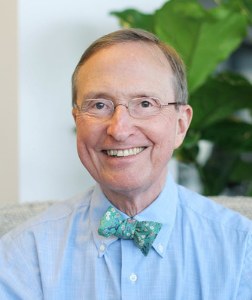
Click Here to View the Recording of Session 2

Session 3: Why is Biodiversity so Important?

Tom Lovejoy, President of the Amazon Biodiversity Center, Senior Fellow at the United Nations Foundation

Tom LovejoyTom Lovejoy, known as the “Godfather of Biodiversity”, is a conservation biologist. He is the founder and president of the Amazon Biodiversity Center, and a Senior Fellow at the United Nations Foundation. He has served on science and environmental councils under the Reagan, Bush, and Clinton administrations, and is credited with bringing the global tropical deforestation to public attention, as well as coining the term “biological diversity.”
Click Here to View the Recording of Session 3

Session 4: Combating Desertification

Uriel Safriel, former Director of the Jacob Blaustein Institutes for Desert Research of the Ben-Gurion University of the Negev, and former Chair of the Science and Technology Committee of the United Nations Convention on Combatting Desertification

Uriel SafrielUriel Safriel is a Professor Emeritus of the Hebrew University of Jerusalem, Israel. His research areas are marine and desert populations, and community and ecosystem ecology, predominately studying birds and mollusks. His appointments include Chief Scientist of Israel Nature and Parks Authority, Director of the Jacob Blaustein Institutes for Desert Research, Chair of Israel Man and Biosphere National Committee, and Chair of the Science and Technology Committee of the United Nations Convention to Combat Desertification, and its Science-Policy Interface. He is also a member of The Lab’s Advisory Board.
Click Here to View the Recording of Session 4

Session 5: The Economics of Sustainability

Hazel Henderson, futurist, economics iconoclast, best-selling author, and producer for the public television series “Ethical Markets”

Hazel HendersonHazel Henderson is a futurist and an economics iconoclast. She is the founder of Ethical Markets Media, a media company promoting the emergence of a sustainable, green, more ethical and just economy worldwide, and the producer of the Ethical Markets television series. She is the author of several books, including the award-winning Ethical Markets: Growing the Green Economy, and her writing has appeared in newspapers and journals around the world.

Click Here to View the Recording of Session 5

Session 6: Sustainability in the Developing World

Ashok Khosla, former co-chair of United Nations Environment Programme’s International Resource Panel (UNEP-IRP), and Founder and Chairman of Development Alternatives

Dr. Ashok KhoslaAshok Khosla is an environmentalist and sustainable development expert. He is the founder and chairman of Development Alternatives, a research and action organization striving to deliver socially equitable, environmentally sound and economically scalable development outcomes, and the former co-chair of United Nations Environment Programme’s International Resource Panel. He is also a member of The Lab’s Advisory Board.
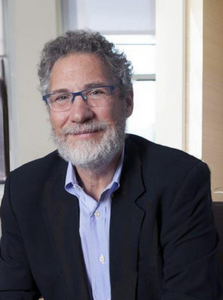

Click Here to View the Recording of Session 6

Session 7: Urbanization and Sustainability

Jonathan Rose, urban planner, author, co-founder of the Garrison Institute, and Founder and President of Jonathan Rose Companies, LLC

Jonathan RoseJonathan Rose is an urban planner and is considered a visionary in urban development. He is the Founder and President of Jonathan Rose Companies, LLC, known for developing affordable, green, and environmentally responsible communities. He is the author of The Well-Tempered City: What Modern Science, Ancient Civilizations, and Human Nature Teach Us About the Future of Urban Life. He co-founded the Garrison Institute, and he sits on the Boards of various nonprofit organizations.


Click Here to View the Recording of Session 7

Session 8: Art and Sustainability

Patricia Watts, curator, writer and founder, ecoartspace

Patricia WattsPatricia Watts is a curator and writer. She is the founder of ecoartspace, an international arts organization specializing in artists who engage the human-nature interface. She has curated over thirty exhibitions related to art and ecology, including I AM WATER (2021), Performative Ecologies (2020), Contemplating OTHER (2018), Enchantment (2016), FiberSHED (2015), Shifting Baselines (2013), MAKE:CRAFT (2010), and Hybrid Fields (2006). Watts has delivered numerous workshops and lectures related to arts and the environment, and is the author of dozens of essays for a variety of online and printed publications.
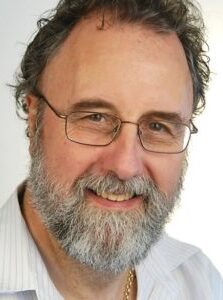
Click Here to View the Recording of Session 8

Session 9: Urgent Need For Change

Sir Robert Watson, CMG, FRS, scientific advisor, scientist, and lead author of the February 2021 U.N. Report Making Peace with Nature

Sir Robert WatsonRobert Watson’s career has included scientific advisor in the Office of Science and Technology Policy, White House; chief scientist, World Bank; chief scientific advisor, UK Department of Environment, Food and Rural Affairs; and strategic director for the Tyndall Center, University of East Anglia, UK.  He has chaired, co-chaired or directed the WMO/UNEP stratospheric ozone depletion assessments, Global Biodiversity Assessment, Millennium Ecosystem Assessment, UK National Ecosystem Assessment and its Follow-on, Intergovernmental Panel on Climate Change, the Intergovernmental Assessment of Agricultural Scientific and Technology for Development, the Intergovernmental Science-Policy Platform for Biodiversity and Ecosystem Services, and UNEP’s Making Peace with Nature. Awards include a Knights Bachelor (2012), Companion of the Order of Saint Michael and Saint George (2003); Fellow of the Royal Society (2011), member of the American Philosophical Society (2020), honorary member of the AMS (2021), UN Champion of the World for Science and Innovation (2014), the Asahi Glass Blue Planet Prize (2010).
Click Here to View the Recording of Session 9

Session 10: Only 2% More!

Jason Rhys Parry is Senior Content R&D at Sapienship, a global impact company co-founded by Yuval Noah Harari and Itzik Yahav.

Jason ParryJason Rhys Parry is Senior Content R&D at Sapienship, a global impact company co-founded by Yuval Noah Harari and Itzik Yahav, where he helps advance solutions to humanity’s most pressing problems. Jason is also a Visiting Research Fellow at the Research Institute for Humanity and Nature in Kyoto, Japan. Previously, he was a visiting assistant professor at Purdue University, where he led seminars on existential risk and wrote and directed a play for a mixed audience of human and AI spectators. He has received grants and awards from English PEN, the National Science Foundation, and the Future Architecture Platform, and published widely on environmental philosophy, sustainable design, and the geopolitics of technology. 
Click Here to View the Recording of Session 10

Session 11: Gaia’s Dance: Nature’s Guide to a Better World

Elisabet Sahtouris is an evolution biologist, futurist, author, and consultant on Living Systems Design.

Elisabeth SahtourisElisabet Sahtouris, Ph.D—internationally known as a dynamic speaker and media personality—is an evolution biologist, futurist, author and consultant on Living Systems Design. Dr. Sahtouris shows the relevance of biological systems to organizational design in businesses, government, and global trade. Her books include A Walk Through TIme: From Stardust to UsBiology Revisioned, co-authored with Willis Harman, and EarthDance: Living Systems in Evolution.

Click Here to View the Recording of Session 11

Session 12: Alternative Currencies and Solar Dollars

Thomas H. Greco, Jr., is a pre-eminent scholar, author, and educator who has been working at the cutting-edge of transformational currency restructuring.

Thomas H. Greco, Jr.Thomas H. Greco, Jr. has been widely regarded as a leading authority on moneyless exchange systems, community currencies, financial innovation, and community economic development. He is a sought-after speaker internationally whose expertise includes monetary theory, complementary currency and exchange systems, statistics, survey research, and computer applications. Tom has been an advisor to currency and reciprocal exchange projects around the world and has authored numerous articles and books including his highly acclaimed, The End of Money and the Future of Civilization (Chelsea Green, 2009). He continues to publish his visionary ideas about the changing economic, social, and political scene in various online journals and on his main website. He holds degrees in engineering and management, and formerly held a tenured faculty position at Rochester Institute of Technology (USA).
Click Here to View the Recording of Session 12

Session 13: Healing the Self: The Path for Healing the Planet

Deepak Chopra is a world-renowned pioneer in integrative medicine and personal transformation.

Deepak ChopraDeepak Chopra MD, MD, FACP, FRCP founder of The Chopra Foundation, a non-profit entity for research on well-being and humanitarianism, and Chopra Global, a modern-day health company at the intersection of science and spirituality, is a world-renowned pioneer in integrative medicine and personal transformation. Chopra is a Clinical Professor of Family Medicine and Public Health at the University of California, San Diego and serves as a senior scientist with Gallup Organization. He is also an Honorary Fellow in Medicine at the Royal College of Physicians and Surgeons of Glasgow. He is the author of over 90 books translated into over forty-three languages, including numerous New York Times bestsellers. For the last thirty years, Chopra has been at the forefront of the meditation revolution and his 93rd book, Living in the Light (Harmony Books) taps into the ancient Indian practice of Royal Yoga and offers an illuminating program for self-realization, bliss, and wholeness. TIME magazine has described Dr. Chopra as “one of their top 100 most influential people.” www.deepakchopra.com
Click Here to View the Recording of Session 13

Session 14: Gross National Happiness

Karma Tshiteem is the former Secretary of the Gross National Happiness Commission in Bhutan.

Karma TshiteemDasho Karma Tshiteem is Chairman of the National Service Core Working Group, established to oversee the setting up of Bhutan’s National Service as a platform, in line with the vision of His Majesty the King; to help youth unleash their full potential as individuals and as citizens, and to protect and promote the interest of the country. He also serves on the Governing Board, and as faculty, in the Royal Institute of Governance and Strategic Studies; as a member of the Governing Board of The Druk Gyalpo’s Institute in Bhutan, and as Chairman of Bhutan National Bank and the Natural Resources Development Corporation. Prior to that, Dasho Karma Tshiteem served as the Chairman of the Royal Civil Service Commission until March 2019, and from 2007 to 2014, as Secretary of the Gross National Happiness Commission, the main planning agency responsible for ensuring that Bhutan’s development leads to Gross National Happiness (GNH). Outside of Bhutan, he has worked in the World Bank and represented Bhutan in the UN Open Working Group on the Post-2015 development agenda. He was also a speaker at the 2021 version of the Future Congress.
Click Here to View the Recording of Session 14 

Session 15: Energy for All, Forever

Edward I. Moses is the founder and CEO of Longview Fusion Energy Systems and former director of the National Ignition Facility at the Lawrence Livermore National Laboratory.

Edward I. MosesDr. Edward Moses is a global leader in the science, technology, and application of carbon-free baseload fusion energy for applications to electricity production. He has more than four decades of experience in engineering, physics, cross-cutting technologies, and management and leadership in the design, construction, commissioning, and operations of multi-billion dollar ‘big science’ projects. As director of the National Ignition Facility at the Lawrence Livermore National Laboratory, Dr. Moses pioneered the use of laser technology and forged cooperative efforts among academia, national and international laboratories, commercial companies, utility entities, and others. Dr. Moses is currently CEO of Longview Fusion Energy Systems, which he recently launched with a mission to accelerate the move to a carbon neutral economy by bringing laser fusion energy to the global grid.
Click Here to View the Recording of Session 15

Session 16: The Cosmic Connection - Awakening the Noospheric Imagination

Brian Thomas Swimme is Director of the Center for the Story of the Universe

Brian SwimmeBrian Thomas Swimme is Director of the Third Story at Human Energy, a nonprofit public benefit organization, and professor at the California Institute of Integral Studies in the Philosophy, Cosmology, and Consciousness program. Dr. Swimme did his doctoral work in gravitational dynamics in the Department of Mathematics at the University of Oregon. His newest book is Cosmogenesis, the story of his transformation from modern to noospheric consciousness. His media work includes the video series, “The Story of the Noosphere,” written with Monica DeRaspe-Bolles, and the Emmy-award winning “Journey of the Universe” film, written with Mary Evelyn Tucker. (Home – Center for the Story of the Universe ).

Click Here to View the Recording of Session 16

Session 17: Light Pollution and Sky Protecting Initiatives

Antonia Varela Pérez is an astrophysicist, and researcher at the Instituto de Astrofísica de Canarias

Dr. Antonia Varela, Director of the Starlight Foundation, has a PhD in Astrophysics and is a researcher at the Instituto de Astrofísica de Canarias where she has worked since 1988, formerly as Senior Engineer. Dr. Varela is President of Association BPW (Business & Professional Women) Canarias within BPW Spain and BPW International. Recently elected to be Director of the Museum of Science and Cosmos of Santa Cruz de Tenerife. She is a member of the International Astronomical Union, the Spanish Society of Astronomy, the Spanish Network of Studies on Light Pollution and she leads the Starlight Foundation’s Working Group on Scientific Tourism/Astro-tourism of Affiliate Members of the UNWTO constituted in September 2019.
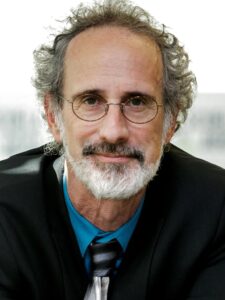
Click Here to View the Recording of Session 17

Session 18: Water

Peter H. Gleick, leading scientist, innovator, and communicator on global water and climate issues.

Peter Gleick by Wendy GregoryIn the 18th session of The Lab’s conversation series, we welcome Peter H. Gleick, leading scientist, innovator, and communicator on global water and climate issues. Based on his new book, “The Three Ages of Water”, Gleick, in this conversation with Michael Ben-Eli, founder of The Sustainability Laboratory, will explore the unique significance of water, the dynamics of our planet’s hydrologic cycle, water-humans interplay throughout history, the role of water in the development of our civilizations and cultures, the current water crises, and his positive vision for the future addressing how we can solve these crises.
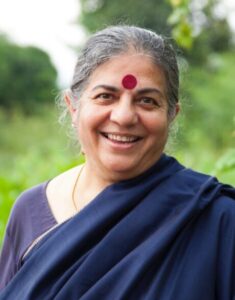
Click Here to View the Recording of Session 18

Session 19: Shifting the Paradigm

Vandana Shiva is a world-renowned environmental thinker, activist, feminist, philosopher of science, writer and science policy advocate

Vandana ShivaVandana Shiva is the founder of the Research Foundation for Science, Technology and Ecology, Navdanya, and Bija Vidyapeeth “Earth University” in Uttarakhand, India. Trained as a Physicist at the University of Punjab, she completed her Ph.D. on the ‘Hidden Variables and Non-locality in Quantum Theory’ from the University of Western Ontario, Canada. She later shifted to inter-disciplinary research in science, technology and environmental policy, which she carried out at the Indian Institute of Science and the Indian Institute of Management in Bangalore, India. In 1982 she founded the Research Foundation for Science, Technology and Ecology (RFSTE), an independent research institute that addresses the most significant problems of ecology of our times, and two years later, Navdanya (‘nine seeds’) the movement in defense of biodiversity and the contributions made to the climate, environment and society by small farmers. The recipient of many awards, including the Right Livelihood Award, (the ‘Alternative Nobel Prize’) and the Sydney Peace Prize, she has been named among the top five “Most Important People in Asia” by AsiaWeek. She is a prolific writer and author of numerous books and serves on the board of the International Forum on Globalization, and a member of the executive committee of the World Future Council.

Click Here to View the Recording of Session 19

Session 20: Older Cosmologies and the Coming Metaphysical Revolution

Anne Baring is an historian, author, and Jungian analyst.

Anne Baring is an historian, author, and Jungian analyst. She received a BA (1953) and MA (1981) in Modern History from Oxford University. In 2018, she received an honorary PhD in Wisdom Studies from Ubiquity University. During the 1950s, Anne travelled widely in India and the Far East before training and practicing as a Jungian analyst. She is a 30-year member of the Scientific and Medical Network and is an honorary member of The Association of Jungian Analysts, London. She has lectured for many years in both the United Kingdom and the United States. Her recent online seminar courses combine 60 years of research and her interest in psychology, history, politics, mythology, art, fairy tales and alchemy. She is the author and co-author of eight books, including her most recent, Messages from a Transcendent Dimension (2023), and The Dream of the Cosmos: A Quest for the Soul (2013 and 2020) which sums up her life’s work.
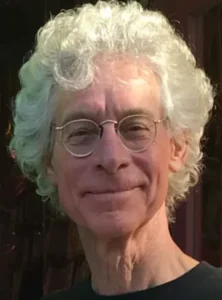
Click Here to View the Recording of Session 20

Session 21: Humanity’s ET Moment?!

Jim Garrison is Director of the Washington, DC Office of the New Paradigm Institute.

man with white hairJim Garrison, PhD, serves as Director of the Washington, DC Office of the New Paradigm Institute where he focuses on the US Government release to the public of information pertaining to Unidentified Anomalous Phenomena (UAP). He also serves as Convener of Humanity Rising Network, a daily global broadcast on issues of global concern. Jim served as Founding President of Ubiquity University from 2005 – 2023. He continues to be involved with Ubiquity on the Board and as President Emeritus. He was co-founder and President of the Gorbachev Foundation/USA (1992 – 1995) and President of the State of the World Forum (1995 – 2004) with Mikhail Gorbachev serving as Convening Chairman. Jim received his B.A in History from the University of Santa Clara, an MA in History of Religion from Harvard University, and a PhD in Philosophical Theology from Cambridge University. He has written numerous books, including The Plutonium Culture, America as Empire, The Darkness of God: Theology after Hiroshima, Citizen Diplomacy, and Civilization and the Transformation of Power. He lectures on comparative philosophy and religion, world history and politics, and the implications of humanity’s contact with Extraterrestrial Intelligences.
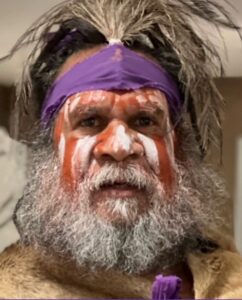
Click Here to View the Recording of Session 21

Session 22: Lessons From Indigenous Wisdom

First Nations Bruce Shillingsworth is a Muruwari and Budjiti elder from Australia.

man with painted faceFirst Nations Bruce Shillingsworth, a Muruwari and Budjiti elder from Australia, represents the ancient tradition of his indigenous community. He is an activist and an outspoken advocate of the rights for water, land, and all people. Deeply committed to environmental justice and the well-being of his community, Bruce has been a vocal advocate for addressing climate change and its impact on Indigenous communities and is a cultural educator on First Nations wisdom and knowledge to heal Mother Earth. He has been educating young people in Australia about First Nations history and responsibility to living sensibly and sustainably. His resilience, commitment, and deep connection to land and tradition have left a lasting impact and he continues to inspire and shape the path forward for Indigenous communities.

Click Here to View the Recording of Session 22.

Session 23: Horticulture, Diversity, and Urban Scapes

Rebecca McMackin is an ecological horticulturist and a green space designer.

woman in a black hat sitting in a garden of treesAs the Arboretum Curator at Woodlawn Cemetery in the Bronx, Rebecca tends to one of NYC’s finest tree collections, restores historic grave sites, and reintroduces ecological functionality to 400 acres of urban greenspace. Before her current role, she spent a decade as Director of Horticulture at Brooklyn Bridge Park, managing eighty-five organic acres and fostering habitats for birds, butterflies, and soil microorganisms. Rebecca, a 2023 Harvard Loeb Fellow, studied ecological design, history of native plant movements, and science communication, and holds M.Sc. degrees in Biology (University of Victoria) and Landscape Design (Columbia University). She received the 2023 Pollinator Advocacy Award from Pollinator Partnership. Rebecca’s research has influenced urban biodiversity practices and ethical management strategies, and her dedication to enhancing beauty and biodiversity extends across city landscapes. Notably, her garden at Brooklyn Museum demonstrates that ecological gardens thrive even in bustling public areas. Rebecca lectures on garden politics, landscape management, and pollination ecology. She has contributed to publications like the New York Times and appeared on PBS’s Garden Smart, among other programs.

Click Here to View the Recording of Session 23.

Session 24: Can AI Serve as a Catalyst for An Inclusive and Ethical Sustainability Revolution?

Mariana Bozesan is a polymath, AI pioneer, and successful serial tech-entrepreneur.

blonde lady wearing black-framed glassesDr. Mariana Bozesan is a polymath, AI pioneer, and successful serial tech-entrepreneur. She is the architect of Integral Investing and an award-winning investor. Her Moonshot is the investment turnaround that uses exponentially growing technologies to address humanity’s existential threats, aiming to decarbonize the global economy and accelerate the UN SDGs by 2050. A women’s rights activist, she co-initiated the Equality Moonshot with UNCTAD. Dr. Bozesan is a strategic advisor to governments, corporations, and NGOs, and has received numerous accolades, including the Golden Angelina Award (Europe’s Female Angel Investor, 2019) and the European Business Angel Network (EBAN) Award (Best European Early Stage Investor, 2016). She is a full member of the prominent international Club of Rome, a Fellow of the World Academy of Art and Science, and the author of several books, including Integral Investing: From Profit to Prosperity. She studied Computer Science and AI at Stanford University and Karlsruhe Institute of Technology (KIT) and holds a Ph.D. in Psychology.

Click Here to View the Recording of Session 24

Session 25: Toward the Net Zero City

Farah Naz is an author, built environment engineer, and climate strategist.

Woman with a headwrap and scarf.

Farah Naz is a built environment engineer, award-winning climate change strategist, and the author of the Middle East’s first NetZero book, “Net Zero City,” along with the children’s book “Mission Zero.” With 20 years of experience in the built environment across the US, UK, Southeast Asia, and the Gulf Region, she has been named one of the Most Influential Women of the Year (2024) and was awarded Sustainability Consultant of the Year in 2022 and 2023. Farah has led sustainability efforts for iconic projects like the Museum of the Future, Louvre Abu Dhabi, Bee’ah HQ in Sharjah and the Expo 2020 Sustainability Pavilion. She was the Sustainability Technical Director for COP 28 and ADIPEC. A Chartered Engineer and Fellow of CIBSE, she promotes best practices in urban sustainability and advocates for STEM education for future generations.

Click Here to View the Recording of Session 25

Session 26: The Sacred Connection

Mindahi Bastida is the founder and convenor of The Earth Elders

Man standing next to a large eagle

Mindahi Bastida, Founder and Convenor of The Earth Elders, was Director of the Original Nations Program of the Fountain 2020 through 2023 and, until July 2020, the Director of the Original Caretakers Program at the Center for Earth Ethics, Union Theological Seminary in the City of New York. Mindahi is also General Coordinator of the Otomi-Toltec Regional Council in Mexico and caretaker of the philosophy and traditions of the Otomi-Toltec peoples. He has been an Otomi-Toltec Ritual Ceremony Officer since 1988, and is a consultant with UNESCO around Sacred Sites and Biocultural issues. Born in San Pedro Tultepec, Lerma, Mexico, Mindahi holds a doctorate in Rural Development from the Universidad Autoěnoma Metropolitana, achieving the University Medal of Merit; a M.A. in Political Science from Carleton University, Canada; and a Bachelor of Tourism from the Universidad Autónoma del Estado de Mexico. He has written on the relationship between the State and Indigenous Peoples, intercultural education, collective intellectual property rights and associated traditional knowledge, among other topics.

Click Here to View the Recording of Session 26

Session 27: Rethinking The World Economy

John Fullerton is the founder of Capital Institute

John Fullerton is an unconventional economist, teacher, writer, impact investor, and some have said philosopher. He is considered the architect of Regenerative Economics and its companion Regenerative Finance, built on a foundation of complex adaptive-living systems science and first presented in his book Regenerative Capitalism (2015). John is the founder of the Capital Institute, dedicated to the bold reimagination of economics and finance, aligned with and in service to life. Previously he was a managing director of “the old JPMorgan” until walking away from Wall Street in 2001 with no plans and many questions. John is also the co-founder of Grasslands, LLC, a board member of the Savory Institute, and a member of the Club of Rome. He teaches two online courses with a growing alumni base from over 50 countries and speaks internationally to public audiences and universities. John was featured in the 2021 award-winning documentary Going Circular.
Click Here to View the Recording of Session 27

The Role of Philanthropy in Advancing the Sustainability Agenda

Sonia Cummings is an entrepreneur, activist, and philanthropist

Sonia Cummings_SLSonia Cummings is a driven entrepreneur, activist, and philanthropist who for over two decades has been passionately addressing issues related to the climate crisis, coexistence, arts, and culture. She is currently serving on the boards of Adamah, Artis Contemporary, and Limmud North America, and has also served as a trustee for numerous organizations, including the Medici Archives, the Santa Monica Museum of Art, the Friends of the Arava Institute, the Nathan Cummings Foundation, and I Am Your Protector (IAYP), for which she was awarded a UN Leadership Award in 2019. With 25 years of experience in the design industry as a designer and trend forecaster, Sonia has also contributed extensively to product development across Asia, France, and the United States. Alongside her professional achievements, Sonia is also a skilled fine arts painter and is currently working on a book that focuses on memory and tradition.

Postponed Until Further Notice

For more information about Exploring the Sustainability Challenge and to register for the event, click here.
We hope to see you there!

PROJECT WADI ATTIR: SPRING 2021 UPDATE

It’s springtime at Project Wadi Attir! Spring is arguably one of the most beautiful seasons at the project, with greenery cascading across the landscape. Spring also tends to be an optimistic time, and this year is no exception. Now more than a year into the COVID-19 pandemic, Project Wadi Attir has persevered through many new and unforeseen challenges. We’ve faced the temporary closure of our tourism and educational departments, navigated reduced incomes from onsite operations, and grappled with the logistical difficulties of working throughout a pandemic. Yet throughout the last year we also tapped into many new opportunities, working hard to strengthen the core of the project, equip staff with new leadership training, explore remote offerings, and more. It hasn’t been easy, but with spring unfolding around us and many new possibilities for growth before us, we’re feeling optimistic for good things to come.

The following update shares some notable news from Project Wadi Attir during the past year. Read on for the latest from Project Wadi Attir!

Lina Alatawna at Project Wadi Attir, March 2021
A group of students from the Jewish National Fund (JNF) visiting Project Wadi Attir for a volunteer activity
Biogas demonstration at the Visitor’s Center at Project Wadi Attir
Pools of rainwater harvested onsite in 2021

ANNOUNCING OUR CONVERSATION SERIES: EXPLORING THE SUSTAINABILITY CHALLENGE

Join us for the launch of our conversation series:

Exploring the Sustainability Challenge

Meeting the global sustainability challenge requires a fundamental shift in the way we look at the world, engage with each other and with all other forms of life, and manage human affairs. Our capacity for thinking in new paradigms and pursuing creative experimentation is essential and urgently needed.

The Sustainability Laboratory, a not-for-profit research, development and educational organization, was established in 2008 in order to develop, demonstrate and facilitate innovative approaches to sustainability practices, thereby expanding prospects, and producing positive, life-affirming impacts on people and ecosystems in all parts of the world. 

In our work, we seek to achieve deep, transformational results. We also recognize that the sustainability issues we are facing require unprecedented new levels of collaboration and cooperation amongst those engaged in advancing the sustainability agenda.

To advance the cause, The Sustainability Laboratory is launching a new forum for the exchange of ideas, and we invite you to join us for our inaugural “Exploring the Sustainability Challenge” conversation series.

We will be engaging thought leaders from around the world in conversations exploring key ideas related to some of the most urgent topics of our time.

Please join us for a free, monthly, live conversation via Zoom. 

To RSVP and receive a link to the event, including the time and format, kindly click the button below:

The program includes:

April 29th: Setting the Context: Sustainability is a System’s StateMichael Ben-Eli, founder, The Sustainability Laboratory, interviewed by Elizabeth Thompson, former Executive Director, the Buckminster Fuller Institute.

May 26th:  The Science of Climate Change with Jennifer Francis, Senior Scientist at the Woodwell Climate Research Center.

July 6th: Why is Biodiversity so Important? with Tom Lovejoy, President of the Amazon Biodiversity Center, Senior Fellow at the United Nations Foundation.

July 21st: Combating Desertification with Uriel Safriel, former Director of the Jacob Blaustein Institutes for Desert Research of the Ben-Gurion University of the Negev. Formerly Chair of the Science and Technology Committee of the United Nations Convention on Combatting Desertification.

September 22ndThe Economics of Sustainability with Hazel Henderson, futurist, economics iconoclast, best-selling author, and producer for the public television series “Ethical Markets”.

October 27th: Sustainability in the Developing World with Ashok Khosla, former co-chair of the United Nations Environment Programme’s International Resource Panel (UNEP-IRP), and Founder and Chairman of Development Alternatives.

November 18th: Urbanization and Sustainability with Jonathan Rose, urban planner, author, co-founder of the Garrison Institute, and Founder and President of Jonathan Rose Companies, LLC.

December 14th: Art and Sustainability with Patricia Watts, curator, writer, and founder of ecoartspace.

Flyer-Image_No-Button-1187x1536

REST IN PEACE, SHAI ZAUDERER

The Sustainability Laboratory team is sad to report the untimely passing of Shai Zauderer, a dear friend of The Lab. Shai was involved with our work since The Lab’s inception, and was essential in developing the branding of our organization. He was an indispensable member of the Project Wadi Attir team, and invested his talent and energy since the project was launched. Shai was loved by all, and he will truly be missed.

Shai working on product design at Project Wadi Attir
Shai with the Project Wadi Attir team during a team building activity

2020 PRIZEWINNER ANNOUNCED!

In a year that was different from all others, we are pleased to have been able to continue our annual tradition of The Lab’s Sustainability Prize at EARTH University. The December 2020 prize ceremony marked the 11th year of the program, and the beginning of a now-annual runner-up prize.

The Sustainability Prize is awarded annually to the student project that best exemplifies The Lab’s five core principles of sustainability. In the past, we awarded a single $10,000 prize to the winning project. Starting in 2020, we now offer an additional runner-up prize of $3,000. Proceeds of the prizes are typically invested by the winners in the continuation of their projects.

The 2020 first prize was awarded to Francely Concepción Flores, Juana Suar Domínguez, and Mónica Alejandra Montoya Grajales for the project: LlamaBrick. This project features the development of paper briquettes sourced from sawdust and community paper waste, serving as a less polluting alternative to burning firewood.

2020 PRIZEWINNER ANNOUNCED!
Francely Concepción Flores (middle) and Juana Suar Domínguez (right) (not pictured: Mónica Alejandra Montoya Grajales) on stage with Irene Alvardo (left) during the 2020 Sustainability Prize ceremony

The runner-up prize this year was awarded to the team of Dasha Montcalm Álvarez and José Andres Charpentier, who developed an educational website related to Indigenous food production techniques.

Dasha Montcalm Álvarez (right) and José Andres Charpentier (left), runner-up prizewinners

In spite of the restrictions posed by the COVID-19 pandemic, this year’s ceremony took place in person, with all attendees masked and socially distanced. Although The Sustainability Laboratory was not able to attend the ceremony in person, Lab founder Michael Ben-Eli sent a video message to the participants, and the ceremony was conducted by Prize program administrator and professor Irene Alvarado. Arturo Condo, President of EARTH University, Yanine Chan Blanco, Dean and Vice President of Academic Affairs, and Irmino Perera, EARTH University professor and Director of Student Life and Wellness, were also in attendance.

We look forward to learning how the prizewinners move forward in developing their projects, and we extend a special thank you to Ivor and Barbara Freeman and Joshua Arnow and Elyse Arnow-Brill for their continued support of The Lab’s Sustainability Prize at EARTH University.

« Back to Sustainability Prize News

INTERVIEW WITH LINA ALATAWNA, CEO OF PROJECT WADI ATTIR

Project Wadi Attir, the flagship initiative of The Sustainability Laboratory with a Bedouin community in the Negev, is a model for hope and positive change, empowering the Bedouin community while showcasing a transformative approach to sustainable development. We recently spoke with Lina Alatawna, CEO of Project Wadi Attir and a young woman from the Bedouin community, about how the project has grown over the years, her vision for the future, and more. We hope you enjoy this recent interview with Lina.

lina-ghadir-presentations-768x512
Lina Alatawna (right), CEO of Project Wadi Attir, with Ghadir Hani (left), Director of Tourism and Community Relationships at Project Wadi Attir, giving a presentation to a group of visitors

The Lab: What changes have you seen at Project Wadi Attir, personally and project-wide, over the years?

Lina: Everything is different now, in a good way! Even me. Comparing myself when I began working at Project Wadi Attir to myself now, I’m totally not the same person. I notice these changes with the other staff as well. We have all changed significantly throughout our time at Project Wadi Attir.

Personally, I have taken many huge steps. For example, now I feel that I am so much more patient with the employees, and with people in general. Before, I wanted things to go faster, and sometimes got frustrated if things didn’t go the right way. Now I can take a deep breath and think more clearly about the situation, and evaluate it in a better way to make the right decision. I can handle all sorts of high-pressure situations. If something goes wrong in the project, I can stop and think, and help make everybody calmer. These kinds of skills I didn’t have before. I feel more confident, calmer in a good way, and better able to see things clearly and make the right decisions. I’m so grateful to Project Wadi Attir. For me it has been huge, and also for the other people in the project.

More broadly, when I came to Project Wadi Attir in 2016, we just had two or three products in the dairy. Now we have many products from the different departments. It was as if we had created something from nothing. The project, just a few years ago, before all of the construction and everything, was just a desert. Now it’s like a paradise, something that nobody could have imagined, that we created this thing in just a few years.

Goats in pasture
Project Wadi Attir’s herd of goats and sheep out grazing in the regenerated farmlands onsite

The Lab: How have Project Wadi Attir and The Sustainability Laboratory have broadened your understanding of sustainability?

Lina: When I came to Project Wadi Attir, I had many thoughts and ideas about each of the elements that the project was working on, but I didn’t have a full and clear understanding of sustainability. Now I deeply understand The Sustainability Laboratory’s approach to sustainability, and five core sustainability principles developed by Michael Ben-Eli, which have been driving the development of Project Wadi Attir. It’s almost philosophical! When you’re inside the project, when you see everything in the project come together, all the five dimensions—everything works together harmoniously. The herds, dairy, green technologies, medicinal plants, indigenous vegetables, tourism, education, community outreach, and more… It makes you realize that the approach makes sense, it’s organized, it’s how it’s supposed to be. Everything that we do at Project Wadi Attir relates to the five dimensions of sustainability. Before I came to the project I never thought about sustainability in this way, and now I realize that it’s huge, and that it’s more important than I thought it was.

Visitors in PWA
International youth group at the Visitor’s Center of Project Wadi Attir

The Lab: What is your vision for the future of Project Wadi Attir?

Lina: My vision is to see Project Wadi Attir completing all of its ongoing goals, such as finishing the integrated infrastructure of green technologies, and reaching financial self-sufficiency. There will always be more goals and more targets that we need to reach, but in the long-term I would like to see Project Wadi Attir copied in different desert areas in the world, replicated with other communities. To show the whole world that a small society—any small community, like the Bedouin community, that has its own traditional knowledge and own values—given the chance can do incredible things. These communities have knowledge to teach and share with others. I would like to see the knowledge generated at Project Wadi Attir serving many communities around the world, not just the Bedouin community and not just in Israel.

Agriculture in PWA
Bedouin women staff at Project Wadi Attir tending to the medicinal plants fields

The Lab: Tell us about some of the social innovations of Project Wadi Attir.

Lina: People at Project Wadi Attir respect each other and accept each other. About 10 different Bedouin tribes are represented at the project. Even when project staff are from different tribes, these differences between tribes don’t matter in the project. We are all the same. If there is a fight between two tribes, and two people from those tribes work at the project, we don’t have a fight inside the project. The staff understand that they can’t bring it inside the project. That’s a big achievement. I tell every group visiting the project that this is one of our big successes at Project Wadi Attir, that about 30 people from more than 10 different tribes work together for the same goals, and the same vision. This is not common at all, not just in the Bedouin community, but I think in the Arab community in general. We all work as one team.

Members of diverse Bedouin tribes during a visit to Project Wadi Attir

I also see developments related to gender equality at Project Wadi Attir. For example, we have one staff member, a Bedouin woman, who works in housekeeping. When she first came to the project, she didn’t talk to anyone. She just dressed in black. She was so shy. I think this wasn’t because she was new on our team. She didn’t know what she was supposed to do, or what to expect from the people around. And today she’s talking and laughing. She feels free to tell us about herself—even with the guys, not just with the women at the project. Which is also not common at all in the Bedouin community. Every day, we all sit together, all staff from every department, for lunch. All the employees—men and women. Which is, again, not common in the Bedouin community at all. Personally, I see this as a big success of the project.

From left: Lina Alatawna with Michael Ben-Eli, founder of The Sustainability Laboratory and a founding member of Project Wadi Attir, and Mohammed Alnabary, founding member of Project Wadi Attir

The Lab: Finally, do you have any advice for Bedouin girls and women who may hope to one day become leaders in the community?

Lina: The most important thing is to believe in themselves. When they want something, when they aim to get something, they can do it. And nothing is impossible to reach. They just need to dig in and they can reach it. Bedouin girls have so much ability and potential. But unfortunately, not all Bedouin girls believe in themselves, so they don’t even know the power that they have. And they don’t know how much they can impact their community in a positive way.

Lina Alatawna, CEO of Project Wadi Attir

Lina is from the Bedouin township of Hura and holds a Master’s degree in Industrial Engineering and Management from Shamoon College of Engineering. She came to Project Wadi Attir in 2016 as the manager of the dairy, and was appointed to CEO two years later, at only 28 years old, in a groundbreaking example of female achievement in the Bedouin community. Her leadership has helped guide the development of the project, and through the hardships of the COVID-19 pandemic.

« Back to Wadi Attir News

Lab Founder Dr. Michael Ben-Eli To Speak At The 2020 Induction Ceremony Of The International Green Industry Hall Of Fame

Our founder, Dr. Michael Ben-Eli, will be a featured speaker at the 8th annual International Green Industry Hall of Fame Induction Ceremony. The ceremony, which will take place on October 1st, 2020, will celebrate the achievements of twelve companies and individuals who demonstrate excellence in green industry.

Dr. Ben-Eli himself was inducted into the Intentional Green Industry Hall of Fame in 2015, where he received a Lifetime Achievement Award.

The upcoming event is online, free, and open to the public. To celebrate the new inductees and view Dr. Ben-Eli’s talk, register here. We hope to see you there!

IGIHOF_InductionCeremony2020_Invite-768x512

An Update From The Sustainability Laboratory, 5 Months Into The COVID-19 Pandemic

To all our friends and supporters, greetings from The Sustainability Laboratory! We hope this communication finds you, your colleagues, and your loved ones doing well and keeping safe.

As we approach the end of the summer, now more than five months after the COVID-19 pandemic was declared and swept throughout the world, at The Sustainability Laboratory we continue to work to address the great sustainability challenges facing the planet. We believe that while world society needs to focus on eliminating the virus and its rampant impacts, simultaneous attention to the long-term and to laying the foundation for a new and better tomorrow are now more urgent than ever.

For the moment, we are pleased to share that all of our programs have continued, albeit with modifications to adapt to COVID-times, while our staff continues to work remotely. Click here to read the full recap of recent developments at The Sustainability Laboratory.

Project Wadi Attir goats
Herds at Project Wadi Attir
Snapshot from the 2018 GSF summer session
The 2020 finalists for The Lab’s Sustainability Prize at EARTH University

PROJECT WADI ATTIR ADAPTS TO COVID-19 TIMES

The COVID-19 pandemic has prompted great changes to organizations throughout the world, and Project Wadi Attir is no exception. Here’s a brief update about how Project Wadi Attir is adapting to the COVID-19 pandemic, and some of the operational changes made onsite during the past few months.

In general, Project Wadi Attir has continued the bulk of its operations throughout the pandemic, though at a reduced capacity. Staff are observing social distancing rules and wear masks onsite.

Two departments, the tourism department and the education department, both temporarily shut down to protect the health of our students, visitors, and staff. The educational department  closed for the end of the 2019-2020 school year, and plans for the fall remain up in the air, depending on how the pandemic progresses. The tourism department shut down at the beginning of the pandemic, but as restrictions are easing in Israel the project has been able to receive limited, small tourist groups.

The herds remain happy and healthy, and continue to go out to the pasture daily for grazing and exercise. Now with even higher-quality fodder, milk production has increased substantially. The animals are regularly milked, and we continue to produce our premium dairy products. The demand for our dairy products has actually increased since the pandemic began!

Herds out enjoying the pasture at Project Wadi Attir

We continue to move forward on various construction initiatives onsite. We are currently in the planning stages of a new pen for the herds, and anticipate beginning construction by the end of the year. We are also working on securing the necessary permits to finalize the construction of our solar energy and storage system.

Meanwhile, staff are exploring different avenues to grow and develop the project, particularly those that can be accomplished remotely. We are exploring our options for online sales of our products, working on strengthening our social media presence, and are cultivating new partnerships.

Overall, we are incredibly proud of the staff at Project Wadi Attir, who have stepped up to take on even more responsibility in ensuring that Project Wadi Attir perseveres through the challenges of the COVID-19 pandemic. While this is a difficult time for all throughout the world, we are confident that thanks to the determination of our team we will see this challenge through as well, ensuring a bright and thriving future for Project Wadi Attir.

Every donation helps support Project Wadi Attir through the COVID-19 pandemic. Please consider making a contribution today! We thank you very much for your support.

Bedouin hospitality tent at Project Wadi Attir

FIVE YEARS AFTER THE PRIZE: INTERVIEW WITH ANTONY CASTRO RIVERA, 2014 PRIZEWINNER

After winning The Lab’s Sustainability Prize at EARTH University in 2014, as well as participating in our graduate-level Global Sustainability Fellows (GSF) program, we caught up with Antony Castro Rivera. He updated The Lab on the impacts of the Sustainability Prize and the GSF program in his work and life, and his many exciting professional and personal pursuits. Please enjoy this interview with Antony!

The Lab: You’ve participated in two different programs of The Lab—as a Sustainability Prizewinner in 2014 and as a Global Sustainability Fellows (GSF) program fellow in 2015. How have these experiences impacted you?

Antony: The Sustainability Prize of 2014 changed the course of my life. I had the opportunity to start the family business that my family and I envisioned. Earning the prize brought great satisfaction to all, and this inspired me to further invest my best efforts in the project.

Coming from a neighborhood where violence and poverty are usual, my chances for starting a business based on technical knowledge were very limited, but The Sustainability Laboratory and EARTH University believed in me and each gave me a chance. Thus, I could start to change my country by providing a useful product to those doing urban agriculture.

My participation in the 2015 GSF program opened up my narrow scientific perspective to one that integrates a vast framework of holistic concepts, which have been useful to me in addressing and preparing for projects about sustainability in Europe and Latin America. I got to understand the “system of beliefs” concept and the system dynamics approach to project development and implementation, which I found fundamental for understanding key stakeholders’ concerns, comprehensively integrating them, and thus maintaining projects viable through time after initial investments. It also impacted me deeply because I got to know about the necessities of the Martina Bustos community, which I thought impossible in Costa Rica.

Antony with 2015 GSF fellow Vanessa Armendariz during the 2015 GSF session, giving a presentation to GSF fellows, faculty, and members of the Martina Bustos community

The Lab: In 2014 you received The Lab’s Sustainability Prize at EARTH University for the project “Implementation of Model Adaptations for a Sustainable Urban Home in Heredia, Costa Rica”. What became of this project?

Antony: I continued the project for about two years after graduating. It grew and generated profit by providing urban agriculture products to customers in 4 provinces of Costa Rica.

We found passion for agriculture within city people, but they could not access what they needed to do it. So we became their providers.

As I wanted to be a better manager, I decided to study Sustainable Resource Management at the Technical University of Munich in Germany. Part of assets of the project served to finance my studies.

The plan was to keep running the business, but I miscalculated the time-difference effects on my ability to attend to the customers from Germany. Eventually, we decided to cease the family business until my return. Nonetheless, my grandpa kept using part of the infrastructure for producing vegetables, supplying our family with more than 15 types of vegetables. This has kept him happy, as he used to do agriculture with his father. This means a lot for all in my family.

Eco-friendly vertical farming in Antony’s prizewinning project: the system uses aromatic plants instead of pesticides to repel plagues; hydroponics and semi-automatized precise irrigation to optimize the use of water and fertilizer; and pyramidal structures with planting bags to optimize the use of space

The Lab: Tell us about what you’ve been up to recently.

Antony: I work doing research for the Technical University of Munich in a joint research project with the German Aerospace Agency. The project is called ForDroughtDet and its objective is identifying drought in trees at Bavaria, because climate change-driven extremely hot summers are significantly increasing tree mortality. We do that using high-technology sensors for inferring the vegetation’s drought affection based on information carried by light, which the human eyes cannot see.

As for personal, ad-honorem projects, I have taught programming to international master’s students. In the same manner, I worked for 1 year and 10 months doing research that made discoveries about the Amazon basin forest’s response to extreme drought, with researchers from Germany, Switzerland, Spain and Costa Rica. We did this by bridging maps on ecoregions (from the Resolve project) with a new satellite product which allow to see photosynthetic activity from space (from the OCO-2 satellite from NASA). My education from EARTH University allowed me to understand processes of the tropical forest. Once I understood what was going on, as a scientist, I felt the ethical responsibility of communicating it to my scientist peers. That could only happen through a scientific publication, so I fought hard for it. It was recently published.

I founded a German NGO called Gaia-liNc together with colleagues I met during my master’s studies. We come from Colombia, Ecuador, Costa Rica, Chile, Peru, and Germany. Gaia-liNc aims to create partnerships between Latin American and German institutions and organizations. Our purpose is to get insights on already identified necessities from the Latin American organizations and help to solve them with assets, technology and education from Germany. The German green-investment-infrastructure is very well developed, but is often not unreachable for the Latin American organizations because of a lack of knowledge on the options, a lack of a partner on the German side (us), and the German language barrier.

Also, I am currently exploring possible applications of the Amazonian photosynthesis discoveries with South American organizations and building a proposal to develop these. I hope I will get support, as so far, I have had to pay for most of the research expenses from my own funding. Moreover, I am building another proposal to work with Blockchain financial technology and waste management by integrating German and Latin American markets and institutions.

The Lab: Have you been able to apply The Lab’s approach to sustainability and five core principles in your work and life? If so, how?

Antony: It helped me to realize that sustainability work is best in teams. I learned at The Lab about the complexity of sustainability, and that I alone cannot cover all of The Lab’s “Five Core Principles of Sustainability” in my projects.

I have spread the five principles because usually people know the 3 pillars approach to sustainability. Some people struggle to acknowledge the spiritual domain, but I have experienced its importance in practice at projects in Peru and Africa. It is difficult to explain, but it connects people with their historic roots and that is a powerful asset.

Antony with a member of the Martina Bustos community during the 2015 GSF session

The Lab: Do you have any words of wisdom for participants in the Sustainability Prize competition?

Antony: To the Sustainability prize participants: if you weren’t doing what you are doing, is possible that there would be nobody doing it. Aim for the highest and be humble at the same time. Also, know when to stand for what you know, even when you work in interdisciplinary teams where others know more than you in their areas. Stand for what you believe in and what inspires you, because otherwise you may lose your passion and get lost. If you are passionate, you may be able to use most of the chances that appear in front of you before these vanish. The success should be envisioned, it won’t just happen.

The Lab: What are your plans for the future?

Antony: In the short-term, I plan to gather funding for continuing research on the Amazonian photosynthesis discoveries, or to do a PhD program in ecology, microorganisms and agriculture. My mid-term plans are to continue gathering skills and abilities that I can use to strengthen projects in the tropics, and help to pay for my sister’s university. And in the long-term, I plan on going back to the tropics for work, where I have been happiest. Meanwhile, I plan to support projects in Latin America through Gaia-liNc from Germany.

We wish Antony luck in all of his future pursuits, and we look forward to following his career moving forward!

« Back to Sustainability Prize News

WATER PURIFICATION THROUGH BIOFILTERS: INTERVIEW WITH THE 2019 PRIZEWINNER

The Lab’s 2019 Sustainability Prize at EARTH University was recently awarded to Yesenia Sandra Cahuana Condori for the project: YAKU sin límites (Water Without Limits). We spoke with Yesenia about how she developed the project and her plans to take it to scale in Arequipa, Peru. Please enjoy this interview with Yesenia!

Yesenia Sandra Cahuana Condori
José Andres Charpentier (left) and Dasha Montcalm Álvarez (right), 2020 second place Sustainability Prizewinners

The Lab: Why did you chose a water purification system as opposed to other sustainability related projects?

Yesenia: Water is the fundamental basis for human beings, and many waterbodies are very contaminated due to constant discharges of waste into rivers. If children consume clean and purified water, they will not suffer from ailments such as diarrhea. It’s important to address these problems at their root. Biofilters are unique in that they remove heavy metals from water, such as arsenic, lead, and chromium.

At EARTH University I researched how to purify water. I conducted many analyses about biofilters and their ability to remove heavy metals and other contaminants. I also created a prototype artisanal oven in which to fabricate the biofilters. This enabled me to know the approximate cost of production of the biofilters.

Prototype biofilters

The Lab: How are you planning on implementing this project in the future?

Yesenia: The project will be implemented in the city of Arequipa, Peru. My first step is to find the appropriate legal support in my country that will allow me to realize my project.

My plan is to employ local women, particularly single mothers. There are many local women who wish to work. It’s true that in order to form a business one needs to work with people who are business-savvy, and for that reason I will work on strengthening my association with female colleagues who want to support the project.

In 2020 I plan to focus on the project, processing the patent for the biofilters, establishing all of the necessary legal documents, and beginning the production and sale of the biofilters. The materials used in the fabrication of the biofilters I will have to obtain in Peru, from various industries. For example, fibers obtained from a company involved in sugar production. Also, based on the prototype artisanal oven that I created at EARTH University, I will create another oven in Peru. The women employed at the project will be involved in the fabrication and sale of the biofilters.

The Lab: Why did you chose the name YAKU?

Yesenia: YAKU means ‘water’ in Quechua. Later on I added the phrase “sín límites” (without limits). The project in general is called YAKU sin límites (Water Without Limits).

Prototype artisanal oven at EARTH University

The Lab: What was the influence of The Lab’s sustainability principles in developing YAKU?

Yesenia: I had been working on the project independently and as part of some class projects. However, I hadn’t presented it anywhere. Since presenting it in EARTH University’s Sustainability and Innovation Forum and obtaining the first-place ranking as a finalist, I began believing that my project was special and could achieve great things. This helped motivate me and keep me focused.

In the material domain, I sought to find waste materials from various companies, to reduce overall environmental impact. In the economic domain, my objective was to look for low-cost materials, so that the biofilters would be accessible by low-income populations. In the social domain, I am motivated to work with women, given that this is the population with the highest unemployment rate in my country, and women are also those who are in charge of raising children. In the domain of life, the project enables better quality of life of various people without harmful environmental impacts. And in the spiritual domain, I am working transparently to be able to implement my project.

The Lab: What’s your vision for the future of YAKU?

Yesenia: I envision that during the first few years YAKU will enable production of biofilters at the national level. Later I plan to expand production throughout Latin America and the world.

Left to right: Tobias Wuscher; Yesenia Sandra Cahuana Condori; Michael Ben-Eli, founder of The Sustainability Laboratory; Yanine Chan Blanco, Dean and Vice President of Academic Affairs; Mike Gucovsky, a Lab board member; and Róger Castellón Mora, EARTH University faculty member
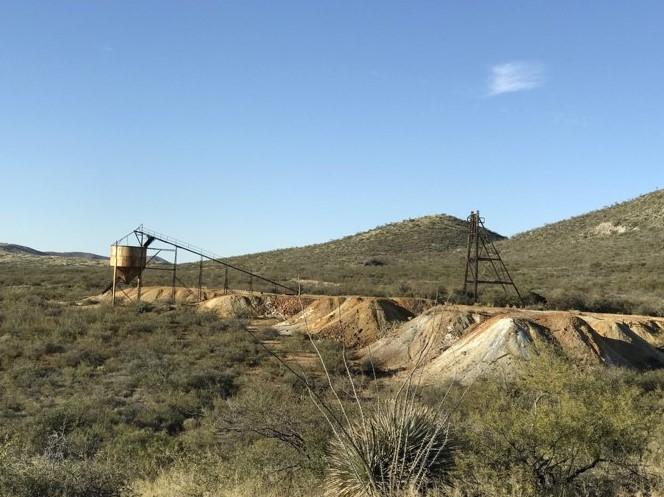

We wish Yesenia luck in her future pursuits, and we look forward to seeing how she implements her scale-up in the coming years! For more information about The Lab’s Sustainability Prize at EARTH University, please contact us at info[at]sustainabilitylabs[dot]org.

« Back to Sustainability Prize News

WATER PURIFICATION THROUGH BIOFILTERS: INTERVIEW WITH THE 2019 PRIZEWINNER

The Lab’s 2019 Sustainability Prize at EARTH University was recently awarded to Yesenia Sandra Cahuana Condori for the project: YAKU sin límites (Water Without Limits). We spoke with Yesenia about how she developed the project and her plans to take it to scale in Arequipa, Peru. Please enjoy this interview with Yesenia!


Yesenia with her winning certificate during the 2019 Sustainability Prize ceremony at EARTH University

The Lab: Why did you chose a water purification system as opposed to other sustainability related projects?

Yesenia: Water is the fundamental basis for human beings, and many waterbodies are very contaminated due to constant discharges of waste into rivers. If children consume clean and purified water, they will not suffer from ailments such as diarrhea. It’s important to address these problems at their root. Biofilters are unique in that they remove heavy metals from water, such as arsenic, lead, and chromium.

At EARTH University I researched how to purify water. I conducted many analyses about biofilters and their ability to remove heavy metals and other contaminants. I also created a prototype artisanal oven in which to fabricate the biofilters. This enabled me to know the approximate cost of production of the biofilters.


Prototype biofilters

The Lab: How are you planning on implementing this project in the future?

Yesenia: The project will be implemented in the city of Arequipa, Peru. My first step is to find the appropriate legal support in my country that will allow me to realize my project.

My plan is to employ local women, particularly single mothers. There are many local women who wish to work. It’s true that in order to form a business one needs to work with people who are business-savvy, and for that reason I will work on strengthening my association with female colleagues who want to support the project.

In 2020 I plan to focus on the project, processing the patent for the biofilters, establishing all of the necessary legal documents, and beginning the production and sale of the biofilters. The materials used in the fabrication of the biofilters I will have to obtain in Peru, from various industries. For example, fibers obtained from a company involved in sugar production. Also, based on the prototype artisanal oven that I created at EARTH University, I will create another oven in Peru. The women employed at the project will be involved in the fabrication and sale of the biofilters.

The Lab: Why did you chose the name YAKU?

Yesenia: YAKU means ‘water’ in Quechua. Later on I added the phrase “sín límites” (without limits). The project in general is called YAKU sin límites (Water Without Limits).


The prototype artisanal oven made by Yesenia at EARTH University

The Lab: What was the influence of The Lab’s sustainability principles in developing YAKU?

Yesenia: I had been working on the project independently and as part of some class projects. However, I hadn’t presented it anywhere. Since presenting it in EARTH University’s Sustainability and Innovation Forum and obtaining the first-place ranking as a finalist, I began believing that my project was special and could achieve great things. This helped motivate me and keep me focused.

In the material domain, I sought to find waste materials from various companies, to reduce overall environmental impact. In the economic domain, my objective was to look for low-cost materials, so that the biofilters would be accessible by low-income populations. In the social domain, I am motivated to work with women, given that this is the population with the highest unemployment rate in my country, and women are also those who are in charge of raising children. In the domain of life, the project enables better quality of life of various people without harmful environmental impacts. And in the spiritual domain, I am working transparently to be able to implement my project.

The Lab: What’s your vision for the future of YAKU?

Yesenia: I envision that during the first few years YAKU will enable production of biofilters at the national level. Later I plan to expand production throughout Latin America and the world.


Left to right: Tobias Wuscher; Yesenia Sandra Cahuana Condori; Michael Ben-Eli, founder of The Sustainability Laboratory; Yanine Chan Blanco, Dean and Vice President of Academic Affairs; Mike Gucovsky, a Lab board member; and Róger Castellón Mora, EARTH University faculty member

We wish Yesenia luck in her future pursuits, and we look forward to seeing how she implements her scale-up in the coming years! For more information about The Lab’s Sustainability Prize at EARTH University, please contact us at info[at]sustainabilitylabs[dot]org.

A NOTE FROM THE SUSTAINABILITY LABORATORY ON COVID-19

From all of us at The Sustainability Laboratory, we hope that this communication finds you well during this difficult moment for our planet.

At The Sustainability Laboratory, we have been closely monitoring the COVID-19 pandemic. Following recommended guidelines from the medical community, our staff have been working remotely, and travel to our various project sites has been suspended for now. We continue to connect digitally with our associates around the world, and our projects are advancing, although at a somewhat slower pace, in spite of the challenges before us. For a detailed update on Project Wadi Attir, our flagship development project with a Bedouin community in the Negev, and its response to the COVID-19 pandemic, please see our most recent update from the project.

We believe that, in the face of such a serious, global challenge, our work towards establishing the concept of sustainability as the organizing principle on the planet is now even more urgent than ever. We are working towards a future in which our planet enjoys a peaceful, productive, and life-affirming existence, with greater resilience in the face of crises such as the one we are experiencing now. We look forward to continuing and redoubling our efforts as we move forward.

Thank you. We wish you peace and good health.

The Sustainability Laboratory

To keep up with The Sustainability Laboratory, please find us on FacebookTwitterInstagramLinkedIn, and YouTube.

NEW VIDEO PRODUCED ABOUT THE GSF

We are happy to present this brand new video about our Global Sustainability Fellows (GSF) program, a graduate-level educational initiative of The Sustainability Laboratory. The video, which showcases the program’s unique features and impacts, was produced by GSF alumnus Yãm Aisner of Regenerative TV.

Liked this video? Don’t miss the video we had produced about The Sustainability Laboratory, and keep up with the latest media from The Sustainability Laboratory by subscribing to our Youtube channel.

THE LAB’S SYSTEMS THINKING & SYSTEMS MODELLING COURSE PUBLISHED AS AN E-BOOK

The Lab has been expanding its educational resources, and recently had its systems thinking and modelling curriculum published as an e-book: Systems Thinking & Systems Modelling: A Course for Understanding Systems and Creating Systems Models.

The e-book was developed in collaboration with Systems Innovation and Loops Consulting. It serves as a companion piece to The Lab’s online course, Systems Thinking & Systems Modelling, and is free and open source. These materials are part of The Lab’s growing systems education curriculum. They are used in our Global Sustainability Fellows (GSF) program, and are openly available for anyone who wishes to learn more about sustainability from a systems perspective.

Click here to download the e-book. We hope you enjoy it!

2019 PRIZEWINNER ANNOUNCED!

In December 2019, The Lab’s Sustainability Prize at EARTH University was awarded to Yesenia Sandra Cahuana Condori for the project: YAKU sin límites (Water Without Limits). The $10,000 prize is awarded annually to the student project that best exemplifies The Lab’s five core principles of sustainability. Yesenia plans to use the funds from the prize to implement her project in Arequipa, Peru.

YAKU is a project that involves the fabrication of biofilters—pollution control devices—to purify water. Through YAKU, Yesenia demonstrated a waste-to-resources approach by assembling biofilters from waste fibers from various industries. She initiated and led the construction of a prototype artisanal oven in order to produce and then extensively test the filters for their ability to remove contaminants from water. She found that biofilters were a viable and economical means of providing clean water to low-income families. She plans to take this project to scale in Arequipa, Peru, where her enterprise will employ women, particularly single mothers. Her ambition is to bring the project to production on a national, and later international, scale.

We look forward to learning how Yesenia moves forward with YAKU, and we extend a special thank you to Ivor and Barbara Freeman and Joshua Arnow and Elyse Arnow-Brill for their continued support of The Lab’s Sustainability Prize at EARTH University.

« Back to Sustainability Prize News

LAB FOUNDER DR. MICHAEL BEN-ELI RECEIVES COSMIC FISHING AWARD

On September 21st, 2019, Dr. Michael Ben-Eli was awarded the Synergetics Collaborative Cosmic Fishing Award during the 6th Biennial Design Science Symposium at the Rhode Island School of Design (RISD).

The Cosmic Fishing Award is given to those who demonstrate a dedication to advancing the use of Buckminster Fuller’s Design Science strategies in helping humanity better understand complex connections within natural systems.

The symposium explored the use of Design Science in addressing complex, real-world problems facing the planet. Dr. Ben-Eli gave a keynote presenting the work of The Lab, as rooted in Buckminster Fuller’s design legacy.

Peter Dean, RISD faculty member and President of Synergetics Collaborative, presenting Michael Ben-Eli with the Cosmic Fishing Award

LAB FOUNDER DR. MICHAEL BEN-ELI INTERVIEWED ON THE LEADING EDGE

Dr. Michael Ben-Eli, founder of The Lab, was recently interviewed by Dr. Michael Wayne, as part of Dr. Wayne’s program “Interviews with the Leading Edge.” Please enjoy this interview, as Michael discusses how The Lab came to be, the importance of taking a holistic, systems perspective when tackling issues of sustainability, and plans for the future of The Lab.

Please see also this introduction written by Michael Wayne introducing Michael Ben-Eli and the work of The Lab.

THE LAB FEATURED ON INNOVATION SHOWCASE

Dr. Michael Ben-Eli presented The Sustainability Laboratory and its work on Innovation Showcase, a Massachusetts-based television program that highlights companies, organizations, and individuals doing groundbreaking work in the fields of science, technology, business, education, and the arts.

During the 30-minute program, Dr. Ben-Eli was interviewed by the show’s host, Jay Sugarman, to discuss The Lab’s development over the last ten years, our portfolio of projects and programs, and plans for the future. We invite you to view the recording, and we hope you enjoy it!

FORESTRY, AGRICULTURE, AND POULTRY PRODUCTION: INTERVIEW WITH THE 2018 PRIZEWINNERS

The Lab’s 2018 Sustainability Prize at EARTH University was recently awarded to Mariana da Cruz Albertazzi and Raphaël Loubert for the project: Agrosilvopastoral system with free range laying hens. We spoke with the prizewinners about the benefits of agrosilvopastoral systems and their plans for a scale-up of this project. Please enjoy this interview with the prizewinners!

Mariana and Raphaël
Prizewinners Raphaël and Mariana at their pilot project

The Lab: Why did you decide to focus on an agrosilvopastoral system over other sustainability related projects?

Mariana and Raphaël: Our area of expertise is agronomy (a branch of agriculture that deals with soil and crop management). We focused on agrosilvopastoral systems because they rely on ecological principles that allow the closure of cycles, using the residual products of one production cycle to feed another, thus reducing the need for external inputs. For example, the animal component of the system (in this case, the hens) contributes to the control of weeds and pests, as well as the improvement of soil fertility with manure. The forestry component provides forage species (plants that are grown to be eaten by livestock), which are rich in nitrogen and serve as food for the animals and as a fertilizer for the soil. Finally, the agricultural component can generate short- or medium-term income for communities and food for the animals.

Taking into account that this type of system is environmentally sound, we proposed a project that can also be economically sustainable (by taking advantage of each available resource and its contributions) and socially (by functioning as a model farm and promoting the establishment of this type of business among the members of the community in which the project is located).

Construction of the chicken coop during the pilot project

The Lab: What made you choose to implement the scale-up of this project in Bajos del Toro?

Mariana and Raphaël: We decided to implement the project in Bajos del Toro because we have a family plot available to be developed there. It is also an advantageous location because this region of Costa Rica attracts a lot of eco-tourism, which makes it feasible to give the project an agro-eco-touristic approach. However, this kind of project can be developed in almost any part of the world, by taking into account that the animal and plant species implemented are suitable for the edaphoclimatic characteristics of the region.

The Lab: Based on what you learned from the pilot project, what changes do you plan to make when implementing it on a larger scale?

Mariana and Raphaël: In the pilot project we tested three diets for hens that had different proportions of concentrated feed and of the plant Alocasia macrorrhiza, with the aim of reducing food costs. We chose Alocasia macrorrhiza for this experiment primarily because it is a plant that has high nutritional value, grows easily, and requires little care at the agronomic level, making it an economically viable alternative to the use of concentrated feed. Thanks to this, we discovered that we can reduce the use of concentrated feed by 30%.

In addition, it was determined that a hen can control 95% of the weeds in 2.1 square meters in a period of 48 days, which will allow us to define the exact number of hens we need in a given area to control a certain percentage of weeds and, in this way, reduce the use of labor for weed control.

Grazing areas at the pilot project, used to determine the time required by the poultry for weed control

The Lab: How did The Lab’s sustainability principles influence the development of this project?

Mariana and Raphaël: The Lab’s Sustainability Prize at EARTH University motivated us to develop this project in its entirety. We went from having just an idea of ​​something that we are passionate about, to working on it and developing it into a feasible project.

The sustainability principles guided the development of the project. For example, our project covers the material perspective by ensuring the closure of cycles, which as we mentioned above, uses the residual products of one production cycle to feed another, which reduces the need for external inputs, waste of resources, and the generation of contaminants. The aforementioned also translates into a reduction in production costs (which contributes to the economic sustainability of the project) and into the preservation of life by reducing the use of agrochemicals that put at risk the preservation of flora and fauna, as well as human health.

Regarding the social approach, the project seeks to motivate the generation of similar businesses among producers in the region. We hope to form partnerships with the objective of reducing production costs and facilitating the performance of certain tasks (for example, the marketing and transport of products to the points of sale). In addition, the project will have an agro-eco-tourism approach that will promote awareness among the general public regarding the need to produce food in harmony with the environment and with the people involved in its production.

Finally, our project covers the spiritual domain simply because it will allow us to do what pleases us in life, which is to design and implement efficient and environmentally friendly food production systems, giving us the opportunity to have constant contact with the soil, the food that nourishes us, and with the people who produce and consume it.

The Lab: What are you hoping to achieve with this project in the future?

Mariana and Raphaël: We wish for this project to be established successfully in Bajos del Toro, and for it to generate data and serve as a model for other agricultural producers in the region and around the world. The idea is to establish the agro-forestry component at the beginning of the year 2021. Later, when the plants have a suitable height and development, we plan to introduce the animal component, which in this case would be laying hens. Subsequently, a food processing plant will be built to give added value to the agricultural products obtained.

The 2018 prizewinners with various community members who assisted with the construction of the pilot project’s chicken coop

We wish Mariana and Raphael luck in their future persuits, and we look forward to seeing how they implement their scale up in the coming years! For more information about The Lab’s Sustainability Prize at EARTH University, please contact us at admin[at]sustainabilitylabs[dot]org.

« Back to Sustainability Prize News

INTRODUCING PROJECT TURQUOISE MOUNTAIN: A MINE REMEDIATION INITIATIVE

Following in the footsteps of Project Wadi Attir, The Lab’s groundbreaking dryland agriculture and community development project with a Bedouin community in Israel’s Negev Desert, we are exploring the possibility of a new, significant development project: Project Turquoise Mountain.

Project Turquoise Mountain is a proposed innovative approach to mine remediation and ecosystem restoration in Gleeson, Arizona, a remote area that contains a slew of long-abandoned mine shafts, tailings, and associated contamination. The Lab is currently collaborating with the owner of the site of these abandoned mines, with the intention of launching a model project that would showcase the application of sustainability principles to the vexing problem of mine remediation. As a first step, we engaged with a group of students at the Arizona-based ECOSA Institute, who developed a preliminary project concept. This work was led by ECOSA director Tony Brown and other faculty, and with guidance from Lab founder Michael Ben-Eli.

PROJECT TURQUOISE MOUNTAIN
A portion of the current proposed site for Project Turquoise Mountain

Although Gleeson is currently a ghost town, it was originally inhabited by the Chiricahua Apache Native Americans. The land was dubbed “Turquoise Mountain”, due to the prevalence of the mineral throughout the region. In 1900, John Gleeson arrived in the area and opened the Copper Belle mine, with many other nearby mines soon to follow. The main minerals that were mined during this time were copper, lead, silver, and gold. Mining operations continued in full force until the years following World War I, when the price of copper dropped. The miners eventually left Gleeson, lured to other sites in the region with better conditions and infrastructure, and by 1957 all mines in Gleeson had closed. Gleeson became a ghost town, and today it is a site along the Arizona Ghost Town Trail.

PTM_Vision_Clean
Multiple uses as envisioned for the planned initiative Project Turquoise Mountain

The ECOSA students conducted substantial research about the site, its history, and current conditions, and developed two alternative design proposals for the site. The proposed project would showcase the rich history of the region, while incorporating innovative approaches to mine remediation and ecosystem restoration that turn a toxic site into a thriving ecosystem and multi-use oasis. Underlying these plans are The Lab’s five core principles of sustainability, which will provide a guiding framework for developing the project.

Preliminary project plans created by students from the ECOSA Institute

We look forward to these preliminary steps maturing into a full-blown project, and will continue working to bring Project Turquoise Mountain to fruition. To learn more, please feel free to contact us at admin@sustainabilitylabs.org.

2018 PRIZEWINNER ANNOUNCED!

In December 2018, The Lab’s Sustainability Prize at EARTH University was awarded to the team of Mariana da Cruz Albertazzi and Raphael Loubert for the project: Agrosilvopastoral system with free range laying hens. The $10,000 prize is awarded annually to the student project that best exemplifies The Lab’s five core principles of sustainability, and the team will use the proceeds to implement a scale-up of their pilot project.

2018 prizewinners Raphael Loubert and Mariana da Cruz Albertazzi

This project features an agrosilvopastoral system, which is a type of agricultural system that incorporates crops, forestry, and the pasturage of animals. Through their pilot project, Da Cruz Albertazzi and Loubert showed that poultry under pasturage results in weed control, higher soil nutrient content, and economic gains from egg production. They proposed to scale up their project on a parcel of land located in Bajos del Toro in central Costa Rica, which consists of 2 hectares of pasture land and 0.5 hectares of primary forest. The team plans to develop an integrated, sustainable farm that consists of various interconnected elements, including the pasturage of poultry, the production of agricultural and forestry products, the cultivation of food products, and agro-eco tourism.

Prizewinners at EARTH University
Prizewinners with Irene Alvarado, Professor at EARTH University; Yasmine Chan Blanco, Dean of Academic Affairs at EARTH University; Michael Ben-Eli, Lab founder; and Arturo Condo, President of EARTH University

We look forward to seeing how the prizewinners move forward with this project, and we extend a special thank you to Ivor and Barbara Freeman and Joshua Arnow and Elyse Arnow-Brill for their continued support of The Lab’s Sustainability Prize at EARTH University.

« Back to Sustainability Prize News

FARM TO MARKET

This year’s runners-up were Johanna Carmona and Carolina Aguilar, for their project Cultivarme, a marketing strategy for contract farmers in Limón, Costa Rica, providing economic support and financial leverage to farmers, ensuring fair trade, and providing consumers with access to fresh, local goods.

Carolina (left) and Johanna (right) with goods from local farmers, sold on the EARTH campus
José Andres Charpentier (left) and Dasha Montcalm Álvarez (right), 2020 second place Sustainability Prizewinners

The agricultural production systems for small and medium-scale producers often have trouble responding to price fluctuations in the market, and therefore receiving fair prices with regularity.

After analyzing the current situation, Johanna and Carolina established a pilot marketing strategy for the goods of contract farmers local to Limón, Costa Rica, providing economic support to producers as a means of financial leverage. In addition to ensuring direct and fair trade, the plan granted consumers at EARTH University access to fresh, high-quality local products. This trial run was intended from the start to assess replicability for other agricultural regions.

Local producers and their families

The project was structured in four phases: elaboration of the business plan, general diagnosis, design of the logistical process, and finally, application and evaluation of the system.

The results identified the potential demand and supply of products from the area, the need for direct and fair markets, and a financial analysis of the strategy. The marketing model, and the market itself, was successful on the EARTH campus, leading to greater awareness of responsible consumption and production, the reduction of pollution, and the empowerment of local producers. The team concluded that local consumption has a strategic advantage, fulfilling social, economic and environmental aspects of sustainability. The prizewinners hope to implement this model in other agricultural regions in the future.

Local produce on the EARTH campus

This year, deliberations for the prizewinner were particularly tough, with only a hair’s breadth separating the winners from the runners-up. Inspired by the quality of both of the projects, Ivor Freeman, one of the lead funders of the prize, committed $2,500 on the spot for the runners-up, for the continued development of Cultivarme. To read more about the prize ceremony and the prizewinners, click here.

« Back to Sustainability Prize News

Left to right: Tobias Wuscher; Yesenia Sandra Cahuana Condori; Michael Ben-Eli, founder of The Sustainability Laboratory; Yanine Chan Blanco, Dean and Vice President of Academic Affairs; Mike Gucovsky, a Lab board member; and Róger Castellón Mora, EARTH University faculty member

We wish Yesenia luck in her future pursuits, and we look forward to seeing how she implements her scale-up in the coming years! For more information about The Lab’s Sustainability Prize at EARTH University, please contact us at info[at]sustainabilitylabs[dot]org.

« Back to Sustainability Prize News

“GREEN” DESALINIZATION

AN INTERVIEW WITH THE 2017 PRIZEWINNERS

The 2017 Sustainability Prizewinners were Jhoselyn Dayhana Mendoza Lozano and Kalem García Abad for their project: “Green energy-powered desalinization of drinking water.” The project involved a design for a home desalinization system that runs on coconut waste instead of fossil fuels. Please enjoy this short interview with the prizewinners:

Why did you decide on this project?

We were looking for a topic related to water, because it is one of the principal problems worldwide. This coincided with the earthquake in our home country of Ecuador in April 2016, which affected the coastal areas. The largest problem the people in the region were having after the disaster was access to clean, fresh water for consumption.

We knew a little bit about this problem because one of us, Jhoselyn, is from this area. Kalem also remembers being at the beach and seeing signs that said, “save water, it is limited.” It’s a seemingly simple sentence which says a lot!

Yaku Thani (Quechua for “healthy water”) was developed to provide a solution to this problem, with the design of a system to desalinate seawater using clean energy. Desalinization is a technique that already exists, but it currently uses conventional energy, which emits CO2 and contributes to climate change.

Through Yaku Thani, we proposed a method for creating clean water without negatively affecting the environment, using a gasification technique for the production of syngas, a clean gas, and using coconut fiber waste as energy.

Jhoselyn and Kalem performing trials with materials used for gasification.

How was your solution fitted to the specifics of the region? How might it be adapted for other regions?

It’s important to say that just 2.5% of the world’s water supply is fresh water and the rest is in the sea. What’s more, the underground wells which provide freshwater have salinized over the years, creating even more scarcity.

The coastal region of Ecuador, but also many other coastal regions worldwide, has all the necessary ingredients to make the project work: a large quantity of salt water, and the biomass required for the gasification process (in the form of coconut husks).

The system would be useful for water issues in other regions, but the purpose might change. In other regions, it might be a way to purify the water that comes from the tap. The source of biomass could also be swapped out for materials that are more prevalent in different areas, but for that we would need further trials to see which works best with our system.

The Yaku Thani desalinization system

How did The Lab’s sustainability principles inform the way you designed this project?  

We knew we wanted to design the desalinization system, but The Lab’s sustainability principles helped us connect this aim to a higher, more interconnected purpose. With the Yaku Thani machine, we want to provide more than just water, we want to provide security. We want to ensure coastal families will have a good life, in harmony with the environment: reusing local waste, while cheapening the cost and lowering the barriers to clean water.

What is next for Yaku Thani? What and how are you trying to improve?

During the process, we had evidence that our desalinization system works, but we will have to purify and improve the quality of the water. The seawater near the coast is contaminated by human activity—a problem that also affects the largest desalination companies, who must take measures to ensure the quality and safety of the water.

There are techniques in existence for water purification, and we already have ideas about how to build this into our system and produce clean water on a medium-scale. Our main barrier at the moment is that we are currently living far away from one another while we work at different companies, building experience in our respective fields. We look forward to working on this project in the future!

Kalem (left) and Jhoselyn (right) presenting the project last year

For more information about the project, please see the prizewinner page on this website.

« Back to Sustainability Prize News

2017 PRIZEWINNER ANNOUNCED!

In December 2017, The Sustainability Laboratory and EARTH University awarded the annual $10,000 Sustainability Prize to Jhoselyn Dayhana Mendoza Lozano and Kalem García Abad for their project: “Green energy-powered desalinization of drinking water.”

Premio-Sostenibilidad-2017-9-768x518

The project, which was inspired by the lack of access to clean drinking water in coastal areas during the April 2016 earthquake in the prizewinners’ native Ecuador, was a design for a home desalinization system that runs on coconut waste instead of fossil fuels. For more information about the project, please see the prizewinner page on this website. You can also read a short interview with the prizewinners, here.

This year’s runners-up were Johanna Carmona and Carolina Aguilar, for their project Cultivarme, a marketing strategy for contract farmers in Limón, Costa Rica, providing economic support and financial leverage to farmers, ensuring fair trade, and providing consumers with access to fresh, local goods. For more information about this project, click here.

Premio-Sostenibilidad-2017-10-e1516733417409-768x721

This year, deliberations for the prizewinner were particularly tough, with only a hair’s breadth separating the winners from the runners-up. Inspired by the quality of both of the projects, Ivor Freeman, one of the lead funders of the prize, committed $2,500 on the spot for the runners-up, for the continued development of their important project. This speaks to the high level of innovation sparked by the prize, and to the value of the projects undertaken by all of the prize finalists.

From left: Michael Gucovsky, Lab Board Member; Irene Alvarado, EARTH Faculty and Prize Coordinator; Kalem García Abad, Prizewinner; Jhoselyn Mendoza, Prizewinner; Michael Ben-Eli, Founder of The Lab; Carolina Aguilar, Runner-up; Johanna Carmona, Runner-up; Ivor Freeman, Prize Funder

A special thank you to Ivor and Barbara Freeman and Joshua Arnow and Elyse Arnow-Brill for their continued support of The Sustainability Prize.

« Back to Sustainability Prize News

CHARAS: THE IMPROBABLE DOME BUILDERS, REISSUED

Originally published in 1973, CHARAS: The Improbable Dome Builders by Syeus Mottel, about six ex-gang members who constructed a geodesic dome on the Lower East Side of Manhattan after a meeting with Buckminster Fuller, has been reissued by The Song Cave and Pioneer Works Press.

CHARAS THE IMPROBABLE DOME BUILDERS REISSUED

The reissue includes a present-day interview with Dr. Michael Ben-Eli, founder of The Lab, reflecting on his work with the project. You can view the chapter about Dr. Ben-Eli from the original publication, here.

CHARAS THE IMPROBABLE DOME BUILDERS REISSUED

Following an exhibition of Mottel’s photos from the project at Situations in New York City, the book was released at an event at Pioneer Works in early December. To commemorate the event, a conversation took place between CHARAS co-founder Chino Garcia and Dr. Ben-Eli, moderated by the architect and professor Nandini Bagchee.

Dr. Ben-Eli (left) and Roy Battiste (right) constructing the dome

The following is an excerpt from the new interview with Ben Estes:

Michael: It was kind of an unusual, spontaneous effort of the counter-culture at the time to organize within the city. I think that a similar need exists even now. There is so much controversy, on the west side, in Chelsea, for example, where developers are putting pressure on a community that was fairly quiet and stable for a long time, where working class people had lived for ages and now that land values have skyrocketed and developers are forcing people out, citizen groups are forming and organizing themselves. I think that CHARAS was an early version of this kind of local communities getting together.

Ben: You mean you see this as a modern-day version of the utopic, counter-culture ideas that you were speaking about earlier?

Michael: It doesn’t need to be regarded as utopian, it’s a very practical matter. You have to live in a place, and you have to try to create conditions for a better life. And as I see it, CHARAS was successful in doing that–by creating their community center, all of the public programming, the activities for kids–really carving out a place for themselves within their urban context and trying to make it a better place.

Ben: But in some ways that is utopic, isn’t it?

Michael: The reason that I’m trying to get away from that term is because “utopia” indicates a dream, or something unreal–and I’m saying that there are practical day-to-day issues that don’t need a brand-new reality in order to be addressed. So, to the extent that individuals and groups take the initiative themselves, and don’t wait for the government, and don’t wait for others to do it for them, they can bring about effective, positive change. Individuals and groups can take the initiative and seek out what is needed to better one’s own life, and that’s what members of CHARAS were doing. It’s actually a very practical issue.

You can buy the book here.

CHARAS THE IMPROBABLE DOME BUILDERS REISSUED

NETAFIM IS INDUCTED INTO INTERNATIONAL GREEN INDUSTRY HALL OF FAME

LAB PRESENTS AWARD AT 7TH ANNUAL CONFERENCE

Netafim was inducted into the International Green Industry Hall of Fame at the organization’s 7th Annual Conference and Induction Ceremony in Clovis, CA. Dr. Michael Ben-Eli presented the award, which honored Netafim’s pioneering work in drip irrigation.

Naty Barak (left), Chief Sustainability Officer at Netafim, onstage with Michael Ben-Eli

Netafim is a friend of The Lab, and designed Project Wadi Attir’s custom drip-irrigation system.

Naty Barak and Michael Ben-Eli

Dr. Michael Ben-Eli is a previous inductee to the International Green Industry Hall of Fame, receiving a Lifetime Achievement Award in 2016. Here he is below, giving a short synopsis on The Lab’s definition of sustainability, and why the prevailing definition is inadequate, at this year’s conference:

DR. FRED MOAVENZADEH JOINS LAB ADVISORY BOARD

We are pleased and honored to announce that Dr. Fred Moavenzadeh of MIT has joined The Lab’s Advisory Board.

Dr. Fred Moavenzadeh

Widely recognized for his innovative role in building global institutions and developing new models of teaching and research through international initiatives in education, science and technology, Dr. Moavenzadeh has a long and distinguished career at MIT. He has served as the director of the Technology and Development Program, and the Center for Technology Policy and Industrial Development. Until recently, Dr. Moavenzadeh served as the President of Masdar Institute of Science and Technology, supporting the Institute’s mandate of transforming the United Arab Emirates into a leading source of sustainable and advanced technologies, educating the human capital.

To learn more about Dr. Moavenzadeh, please visit the Advisory Board section of our website.

NEW ADDITIONS TO THE LAB BOARD

The Sustainability Laboratory is proud to announce the addition of Manuela Roosevelt and Peter Dean to its board. Both Manuela and Peter are longtime friends of The Lab and former members of The Lab’s Advisory Board.

Manuela RooseveltManuela Roosevelt, co-founder at Springwood Media, commented: “I’m deeply honored to serve on the Board of The Sustainability Laboratory and to join Michael Ben-Eli and my fellow board members as The Lab takes its next wonderful steps to global reach. I’m very excited to be able to contribute in small part to a big vision of rightful heritage of integrated sustainable livelihood and environment. I cannot think of any project in sustainability that delivers on its promise so tangibly and so magnificently.”
Peter DeanPeter Dean, Senior Teacher/Critic at RISD, said: “It gives me great hope and joy to be working with an organization devoted to actual projects that are exemplary of a truly sustainable model. There actually is a right way to be sustainable, and The Sustainability Laboratory is showing the way. I feel proud and privileged to join the board of this organization, and profoundly excited for what is to come!”

Joshua Arnow is leaving our board, but remains a committed friend of The Lab.

The Lab is also very please to announce the addition of Dr. Mohammed Alnabari, Mayor of Hura and longtime partner to Dr. Ben-Eli in the development of Project Wadi Attir, to its Advisory Board.

Dr. Mohammed Alnabari (left) with Dr. Michael Ben-Eli at Project Wadi Attir

To learn more about The Lab’s new board members, please see their bios on our Who We Are page.

A VISIT TO THE GREENWAVE FARM

In October 2015, Dr. Michael Ben-Eli was invited to present Bren Smith of Greenwave with the 2015 Buckminster Fuller Challenge Prize. The non-profit has designed the world’s first multi-species 3D ocean farms, aiming to restore ocean ecosystems and create jobs in coastal communities by transforming fishers into restorative ocean farmers.

“GreenWave exemplifies beautifully Fuller’s inspirational call for individuals and groups to take the initiative, identify a critical issue, and tackle it independently, creatively, responsibly, and in a comprehensive manner,” said Dr. Ben-Eli at the award ceremony.

Last week, we had a chance to visit the underwater farm with Bren, and team member Asa Dickerson, on a wonderful morning at sea just off the coast of Branford, Connecticut.

Michael in GreenWave

We watched as they pulled lines of long, beautiful kelp–cheap and easy to farm, with a negative carbon footprint due to its ability to sequester carbon–out of the ocean. Greenwave believes that every ocean ecosystem around the world has an abundance of sea vegetables waiting to be discovered, farmed and harvested, to feed the world and turn fishermen into ocean farmers, while protecting the seas and mitigating climate change.

In addition to the kelp, we tasted oysters and wild clams fresh out of the water. Wow!

The farms also act as natural reef systems, and are now teeming with life–a fact we saw firsthand when they pulled the oyster cages from the water and found crab and starfish hanging on their edges.

Michael in GreenWave 2

These “reefs” will also protect coastal communities from violent storms, enhancing resilience to climate-related weather events.

Greenwave is a project that embodies not just Buckminster Fuller’s legacy, but also The Lab’s Sustainability Principles. We look forward to hearing more about how the project develops. For more information about Greenwave, click here.